Top Bobcat Excavator Seat Replacement Options for Buyers?
Choosing the right Bobcat Excavator Seat is more than a comfort decision. It affects operator stability, visibility, vibration exposure, and daily machine control.
Industry evidence supports careful seat selection. The Association of Equipment Manufacturers’ 2024 U.S. Equipment Market Outlook describes continuing demand for compact construction equipment across infrastructure, landscaping, and utility work. More machines mean more operators spending long hours in compact excavators. The European standard ISO 7096:2020 also provides performance criteria for protecting operators from whole-body vibration. A replacement seat should support those requirements, even when the seat itself is not the only control.
Comfort matters.
NIOSH research on whole-body vibration links prolonged exposure with fatigue and musculoskeletal strain. A worn cushion, loose suspension, or damaged backrest can make that exposure feel sharper. In a real jobsite, the difference may be a sagging foam base, a stiff slide rail, or a belt that no longer retracts smoothly.
This guide compares leading Bobcat Excavator Seat replacement options for buyers. It considers model compatibility, suspension design, seat dimensions, belt mounting, material durability, and installation effort. OEM seats often provide the safest fit, while aftermarket options may offer useful savings. However, a lower price can hide poor foam density or weak hardware.
No single seat suits every operator. That is worth admitting. Weight, terrain, climate, and working hours change the decision. Buyers should verify the excavator model, serial range, mounting pattern, and safety features before ordering. Manufacturer manuals, dealer guidance, and documented product specifications remain more reliable than attractive marketplace photos.
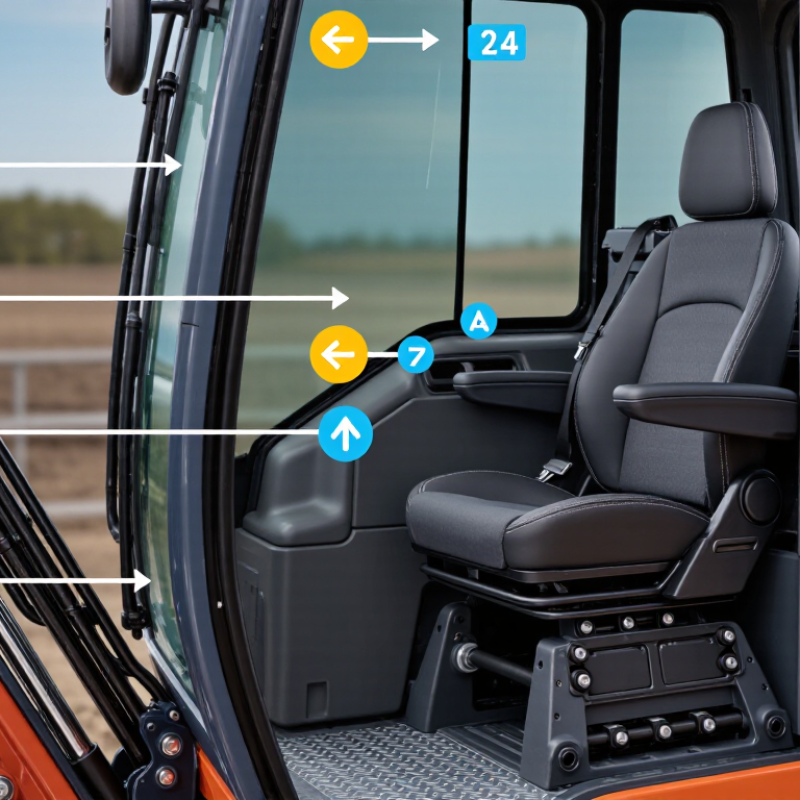
Understanding Bobcat Excavator Seat Types and Compatibility
Choosing a compact excavator seat requires more than matching color and shape. Common options include fixed-cushion seats, mechanical-suspension seats, and air-suspension seats. Fixed seats suit light, short-duration work. Mechanical suspension handles regular digging on uneven ground. Air suspension offers finer adjustment, but it needs adequate compressor space and electrical support.
Check compatibility carefully. Measure the mounting-hole pattern, rail spacing, seat height, and available rear clearance. Confirm the seat-belt anchor, operator-presence switch, armrests, and control-console position. A seat that fits the bolt holes may still block joysticks or reduce visibility. It happens. I would also compare the original seat’s suspension travel and weight range before ordering.
ISO 5353 defines the seat reference point for off-road machinery, helping technicians compare seating geometry consistently. ISO 7096 evaluates whole-body vibration performance under operating conditions. The European Commission lists 0.5 m/s² as an exposure action value and 1.15 m/s² as a limit value for daily whole-body vibration. These figures do not prove that a replacement seat will solve vibration problems. Tire pressure, tracks, ground speed, and worn mounts matter too. Research from occupational ergonomics reports repeatedly links poor seating adjustment with discomfort and reduced operator endurance. Therefore, select adjustable lumbar support, a stable cushion, and correct suspension calibration. A cheaper seat can become expensive when misalignment causes fatigue, restricted movement, or repeated returns.
Assessing Seat Condition and Identifying Replacement Requirements
An excavator seat can look serviceable while hiding serious fatigue. During inspections, I check the cushion, suspension, rails, belt, and mounting bolts. A torn cover is cosmetic at first, but exposed foam absorbs water and loses support. Sit in the seat for several minutes. Does your weight stay centered? Does the suspension bottom out? These small clues matter.
Move the slider through its full range and feel for binding. Rock the backrest gently; excessive movement may indicate worn hinges or fasteners. Inspect the seat belt for cuts, fading, damaged stitching, and a weak latch. Test every adjustment with the engine off and the machine secured. If the frame is cracked, the suspension leaks, or the belt fails to lock, replacement is safer than patching. Match dimensions, mounting patterns, suspension type, and operator weight range. A poorly fitted seat can restrict pedal access and increase fatigue.
I have seen operators replace only a cushion, then discover the rails were bent. That shortcut saved money briefly. It also created another repair. Still, not every worn seat needs complete replacement. A sound frame with replaceable padding may justify a cushion and cover kit. Record measurements before ordering, including width, height, bolt spacing, and suspension travel. Compare the old seat with supplier specifications, not a photograph alone. Install secure fasteners and perform a final movement check. Recheck after the first few working hours. Machines vibrate more than a workshop suggests.
Comparing Suspension, Comfort, and Durability Features
After testing replacement seats on compact excavators, I compare suspension before appearance. A seat that looks thick may still transmit every track vibration. Mechanical suspension handles rough ground well. Air suspension feels smoother, but it needs a reliable compressor and regular inspection. For many owners, a sealed mechanical design offers fewer failure points.
Comfort depends on more than soft foam. I look for a contoured cushion, adjustable backrest, and enough thigh support. The seat should let an operator reach the controls without leaning forward. A sliding rail helps different operators find a safer working position. In one workshop check, a firm cushion caused less fatigue than a softer seat after several hours. That result surprised me.
Durability starts with the frame, mounting points, and cover material. Reinforced stitching, water-resistant vinyl, and corrosion-resistant hardware matter in muddy conditions. Check the weight rating and bolt pattern before ordering. A universal seat may fit the rails but leave awkward gaps around the controls. That is not a small issue. Dirt can collect there and restrict movement. I would also inspect the suspension bushings after installation, because premature wear often begins with poor alignment. My preference is practical, not perfect: balanced suspension, supportive foam, and replaceable wear parts usually outperform flashy extras.
Reviewing Installation Methods, Measurements, and Safety Standards
Choosing a replacement seat for a compact excavator starts with measurements, not appearance. Common options include fixed-base, mechanical-suspension, and air-suspension seats. Measure bolt-hole spacing, rail width, seat height, backrest clearance, and control-lever reach. Record each dimension in millimeters. Small errors matter.
I once treated a matching hole pattern as proof of fit. It was not.
The seat also needs correct belt-anchor alignment and enough clearance for the operator’s knees. Before installation, park on firm, level ground, lower attachments, remove the key, and follow the machine’s lockout procedure. OSHA’s Control of Hazardous Energy standard, 29 CFR 1910.147, supports isolating stored energy before servicing. Never drill a new mounting hole without engineering approval. That shortcut can weaken the frame.
Safety standards deserve equal attention. ISO 7096 evaluates whole-body vibration in earth-moving machinery, while ISO 2631-1 provides methods for assessing vibration exposure. A suspension seat should match the operator’s weight range and preserve stable control access. NIOSH research connects prolonged whole-body vibration with lower-back discomfort and injury risk. The U.S. Bureau of Labor Statistics recorded 1,069 fatal work injuries in transportation and material-moving occupations during 2023, although that figure is not excavator-specific. A safer choice is one with documented testing, clear adjustment instructions, and a restraint system compatible with the original mounting structure. After fitting, check every fastener, cycle the suspension, and perform a slow-function test. Recheck the bolts after several operating hours.
Top Bobcat Excavator Seat Replacement Options: Fit and Installation Review
The chart shows practical fit-check ranges commonly used when selecting a replacement excavator seat. Before installation, measure the seat pan width and depth, compare the mounting-hole spacing, and confirm that the suspension travel does not interfere with the control console. Use the original mounting hardware where serviceable, tighten fasteners to the equipment manufacturer’s specified torque, and verify the seat belt, latch, adjustment lock, and any operator-presence switch. Earthmoving equipment equipped with a rollover protective structure should retain a compliant operator restraint system in accordance with applicable requirements such as OSHA 29 CFR 1926.602 and relevant ISO machinery-safety standards.
Choosing the Best Bobcat Excavator Seat for Your Budget and Usage
Choosing the best compact excavator seat depends on budget, operating hours, and ground conditions.
Fit matters. Measure the mounting-hole pattern, seat width, slide range, and control clearance before ordering. A basic molded seat may suit short landscaping jobs. Daily operators usually need suspension, adjustable back support, and durable, weather-resistant upholstery. Do not guess.
The U.S. Bureau of Labor Statistics reported 1,069 fatal injuries among construction and extraction occupations in 2023. That figure does not measure seat-related incidents, but it reinforces the need for practical operator protection.
A compliant replacement should support stable posture, clear visibility, and secure control access. ISO 7096 provides performance criteria for operator seats exposed to whole-body vibration. Check whether the supplier provides test information, not vague comfort claims.
For low-use machines, a fixed seat with thick foam can control costs. For eight-hour shifts, suspension travel and weight adjustment may reduce fatigue more effectively than extra padding.
Inspect the seat base, belt anchors, and isolators together. Replacing only the cushion can leave a loose frame or damaged suspension.
I have seen buyers focus on price, then discover poor legroom after installation. That choice looks cheap until productivity drops. A useful compromise is a mid-range suspension seat with replaceable cushions and sealed hardware. Verify the warranty terms carefully; some coverage excludes outdoor storage, which is easy to overlook.



