7 Best Holographic Foil Machines for Global Buyers?
Choosing among the 7 best Holographic Foil Machine options requires more than comparing speed or glossy product photos. Global buyers must examine foil width, embossing pressure, heating stability, registration accuracy, and substrate compatibility. A machine that performs beautifully on coated paper may struggle with folding cartons, labels, films, or textured packaging. That difference becomes obvious beside a production line, where uneven temperature can create dull patches, wrinkles, or incomplete transfer.
Holography pioneer Dr. Stephen A. Benton described holography as “a technique that enables a light field to be recorded and later reconstructed.” His explanation remains useful here. A Holographic Foil Machine does not simply add shine. It transfers a controlled visual structure onto a surface, often using heat, pressure, and carefully aligned foil. Small settings matter. A few degrees can change the result.
This guide evaluates seven machines through a practical buyer’s lens. It considers output quality, operating flexibility, maintenance access, energy use, training requirements, and supplier support across regions. Certifications and installation assistance also deserve attention, especially for factories importing equipment. No machine is perfect. Some models offer impressive speed but demand stricter setup discipline. Others are easier to operate but provide fewer adjustment options. I have deliberately included those trade-offs, because a polished specification sheet rarely reveals the full production experience. Before purchasing, buyers should test their actual materials, inspect sample consistency, and calculate long-term operating costs rather than choosing by headline speed alone.
What Are Holographic Foil Machines and How Do They Work?
What Are Holographic Foil Machines and How Do They Work?
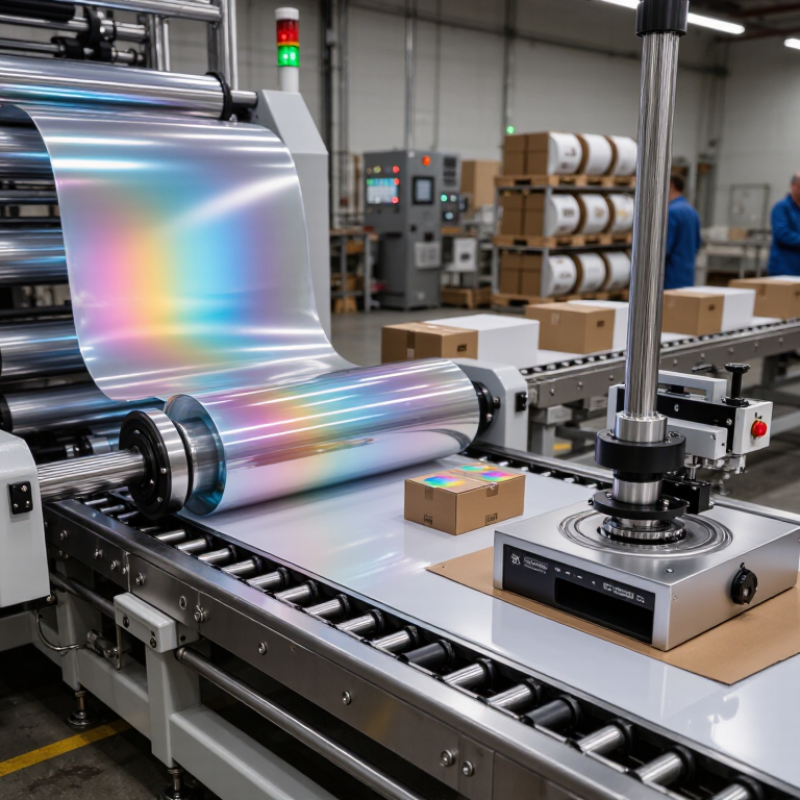
Holographic foil machines transfer reflective patterns onto paper, film, labels, or coated boards. The effect resembles floating light, but the process is mechanical. A foil roll carries a thin metalized layer, release coating, and micro-embossed design. Heat and pressure separate that layer from its carrier film. The pattern then bonds to the printed surface.
Some systems use hot stamping, while others use cold foil with adhesive and curing equipment. Hot stamping typically needs controlled temperatures between 90°C and 160°C, depending on the foil and substrate. Pressure, dwell time, and web speed must remain balanced. Too much heat can blur fine lines. Too little pressure creates broken reflections. Small details decide.
Smithers’ The Future of Global Packaging to 2028 values the global packaging market at approximately US$1.2 trillion by 2028. Its growth supports demand for premium, decorative finishing equipment. Grand View Research also reports continued expansion in packaging printing, driven by brand differentiation and shorter production runs. These figures do not represent holographic machines alone. They indicate a wider investment environment.
For global buyers, machine selection should begin with material tests, not catalog promises. Check foil waste, registration accuracy, drying performance, and maintenance access. I would request samples using the actual paper, film, and artwork. A perfect sample can hide unstable production. That deserves reflection. Total cost includes tooling, rejected sheets, energy use, operator training, and spare parts. Certifications and electrical requirements also vary by destination.
Seven Leading Holographic Foil Machines for Global Buyers
Seven leading holographic foil machines serve different production needs for global buyers. The right choice depends on material, volume, finish quality, and operator skill. Real production experience matters more than a polished brochure. An impressive speed rating may assume ideal film and simple artwork.
A compact desktop machine suits samples, short runs, and small packaging orders.
A roll-to-roll machine supports continuous labels, flexible films, and higher daily output.
A sheet-fed stamping machine handles cards, covers, and folded cartons with accurate registration.
A hot foil machine creates strong pressure and heat control for textured surfaces.
A cold foil machine works efficiently with compatible adhesive systems and faster inline production.
A digital toner-reactive machine is useful for variable graphics and personalized designs.
A hybrid machine combines several methods, but setup and maintenance can become demanding.
Buyers should request test samples using their actual paper, film, and foil. Check temperature stability, pressure adjustment, waste rates, cleaning access, and spare-part availability. Verify electrical standards, operator safeguards, documentation, and service coverage in the destination country. A small trial often reveals feeding problems or weak adhesion. That can be inconvenient. It is also valuable evidence. Cost comparisons should include tooling, consumables, training, freight, and downtime. No single machine performs perfectly across every substrate or holographic pattern.
How to Choose a Machine for Different Materials and Production Needs
7 Best Holographic Foil Machines for Global Buyers?
Choosing a holographic foil machine starts with the material, not the catalogue ranking. Film, paperboard, labels, and laminated sheets require different heating zones, pressure settings, and web controls. A narrow-web machine suits short label runs. A sheet-fed model handles cartons and premium covers more comfortably. For continuous packaging, inspect unwinding accuracy, foil-saving controls, and cooling stability. Smithers’ 2024 printing outlook places global printed packaging value above US$500 billion, with steady growth expected through 2028. That scale increases demand for reliable, repeatable finishing equipment.
Ask for test samples using your actual substrate. Glossy PET may release cleanly, while textured paper can show weak adhesion or broken highlights. Check maximum material width, line speed, temperature range, cylinder format, and operator training. Production speed alone is misleading. A machine running quickly with frequent stoppages is not productive. I once underestimated setup waste on a short run. That mistake was expensive. Smaller converters should compare total ownership costs, including foil waste, electricity, spare parts, and service response across regions.
Tips: Request a documented trial before purchase. Measure foil consumption per 1,000 sheets or labels. Confirm electrical standards and safety certification for your market. Review maintenance access with the operator who will use the machine. A practical choice may be less impressive, but easier to control. According to a 2023 Smithers packaging analysis, sustainability pressure is also reshaping finishing decisions, so prioritize foil-saving functions and recyclable material compatibility.



