NOTICE
We use cookies to improve the user experience and analyze its performance.
Choosing among the best temperature logger manufacturers in China starts with a practical question: can their instruments produce dependable readings in your actual operating conditions? A unit may look precise on a product page, yet perform differently beside a freezer door, inside a warm warehouse, or during a long shipment. Small details matter.
The World Health Organization’s guidance on temperature-sensitive pharmaceutical storage emphasizes suitable monitoring and documented control of storage conditions. Requirements vary by product, so a logger’s range, accuracy, calibration evidence, and alarm behavior must match the intended use. Grand View Research’s temperature-monitoring market analysis also points to demand across sectors such as healthcare and food. These reports offer useful context, but they do not verify any single manufacturer’s claims.
Lord Kelvin, a foundational authority in measurement science, wrote: “When you can measure what you are speaking about, and express it in numbers, you know something about it.” That principle applies directly to every temperature logger: readable data is useful only when its measurement quality is understood. This guide compares Chinese manufacturers by product capability, documentation, customization, and service—not just price or stated accuracy. It also treats a familiar weakness honestly: specifications alone cannot show how well a device will work in your facility. Ask for calibration records, test the logger in representative conditions, and confirm how data can be exported and reviewed. Those checks make the shortlist more credible.
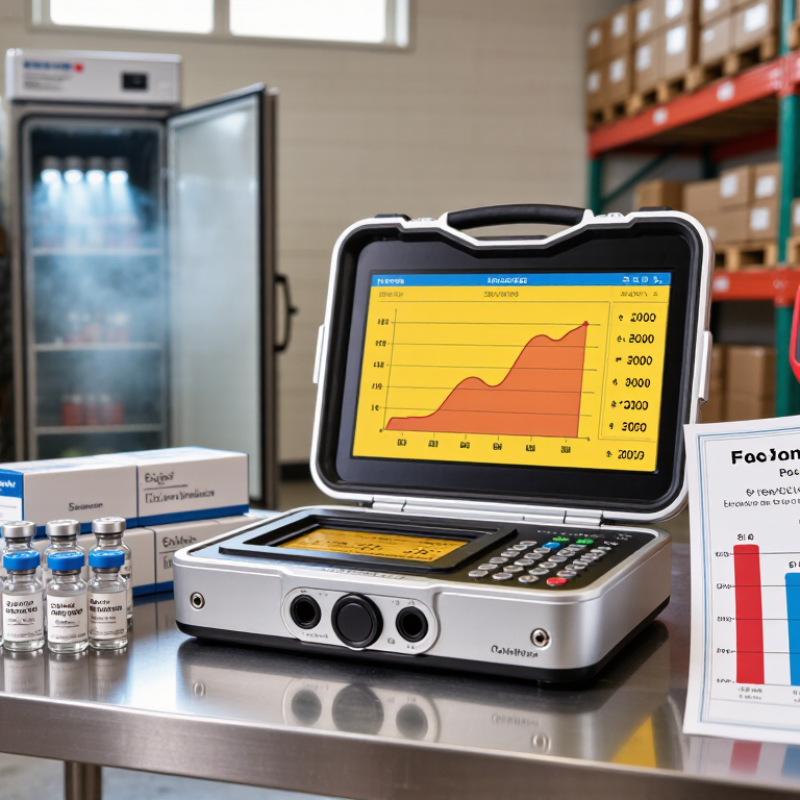
A temperature logger is a compact instrument that records temperature over time. A probe senses heat changes and converts them into an electrical signal. The logger samples that signal at set intervals, then stores readings in memory. Some models also display live, minimum, and maximum temperatures. A logger measures conditions; it does not regulate them. That distinction matters beside a refrigerator door, where temperatures can swing during frequent opening.
The CDC’s Vaccine Storage and Handling Toolkit recommends digital data loggers with accuracy within ±0.5°C and readings at least every 30 minutes. Those specifications offer a practical benchmark when comparing equipment, though other applications may need different ranges or calibration intervals.
In use, place the probe where products are stored, not against a cooling vent. Check the time stamp, battery, and alarm settings before relying on a temperature record. Small setup errors can distort useful data. That part is easy to overlook. A logger may show a stable number while its probe sits in the wrong spot, so installation deserves as much attention as the device itself.

In China, temperature logging is widely used across food production, cold-chain transport, pharmaceuticals, agriculture, and laboratory storage. The China Federation of Logistics and Purchasing reported that the country’s cold-chain logistics market reached 517.1 billion yuan in 2023. This broad market figure does not measure logger sales, but it shows the scale of temperature-sensitive movement.
Food operators place probes inside refrigerated trucks, near warehouse doors, and between pallets, where warm air can enter during loading. Pharmaceutical teams monitor storage rooms and insulated shipments, while farms and food processors track cooling after harvest or processing. Chemical manufacturers and research laboratories also use loggers when specific materials require stable storage conditions. Details matter: one sensor near a cooling unit may miss warmer spots elsewhere.
FAO reported that 13.2% of food was lost globally between harvest and retail in 2021. This is not a China-specific estimate, and temperature is only one factor behind food loss. Still, reliable records can help teams identify repeated temperature excursions and adjust handling practices. A logger alone cannot prove that every product stayed within range. Sensor placement, calibration, and gaps in recorded data deserve careful review.
Typical monitored storage-temperature bands for selected applications (°C). These are indicative examples, not market-share data; actual limits vary by product and applicable requirements.
Temperature loggers help food and pharmaceutical supply chains document storage conditions, identify excursions, and support quality control. Blood storage and vaccine cold chains also rely on continuous monitoring to help maintain specified conditions.
Choosing a temperature logger manufacturer in China starts with the measurement task, not a catalogue photo. Define the temperature range, accuracy, logging interval, and operating environment. A cold-storage unit may face condensation, while a transport logger must tolerate knocks and changing temperatures. Small details matter.
Ask how each model is calibrated and whether calibration records identify the device and test conditions. Request evidence of repeatability, not just a stated accuracy figure. Check whether production units are tested, how failed units are handled, and whether firmware or hardware changes are recorded. A polished brochure is not proof. Review a sample logger, export its data, and confirm timestamps, alarm settings, and file formats match your workflow.
Support matters after shipment. Clarify spare-part availability, repair procedures, response times, and lead-time commitments in writing. Ask for relevant quality and product documentation, then verify that it applies to the exact model you plan to buy. Compare quotes carefully: a lower price may exclude calibration, accessories, or software support. No checklist is perfect; even detailed specifications can miss a practical issue. A short pilot run can reveal battery limits, confusing menus, or readings that drift during real use.
Best Temperature Logger Manufacturers in China?
How Do China’s Temperature Logger Manufacturers Differ?
China’s temperature logger manufacturers vary in sensor options, measurement ranges, and calibration practices. Some focus on compact devices for refrigerators, while others make rugged units for warehouses or transport. A logger suited to a chilled cabinet may not perform well in a hot, vibrating vehicle. Small details matter.
Compare more than the stated accuracy. Ask how often devices are calibrated, whether calibration records are supplied, and how readings are checked across the operating range. Battery life, memory capacity, alarm settings, and data export can also differ. A clear screen helps on site; reliable software matters when reviewing months of records. Not always the same priority.
Manufacturers also differ in customization and support. One may offer probes of different lengths or simple wireless reporting; another may provide more configuration but longer lead times. Request a sample and test it in the conditions it will face, including door openings or rapid temperature changes. A specification sheet cannot show every practical weakness. I would not assume a lower price means poor quality, or a polished interface means better measurement. Compare calibration evidence, usability, and after-sales response together.
| Comparison Dimension | Basic Data-Logger Producers | Cold-Chain Specialists | Industrial Monitoring Specialists | Custom OEM/ODM Producers |
|---|---|---|---|---|
| Typical product focus | Standalone loggers for general storage, laboratories, and routine transport monitoring. | Monitoring solutions designed for refrigerated transport, freezers, food distribution, and pharmaceutical shipments. | Rugged instruments and multi-channel systems for equipment, process, warehouse, and facility monitoring. | Products adapted to a buyer’s enclosure, firmware, interface, packaging, or private-label requirements. |
| Sensor options | Often use an internal thermistor or an external temperature probe, depending on the model. | May offer internal or external probes and configurations suited to chilled and frozen goods. | May support thermistors, RTDs, thermocouples, or other inputs, depending on the instrument design. | Sensor type and probe design can often be specified, subject to engineering and validation. |
| Temperature range | Varies by sensor, electronics, probe, and model; check the published operating and measurement ranges. | Products commonly target refrigerated and frozen supply-chain conditions, but limits are model-specific. | Some product lines cover broader process conditions; the sensor and probe can set the practical limits. | Range requirements should be confirmed against the proposed sensor, materials, and calibration plan. |
| Accuracy and calibration | Compare stated accuracy, resolution, calibration interval, and whether a calibration certificate is supplied. | Check accuracy across the intended cold-chain range and whether calibration records are traceable. | May offer application-specific calibration options; confirm the range and uncertainty required for the process. | Calibration documentation and acceptance criteria should be agreed before production. |
| Data access and connectivity | Common options include USB download, display readout, or local software, depending on the model. | May include USB, Bluetooth, or cloud-connected options for shipment or storage monitoring. | May support local logging, wired interfaces, or network connectivity for integration with monitoring systems. | Interfaces and software can sometimes be tailored; confirm compatibility, security, and ongoing support. |
| Alerts and reporting | May provide configurable limits, alarm indicators, and downloadable reports. | May prioritize excursion records, shipment reports, and review of temperature history. | May provide alarms and data outputs suited to equipment or facility monitoring workflows. | Alarm logic, report format, and user interface should be specified and tested for the intended workflow. |
| Enclosure and environment | Enclosure protection varies by model; check the specified IP rating where relevant. | Assess suitability for condensation, handling, packaging, and the conditions expected during transport. | Some models are built for demanding environments; verify enclosure rating, probe rating, and operating limits. | Custom enclosure changes may affect sealing, durability, and qualification requirements. |
| Standards and documentation | Ask for applicable test reports, user documentation, and calibration records for the exact model. | For transport and storage applications, check whether the device and documentation meet the buyer’s applicable requirements, such as EN 12830 where relevant. | Request documentation relevant to the installation, measurement method, and required quality system. | Define required standards, declarations, test records, and document versions in the purchasing specification. |
| Customization and order fit | Usually best suited to standard models and straightforward purchasing requirements. | Often a fit for buyers prioritizing cold-chain use cases and associated reporting needs. | Often a fit for buyers needing specialized inputs, probes, or system integration. | Can suit projects requiring design changes or branded packaging; confirm minimum order quantities and tooling costs. |
| Best way to compare suppliers | Compare the same measurement range, accuracy, logging interval, memory, and calibration documentation. | Check performance at the actual shipment temperatures, reporting workflow, and required validation records. | Compare sensor compatibility, installation requirements, environmental ratings, and interface specifications. | Request a written specification, prototype evaluation, production sample, and agreement on change control. |
| These are general manufacturer and product-category profiles, not claims about specific companies. Actual specifications, certifications, lead times, and order quantities vary by supplier and model; verify them in current technical documents and quotations. | ||||
A temperature logger’s brochure is not proof of performance. Ask for calibration certificates showing the date, measurement range, uncertainty, and traceability to recognized national standards. Compare the stated accuracy with your actual use: a logger accurate at room temperature may not perform equally well in a chilled truck. Request test results across the full operating range, plus evidence that alarms, probes, and data exports work as specified. Small details matter. Check that any quality-system certificate covers the manufacturing site and product scope, not just the company name.
The stakes are practical. FAO’s 2019 State of Food and Agriculture estimated that 14% of food is lost between post-harvest and retail; temperature control is only one factor, but dependable records can help identify excursions. Test a sample logger beside a calibrated reference probe in a working cold room. Then trigger an alarm, export a report, and check whether timestamps and units are clear. Ask suppliers how often calibration is recommended, how firmware changes are documented, and who handles repairs. Get support hours and response targets in writing. No shortcut works. A polished dashboard can still hide gaps in service, so verify the process before placing a large order.