
NOTICE
We use cookies to improve the user experience and analyze its performance.
Why Are Branch Circuit Breakers Essential for Safety?
Every powered outlet hides a potential fault. A damaged cord, loose terminal, or overloaded receptacle can generate heat inside a wall. Branch Circuit Breakers interrupt that dangerous current before conductors reach failure temperatures. Their role is simple, but not minor. They protect individual circuits, connected equipment, and people working near energized systems.
The National Fire Protection Association reported an annual average of 35,150 U.S. home structure fires involving electrical distribution and lighting equipment from 2012 to 2016. These fires caused approximately 470 civilian deaths, 1,100 injuries, and $1.3 billion in direct property damage. Those figures explain why circuit protection cannot be treated as a box-checking exercise. NFPA 70, the National Electrical Code, also establishes requirements for branch-circuit conductors, overcurrent protection, and installation practices. Licensed professionals use these requirements with load calculations and inspection experience.
A breaker reacts to abnormal current. It does not repair damaged insulation or replace proper maintenance. That distinction matters. A correctly sized breaker should trip during a short circuit or sustained overload, limiting energy before wiring overheats. The U.S. Consumer Product Safety Commission has repeatedly warned about overloaded circuits, damaged electrical products, and fire risks in homes. Yet safety assumptions can still fail. A breaker may appear functional while connections loosen behind a panel. Regular inspection, torque verification, and appropriate replacement remain essential. No device is magic. Reliable protection comes from sound design, qualified installation, and careful attention to changing loads.
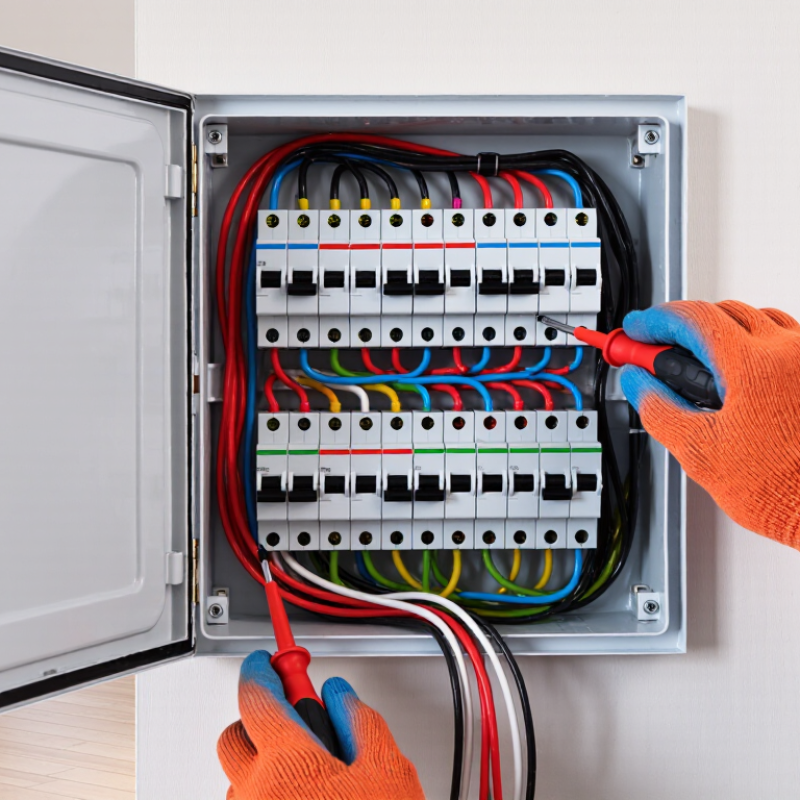
A branch circuit breaker controls power flowing through one household circuit. It protects wiring that supplies outlets, lights, or fixed appliances. Inside the electrical panel, the breaker monitors current continuously. When current rises above its safe rating, it opens the circuit. Power stops flowing.
Most breakers use thermal and magnetic protection. A thermal element reacts to a sustained overload and trips after heating. A magnetic mechanism responds almost instantly to a short circuit. This timing helps separate ordinary overloads from sudden, dangerous faults. The breaker must match the circuit wiring and expected load. A higher rating is not automatically safer.
During electrical inspections, repeated tripping is a common warning sign. It may indicate damaged insulation, excessive appliances, or a failing device. Resetting the breaker again is not repair. That habit deserves reflection. For example, a circuit carrying a heater, kettle, and microwave may overload during normal use. An electrician should measure the load and inspect connections before changing equipment.
Some branch breakers also detect leakage or arc faults, depending on their design. These features can reduce risks in damp areas or older wiring systems. However, no breaker replaces sound installation, proper grounding, or careful maintenance. Warm covers, buzzing sounds, burning smells, or discoloration need prompt attention. Keep the panel dry and accessible. Only a qualified professional should open it or alter circuit protection.

Branch circuit breakers are essential because they monitor current flowing through individual circuits. When current rises above a safe level, the breaker interrupts the path. This protects conductors from overheating inside walls, outlets, and junction boxes.
The National Fire Protection Association reported an estimated annual average of 32,680 home fires involving electrical distribution and lighting equipment from 2016 to 2020. Those fires caused about 470 deaths and $1.3 billion in property damage.
A thermal trip responds to sustained overloads, such as too many appliances sharing one circuit. A magnetic trip reacts almost instantly to a short circuit, where energized conductors contact each other. Some branch protection also analyzes unusual current waveforms linked to arcing. Ground-fault protection compares outgoing and returning current. A small difference can indicate leakage through a person or wet surface, so the circuit disconnects quickly. Very quickly.
The National Electrical Code requires different protection methods for different hazards and locations. In practice, electricians test breakers, inspect terminal torque, and check for heat discoloration.
A breaker can be fast, but it is not omniscient. A loose connection may create dangerous heat without immediately reaching the trip threshold. That detail deserves more attention during inspections.
Why Are Branch Circuit Breakers Essential for Safety?
How Breakers Prevent Overloads and Short Circuits
Branch circuit breakers protect wiring from dangerous overcurrent. Each breaker serves a defined circuit, such as kitchen outlets or bedroom lighting. When current rises beyond a safe level, the breaker opens the circuit. Power stops before insulation overheats.
An overload develops when too many appliances share one branch circuit. Picture a portable heater, toaster, and microwave running together. Their combined demand can heat conductors inside the wall, even when no flame is visible. The breaker’s thermal element responds to this sustained heating and disconnects power.
Short circuits behave differently. A damaged conductor may touch another conductor or a grounded metal path. This creates very low resistance and a sudden surge of current. The breaker’s magnetic mechanism can trip almost instantly. That rapid interruption helps limit arcing, equipment damage, and fire risk.
A tripped breaker is a warning, not an invitation to keep resetting it. Unplugging one appliance may solve an overload, but repeated trips require investigation. Loose connections, damaged insulation, or incorrect circuit sizing can remain hidden behind an outlet plate. Qualified electricians test the circuit, check conductor size, and follow applicable electrical codes before restoring service.
Protection is not perfect. Breakers can age, fail mechanically, or be mismatched with the circuit. That uncomfortable detail matters. Safe practice includes periodic inspections and careful attention to warm outlets, buzzing sounds, burning odors, or unexplained trips. Each sign deserves prompt attention.
Breaker ratings and recommended continuous-load limits for common branch circuits
Branch circuit breakers protect wiring from overheating during overloads and disconnect power rapidly during short circuits. The continuous-load values shown are calculated at 80% of the breaker rating, a commonly used electrical safety limit for continuous loads. Always verify requirements with applicable local electrical codes.
Calculation basis: recommended continuous load = breaker rating × 0.80.
Branch circuit protection reduces fire and shock risks by limiting dangerous current before wiring overheats. A damaged cable, loose terminal, or overloaded outlet can turn a quiet wall cavity into a heat source. The National Fire Protection Association’s Electrical Fires report estimates that electrical distribution and lighting equipment contributes to tens of thousands of U.S. home fires each year, causing hundreds of deaths and more than a billion dollars in property damage. A correctly rated breaker can disconnect that circuit within seconds.
That response matters.
In practical inspections, I have seen small warning signs: warm receptacles, flickering lights, and breakers that trip repeatedly. These signals should not be ignored. A breaker protects conductors from overcurrent, but it does not solve every shock hazard. Ground-fault circuit interrupters are designed to respond to leakage current, especially near water. The U.S. Consumer Product Safety Commission continues to identify electrical incidents as a serious household safety concern, reinforcing the need for tested protection and professional installation.
Protection is not magic. An incorrectly sized breaker may leave wiring vulnerable, while constant resetting can hide a deeper fault. The details matter: conductor size, load calculation, enclosure condition, and secure connections. Safety guidance from NFPA 70 supports properly coordinated overcurrent protection, yet real installations are not always perfect. That is why periodic inspection remains necessary, even when the panel appears normal.
Why Are Branch Circuit Breakers Essential for Safety?
Selecting a branch circuit breaker begins with the circuit’s measured load, voltage, conductor size, and intended equipment. Never guess. A breaker rated above the conductor’s capacity can allow dangerous overheating. Check the panel’s approved breaker types and required interrupting rating. Some areas also require ground-fault or arc-fault protection. Local electrical rules and a qualified electrician should guide the final choice.
Installation demands careful testing, not confidence alone. Turn off the supply, verify that the circuit is dead, and use insulated tools. The breaker must connect firmly, with terminals tightened to the specified torque. Loose connections can create heat behind the panel, where damage may remain invisible. Label each circuit clearly. I have seen labels become outdated after renovations, so documenting every change is worth the extra minute.
Tips: Test protective devices according to their instructions. Watch for buzzing, warm covers, discoloration, burning smells, or repeated trips. Do not repeatedly reset a tripping breaker. Find the cause first. Keep the panel dry and accessible. Avoid opening energized equipment unless you are properly qualified. A yearly inspection may reveal loose terminals or overloaded outlets, although inspection intervals depend on the building and its usage. Mistakes happen, even during careful work. Reflect before restoring power.
| Safety Dimension | What the Breaker Does | Selection or Installation Requirement | Practical Verification |
|---|---|---|---|
| Overload protection | Interrupts a circuit when current remains above its safe continuous capacity, helping prevent conductor overheating. | Choose the breaker rating to protect the circuit conductors and connected load; never increase the rating merely to stop nuisance tripping. | Confirm the breaker rating is compatible with the conductor size, insulation rating, terminal rating, and applicable electrical code. |
| Short-circuit protection | Opens the circuit rapidly when a high-magnitude fault occurs between energized conductors or between a conductor and ground. | Select an interrupting rating at least equal to the available fault current at the installation location. | Have a qualified electrician verify the available fault current and the breaker interrupting rating. |
| Ground-fault protection | Detects current leaving the intended circuit path and disconnects power to reduce electric-shock risk. | Use the ground-fault protection required for locations such as wet areas, outdoor receptacles, garages, kitchens, and other code-designated spaces. | Test the protective device using its test function at the frequency required by local regulations and the device instructions. |
| Arc-fault protection | Detects electrical signatures associated with hazardous arcing and disconnects the affected branch circuit. | Install where required by the applicable electrical code, particularly in many residential living areas. | Use the built-in test control according to the device instructions and investigate repeated trips instead of repeatedly resetting the breaker. |
| Voltage rating | Defines the maximum system voltage for which the breaker is designed to open and clear a fault safely. | The breaker voltage rating must be equal to or greater than the circuit voltage and suitable for the system configuration. | Compare the marked voltage rating with the measured or documented supply voltage before installation. |
| Pole configuration | Provides switching and protection for the required number of ungrounded conductors. | Use the pole arrangement required by the circuit design; multiwire circuits generally require simultaneous disconnection of their ungrounded conductors. | Check that the breaker configuration matches the wiring diagram and that connected poles operate together where required. |
| Trip characteristic | Determines how the breaker responds to normal load current, temporary inrush, overloads, and short circuits. | Select a characteristic suitable for the connected load, such as resistance heating, lighting, motors, or electronic equipment. | Check the equipment starting current and manufacturer requirements to prevent unwanted trips without compromising conductor protection. |
| Continuous loading | Helps prevent a circuit from operating continuously at a level that can overheat conductors or terminations. | Apply the continuous-load requirements in the governing electrical code; many codes require an additional design margin for loads expected to run for three hours or more. | Calculate the expected demand and confirm the circuit, breaker, conductors, and equipment are adequately sized. |
| Terminal connections | Provides the electrical path between the branch-circuit conductors and the breaker. | Use only approved conductor types and sizes, strip conductors correctly, and tighten terminals to the specified torque. | De-energized inspection should look for loose strands, damaged insulation, discoloration, overheating, or incorrect conductor placement. |
| Panel compatibility | Ensures the breaker mounts correctly and maintains the intended electrical and mechanical connection. | Use a breaker specifically approved for the panelboard and its bus configuration; physical fit alone does not establish compatibility. | Verify the panel documentation, listing information, bus rating, and installation instructions before fitting the breaker. |
| Identification and labeling | Allows occupants and maintenance personnel to identify the circuit and disconnect the correct power source quickly. | Label the circuit directory accurately with the area or equipment supplied. | Operate the breaker under controlled conditions and confirm that the labeled load is the one disconnected. |
| Routine inspection | Helps identify conditions that can reduce reliability, including heat damage, corrosion, contamination, or mechanical wear. | Set inspection intervals according to the environment, equipment duty, regulations, and maintenance program. | Inspect for unusual odor, buzzing, visible heat damage, repeated tripping, moisture, corrosion, or a warm enclosure. |
| Safe reset procedure | Restores power only after the cause of the trip has been assessed. | Disconnect or switch off loads if safe, move the handle fully to the reset position, then switch it on once. | If the breaker trips again, leave it off and arrange qualified troubleshooting; do not repeatedly reset it. |
| Professional installation | Reduces the risk of incorrect wiring, inadequate torque, unsafe exposure to energized parts, and code violations. | Installation, testing, and repairs should be performed by a qualified electrician in accordance with local law and the applicable electrical code. | Require documented testing, accurate labeling, and confirmation that covers are installed and unused openings are closed. |
Safety note: Breaker selection and installation must comply with the electrical code and regulations applicable to the specific location. A breaker should never be used as a substitute for correcting overloaded circuits, damaged wiring, loose connections, or faulty equipment.