Blog

China Top 10 Current Sensor Manufacturers for Global Buyers

Current sensing has moved from a supporting circuit function to a strategic design requirement. Electric vehicles, solar inverters, factory robots, data centers, and battery systems all depend on accurate current sensor performance. Small errors can create visible heat, shorter battery life, or unexpected downtime.

Recent market studies show why global buyers are looking toward China. MarketsandMarkets estimates that the global current sensor market could grow from approximately USD 2.4 billion in 2023 to more than USD 3.7 billion by 2028. Yole Group also identifies electrification and power conversion as major growth drivers for magnetic and shunt-based sensing technologies. Figures vary between reports. That is worth remembering.

As Analog Devices engineer Steven P. Decker has noted, “Current sensing is fundamental to power management and system protection.” The statement reflects a practical truth: engineers must evaluate more than nominal accuracy. Response time, isolation voltage, temperature drift, bandwidth, package design, calibration, and supply consistency matter in production.

China’s leading manufacturers now serve automotive, industrial, renewable-energy, and consumer-electronics customers. Their capabilities are not identical. Some specialize in Hall-effect devices, while others focus on fluxgate, shunt, or integrated sensing solutions. Certification claims still require verification.

This guide examines ten Chinese current sensor manufacturers for international buyers. It considers product portfolios, manufacturing experience, technical documentation, quality systems, export readiness, and application support. Datasheets may look similar. Factory discipline often tells the deeper story.

China Top 10 Current Sensor Manufacturers for Global Buyers

Current Sensor Types and Their Industrial Applications

China Top 10 Current Sensor Manufacturers for Global Buyers

Current sensors measure electrical flow, but their designs serve very different industrial needs. Shunt sensors offer low cost and strong accuracy in battery systems, chargers, and compact power supplies. However, they create heat because current passes through a resistive element. Hall-effect sensors provide electrical isolation and measure direct or alternating current. They fit motor drives, solar inverters, factory automation, and electric vehicle equipment. Their output can drift with temperature, so calibration matters.

Current transformers suit high-voltage alternating-current panels and distribution equipment. They are dependable, but they cannot measure direct current. Rogowski coils handle large currents around busbars and cables without breaking the circuit. Their flexible shape helps during retrofit work.

Fluxgate sensors deliver excellent accuracy for energy storage and power-quality monitoring, although their price and control requirements are higher. Optical sensors can support demanding environments, yet installation and signal management require careful planning.

On factory floors, cable position, vibration, heat, and electromagnetic noise often affect results more than catalog specifications. A sensor with 0.5% accuracy may outperform a 0.1% model when installed correctly. I have seen simple mounting errors create unstable readings. That detail is easy to miss.

Global buyers should compare isolation voltage, bandwidth, response time, temperature range, output format, and testing records. Certification documents also deserve close review. No sensor is perfect; selecting the right type for the actual load is more reliable than choosing the most impressive number.

China’s Current Sensor Manufacturing Landscape

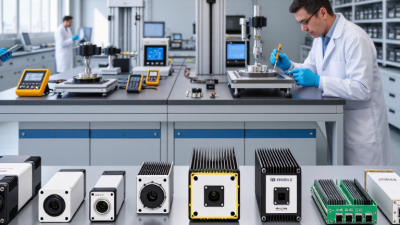
China’s current sensor manufacturing landscape is broad, technical, and highly competitive. Manufacturers produce Hall-effect, shunt-based, magnetic, and fluxgate sensors for vehicles, energy storage, industrial equipment, and smart meters. Many factories combine chip selection, circuit design, molding, calibration, and final testing in one facility. This improves traceability and shortens development cycles. However, quality still varies between suppliers.

Experienced buyers should examine accuracy, linearity, response time, insulation strength, operating temperature, and long-term drift. A sensor may perform well in a laboratory but fail inside a hot cabinet near switching equipment. Reliable manufacturers usually provide test reports, calibration records, material details, and samples from stable production lots. Certifications can support trust, but they should not replace factory audits or application testing. The market is advanced, but not flawless.

Tips: Request samples from the intended production process, not only engineering prototypes. Test them under vibration, heat, electrical noise, and continuous load. Ask how rejected units are controlled and how calibration equipment is verified. Compare total ownership cost, including tooling, packaging, documentation, and after-sales support. A low quotation can conceal inconsistent batches. Check it carefully. Some suppliers communicate quickly but document poorly, which can create avoidable design changes. Clear drawings, acceptance limits, and written response times reduce that risk.

Top 10 Chinese Current Sensor Manufacturers for Global Buyers

China’s top 10 current sensor manufacturers serve industrial automation, energy systems, vehicles, and test equipment. Their products commonly include Hall-effect, shunt, fluxgate, and current transformer sensors. Each technology fits different conditions. Hall sensors offer isolation and fast response, while shunts can provide strong accuracy at lower cost.

A serious buyer should compare more than catalog prices. Check measurement range, bandwidth, isolation voltage, temperature drift, and response time. Ask for calibration records and production traceability. Factory audits can reveal practical details, such as clean assembly areas, automated soldering, and final testing under changing temperatures. Connector quality matters too. Small defects become expensive in field installations.

The strongest Chinese suppliers usually provide samples, technical drawings, and test data before volume orders. They should explain tolerances clearly, not hide behind broad accuracy claims. Some manufacturers have excellent engineering teams but weaker overseas communication. Others respond quickly but provide limited long-term reliability data. That weakness deserves attention. Buyers should test sensors with their own cables, loads, and control systems. A sensor that performs well in a laboratory may drift near motors or switching equipment. Review certification scope carefully, because one compliant model does not validate every product in a supplier’s catalog.

Product Quality, Certifications, and Technical Capabilities

China’s leading current sensor manufacturers compete through measured quality, documented certifications, and practical engineering support. Global buyers should inspect calibration records, incoming material controls, and production traceability. A reliable factory can show test data for linearity, insulation strength, temperature drift, and response time. Do not judge quality from a polished sample alone. Batch consistency matters more.

Certifications may include ISO 9001, CE, RoHS, UL, or application-specific approvals. However, a certificate is only useful when its scope matches the product and destination market. Ask for the original certificate, test laboratory details, and validity dates. Strong technical teams also provide magnetic circuit design, PCB integration, EMC testing, and firmware communication support. CAN, Modbus, or analog output options should be verified under real load conditions.

Tips: Request three production samples, not one. Test them at low, rated, and overload currents. Compare readings after thermal cycling. A small mismatch can reveal weak compensation or unstable materials. Factory audits are helpful, yet they cannot replace independent testing. Some suppliers explain problems openly; that honesty is valuable, although it may expose gaps requiring further review. Pair technical discussions with clear drawings, tolerance limits, and an agreed inspection plan.

How Global Buyers Can Evaluate Suppliers and Place Orders

Global buyers should evaluate current sensor suppliers through evidence, not polished catalog pages. Request datasheets, calibration records, production photos, and recent quality reports. Check current range, accuracy, response time, temperature drift, insulation rating, and expected service life. A sensor rated for 500 amperes may perform differently under continuous heat or vibration.

Ask each manufacturer for a sample order before discussing large volumes. Test samples with your actual cables, busbars, enclosure space, and control system. Record readings at low, medium, and peak current. Compare results with an independent reference meter. Small errors can become expensive in battery systems, industrial drives, and energy monitoring equipment.

Supplier communication also reveals operational reliability. Request a clear quotation covering minimum order quantity, lead time, packaging, payment terms, shipping terms, and warranty handling. Confirm product traceability through batch numbers and inspection records. Verify applicable safety and electromagnetic compatibility documentation for your destination market. Factory audits can help, but remote evidence is not always enough. I have seen attractive specifications hide vague test conditions. Ask uncomfortable questions early. Also, avoid choosing only by unit price; inconsistent calibration may create higher costs during installation and field service. Use a written comparison sheet, and require every promised feature to appear in the purchase agreement.

China Top 10 Current Sensor Manufacturers for Global Buyers - How Global Buyers Can Evaluate Suppliers and Place Orders
Supplier Code Main Sensor Technology Typical Product Categories Typical Current Range Typical Accuracy Isolation Voltage Operating Temperature Common Certifications Typical MOQ Sample Lead Time Recommended Buyer Verification
CN-CS-01 Hall-effect, open-loop PCB current sensors, DC monitoring modules, battery protection units ±5 A to ±600 A ±1.0% to ±2.0% FS 2.5–5.0 kVrms −40°C to +85°C CE, RoHS, ISO 9001 10–100 pcs 7–15 days Check zero-current offset, linearity, response time, and thermal drift.
CN-CS-02 Hall-effect, closed-loop Industrial drives, welding equipment, power converters ±25 A to ±2,000 A ±0.5% to ±1.0% FS 3.0–6.0 kVrms −40°C to +85°C CE, RoHS, UL-recognized components 5–50 pcs 10–20 days Request closed-loop bandwidth, supply-current, and long-duration stability data.
CN-CS-03 Rogowski coil AC energy monitoring, switchgear, retrofit measurement systems 50 A to 10 kA AC ±1.0% to ±3.0% reading 1.0–3.0 kVrms −20°C to +70°C CE, RoHS, IEC 61869 test capability 20–100 pcs 10–18 days Confirm coil length, integrator compatibility, phase error, and flexible-installation limits.
CN-CS-04 Fluxgate, high-precision DC Precision battery test systems, medical equipment, laboratory instruments ±1 A to ±1,000 A ±0.05% to ±0.2% FS 2.5–4.0 kVrms −40°C to +85°C CE, RoHS, ISO 9001 1–20 pcs 15–30 days Validate hysteresis, noise density, temperature coefficient, and calibration traceability.
CN-CS-05 AC current transformer Metering, protection relays, distribution panels 5 A to 3,000 A AC Class 0.2–1.0 2.5–7.2 kVrms −25°C to +70°C CE, RoHS, IEC 61869 documentation 50–500 pcs 15–25 days Verify burden, ratio error, phase displacement, knee-point data, and terminal safety.
CN-CS-06 Split-core current transformer Building automation, energy meters, retrofit monitoring 30 A to 1,500 A AC Class 0.5–1.0 1.0–3.0 kVrms −20°C to +60°C CE, RoHS, UKCA availability 50–300 pcs 12–22 days Measure closing accuracy, aperture size, latch durability, and installation clearance.
CN-CS-07 Shunt-based current sensor Battery management systems, chargers, low-voltage power supplies 1 A to 1,000 A DC ±0.5% to ±1.0% FS Non-isolated or 1.0 kVrms −40°C to +125°C CE, RoHS, ISO 9001 100–1,000 pcs 15–30 days Check resistance tolerance, power dissipation, Kelvin terminals, and thermal derating.
CN-CS-08 Digital Hall-effect module Electric vehicle auxiliary systems, robotics, smart power cabinets ±10 A to ±800 A ±1.0% FS 2.5–4.0 kVrms −40°C to +105°C CE, RoHS, EMC test reports 20–100 pcs 15–25 days Confirm CAN, RS-485, or analog interface specifications and EMC performance.
CN-CS-09 High-frequency current transformer Switch-mode power supplies, inverter testing, resonant converters 1 A to 500 A AC ±1.0% to ±3.0% 1.5–4.0 kVrms −25°C to +85°C CE, RoHS, ISO 9001 50–500 pcs 15–28 days Request frequency-response curves, phase error, core material data, and insulation test results.
CN-CS-10 Integrated automotive current sensor 12 V/48 V systems, battery disconnect units, power distribution modules ±50 A to ±1,000 A DC ±1.0% to ±2.5% FS 1.0–2.5 kVrms −40°C to +125°C IATF 16949 availability, ISO 9001, RoHS 100–1,000 pcs 20–40 days Audit PPAP capability, vibration testing, load-dump protection, and automotive traceability.
Buyer note: The specifications above represent commonly available product ranges and procurement benchmarks for Chinese current-sensor suppliers. Confirm the exact model, test method, certification scope, production capacity, payment terms, warranty, Incoterms, and inspection requirements before placing an order.
FrenchBulgaria