China Top 10 Explosion Proof Box Manufacturers 2026
China Top 10 Explosion Proof Box Manufacturers 2026
Choosing an Explosion Proof Box manufacturer requires more than comparing prices, catalogs, or polished factory photographs. This guide examines ten Chinese suppliers through practical criteria, including enclosure materials, sealing quality, certification documentation, production consistency, customization capability, and after-sales support. Stainless steel, aluminum alloy, cable glands, hinges, and inspection windows all deserve attention. Small details can determine long-term reliability.
Hazardous-area engineering specialist Dr. David R. H. Jones states, “A safe enclosure begins with a verified hazard assessment, not a catalog promise.” That principle shapes this review. A manufacturer may offer ATEX, IECEx, or other market certifications, yet buyers should still verify certificate scope, gas or dust-group suitability, temperature class, ingress protection, and actual model numbers. Certification is not decoration.
Field experience also matters. A box installed beside a dusty conveyor faces different stresses from one mounted near a chemical-processing line. Welding quality, gasket compression, drainage design, and maintenance access can become decisive after years of vibration and temperature changes. Look closely.
This ranking is useful, but it is not absolute. Supplier capabilities change, public information can be incomplete, and some claims require independent verification. That is an uncomfortable limitation. Therefore, readers should request current certificates, test reports, factory records, and project references before making a final decision. The strongest manufacturers combine engineering discipline with transparent communication, not merely impressive production figures.
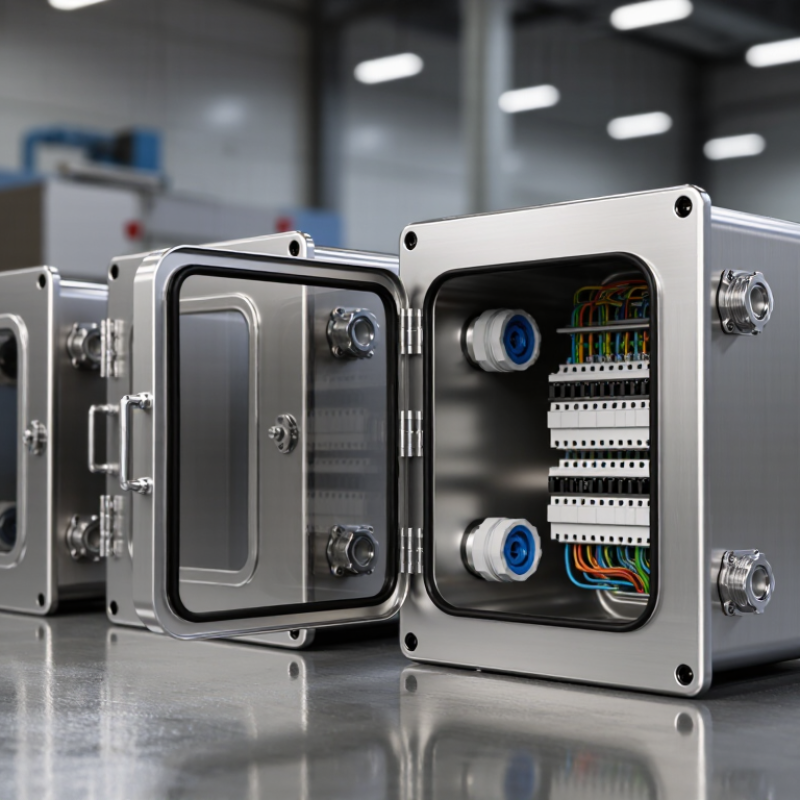
What Are Explosion-Proof Boxes and Where Are They Used?
Explosion-proof boxes are reinforced enclosures for electrical connections, controls, and instruments used near flammable gases, vapors, or combustible dust. They are designed to contain an internal spark or ignition event. Their joints also limit escaping flame and hot gases. They do not make every location safe automatically. Correct certification, temperature rating, enclosure protection, and installation remain essential.
These boxes are common in oil and gas processing areas, chemical plants, paint facilities, mines, grain handling sites, and wastewater operations. A suitable model should match the hazardous-area classification and the possible atmosphere. Cable glands, seals, grounding points, and fasteners matter greatly. A small installation mistake can reduce protection. Field experience shows that poor cable sealing causes many avoidable problems. Inspection should check corrosion, damaged threads, loose covers, and unauthorized modifications. In practice, selection is rarely perfect on the first attempt. Rechecking the site conditions is worthwhile.
Tips: Confirm the gas or dust group before ordering. Check the temperature class against nearby heat sources. Use compatible glands and certified accessories. Keep unused entries properly sealed. Train technicians to close covers evenly and avoid forcing damaged threads. Records of inspections also improve reliability, although they are often neglected.
How Are China’s Top Explosion-Proof Box Manufacturers Evaluated in 2026?
In 2026, China’s leading explosion-proof box manufacturers are judged by evidence, not polished claims. Evaluators examine design records, material certificates, and production consistency. The enclosure should resist impact, corrosion, heat, and dust in demanding industrial areas. Its joints must close evenly, without weak corners or uneven gaps. Small details matter.
Testing usually covers ingress protection, pressure resistance, temperature limits, grounding continuity, and cable-entry performance. Inspectors may review samples from several production batches, not one carefully prepared unit. They also check machining accuracy, gasket aging, fastener strength, and surface treatment. A reliable manufacturer explains test methods clearly and keeps traceable records. Certification under applicable standards supports credibility, but it should not replace practical inspection.
Experienced buyers often visit factories or request independent test reports. They compare laboratory results with field feedback from chemical plants, energy facilities, and dusty workshops. Response time also matters when a replacement seal or technical answer is needed. No factory is flawless. A strong supplier admits production limits and shows how problems are corrected. This honest evidence can be more valuable than broad marketing language. Evaluation should remain cautious, because environmental conditions differ, and a box proven in a dry workshop may perform differently near salt air, vibration, or frequent temperature changes.
China Top 10 Explosion Proof Box Manufacturers 2026 - How Are China’s Top Explosion-Proof Box Manufacturers Evaluated in 2026?
A standards-based evaluation framework for comparing explosion-proof box manufacturing capabilities without displaying company or brand information.
| Evaluation Rank | Evaluation Dimension | Weight | Verification Basis | 2026 Benchmark Requirement | Scoring Focus |
| 01 | Explosion Protection Design | 18% | IEC 60079 series and the corresponding Chinese GB/T 3836 series | Mandatory compliance | 0–18 points |
| 02 | Hazardous-Area Suitability | 12% | Declared gas, vapor, dust, zone, equipment group and temperature-class compatibility | Application-specific documentation required | 0–12 points |
| 03 | Ingress Protection | 10% | IEC 60529 or GB/T 4208 IP-rating test evidence | IP rating must match the operating environment | 0–10 points |
| 04 | Enclosure Material and Corrosion Resistance | 10% | Material certificates, coating specifications, salt-spray or corrosion-resistance test records | Verified material traceability | 0–10 points |
| 05 | Manufacturing Quality Control | 10% | Quality-management procedures, incoming inspection, process control and final inspection records | Documented and repeatable controls | 0–10 points |
| 06 | Certification and Technical Documentation | 10% | Valid certificates, technical drawings, installation instructions, marking data and test reports | Complete product documentation | 0–10 points |
| 07 | Electrical and Mechanical Safety | 8% | Earthing continuity, cable-entry compatibility, impact resistance, sealing and fastening design | Safety functions verified by testing | 0–8 points |
| 08 | Customization Capability | 8% | Ability to configure dimensions, terminals, cable glands, windows, controls and mounting options | Controlled engineering change process | 0–8 points |
| 09 | Delivery Reliability and Supply-Chain Control | 7% | Production capacity, component availability, lead-time records and export packaging controls | Documented delivery performance | 0–7 points |
| 10 | After-Sales and Compliance Support | 7% | Installation guidance, technical response process, warranty terms, spare-parts support and audit readiness | Defined support and corrective-action process | 0–7 points |
Total evaluation weight: 100%. The framework is based on internationally recognized explosion-protection, ingress-protection and quality-management requirements. Final supplier rankings should be confirmed through current certificates, product test reports, factory audits, sample inspection and project-specific hazardous-area requirements.
China’s Top 10 Explosion-Proof Box Manufacturers in 2026
China Top 10 Explosion Proof Box Manufacturers 2026
China’s Top 10 Explosion-Proof Box Manufacturers in 2026 should be assessed beyond production scale. Mordor Intelligence estimates the global explosion-proof equipment market at about USD 8.64 billion in 2024. It may reach USD 12.47 billion by 2029, showing steady industrial demand. China’s leading manufacturers typically serve petrochemical plants, grain facilities, mining sites, and battery production lines. Their strongest advantages include stainless-steel fabrication, reliable sealing, thermal management, and traceable quality control.
A practical evaluation should examine IEC 60079 compliance, enclosure IP ratings, temperature classification, cable-entry design, and third-party testing.
Factory audits also matter. Look for welding inspection records, pressure-test procedures, material certificates, and documented after-sales support.
Reports from MarketsandMarkets also identify hazardous-area safety equipment as a technology-driven market, where certification and customization influence purchasing decisions. A ranking is never absolute. Delivery performance and field reliability can change the result.
Tips: Request recent test certificates and inspect sample boxes before ordering. Check gasket compression, hinge strength, and terminal spacing. Ask how suppliers manage design changes. A polished catalog is not enough. Even experienced buyers can overlook installation conditions, especially moisture, dust, and temperature cycles.
What Products, Certifications, and Industries Do They Serve?
China Top 10 Explosion Proof Box Manufacturers 2026
China’s leading explosion-proof box manufacturers typically supply cast-aluminum, stainless-steel, and reinforced-polyester enclosures. Their portfolios may include junction boxes, control stations, switch boxes, cable glands, lighting housings, and instrument panels. MarketsandMarkets estimates that the global explosion-proof equipment market will grow steadily through 2028, supported by oil, gas, chemical, mining, and manufacturing investment. The exact market value differs between reports, so buyers should examine the research method.
Certification separates a reliable supplier from a polished catalogue. Export-oriented manufacturers commonly offer products tested under IECEx or ATEX requirements. North American projects may require UL 1203 or CSA C22.2 No. 30 compliance. Chinese projects often reference GB/T 3836 standards and applicable CCC requirements. Check the certificate number, enclosure marking, gas group, temperature class, ingress rating, and test laboratory. Small details matter.
These products serve refineries, battery plants, grain-processing sites, offshore platforms, wastewater facilities, and hazardous chemical rooms. The IEA’s World Energy Investment 2024 report shows continued global investment in energy infrastructure, creating demand for safer electrical installations. Yet product selection is not automatic. A stainless-steel box may resist corrosion, but it can increase cost and weight. An IP66 rating also does not replace correct explosion protection. No shortlist is perfect; engineers still need to verify dimensions, cable entries, ambient temperature, maintenance access, and local approval rules before purchase.
Reference context: Explosion-proof boxes are commonly supplied as junction boxes, control stations, terminal enclosures, instrument enclosures, and electrical distribution boxes. Typical certification frameworks include IECEx, ATEX, UL/CSA, and China’s GB/T and CCC requirements, depending on the target market.
Application sectors: oil and gas, petrochemical processing, chemical manufacturing, pharmaceuticals, mining, marine and offshore engineering, grain handling, wastewater treatment, and battery or energy-storage facilities.
The chart presents the internationally used IEC 60079 temperature-class limits for equipment surface temperature. These limits are technical reference values and do not represent manufacturer market share or company-specific certification claims.



