NOTICE
We use cookies to improve the user experience and analyze its performance.
Choosing the right water tank level sensor is crucial for efficiency and reliability. A recent report highlights that improper monitoring can waste up to 20% of stored water. This staggering figure emphasizes the significance of selecting an accurate sensor for your specific needs. In various industries, from agriculture to manufacturing, the demand for effective water management is growing.
Water tank level sensors play a vital role in preventing overflows and ensuring optimal water usage. With advancements in technology, sensors now offer greater precision and connectivity options. However, choosing the right one can be challenging. Simply selecting the most expensive or popular option does not guarantee it will suit your application perfectly.
Different environments and requirements lead to distinct sensor needs. For instance, a tank in a chemical plant may require a more robust sensor than one used in a residential setting. Reflecting on your unique conditions and demands is essential. Given the wide variety of available technologies, making an informed choice is paramount. Balancing cost with functionality will lead to better water management solutions.
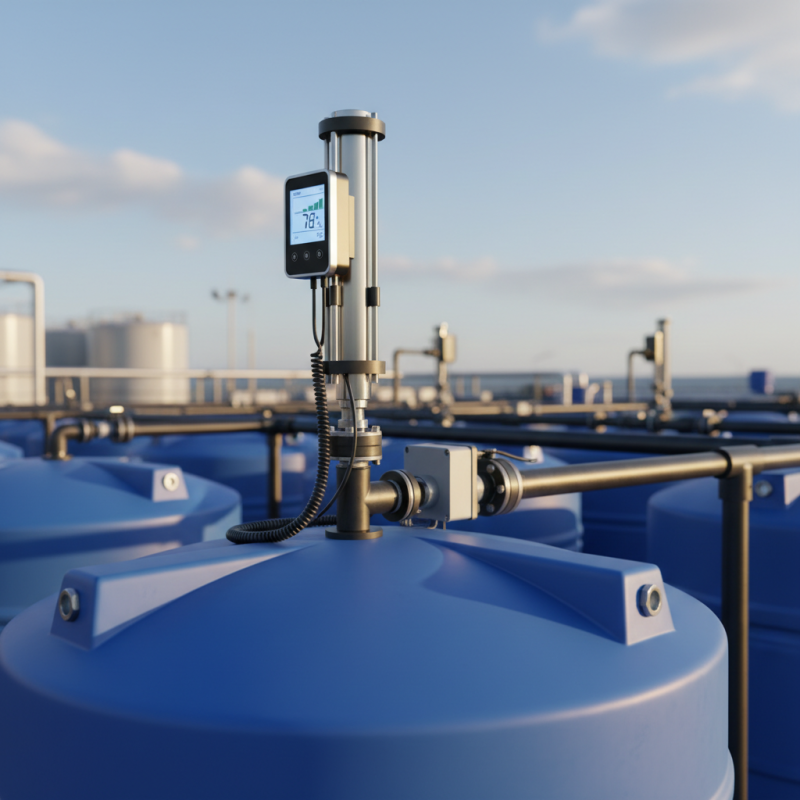
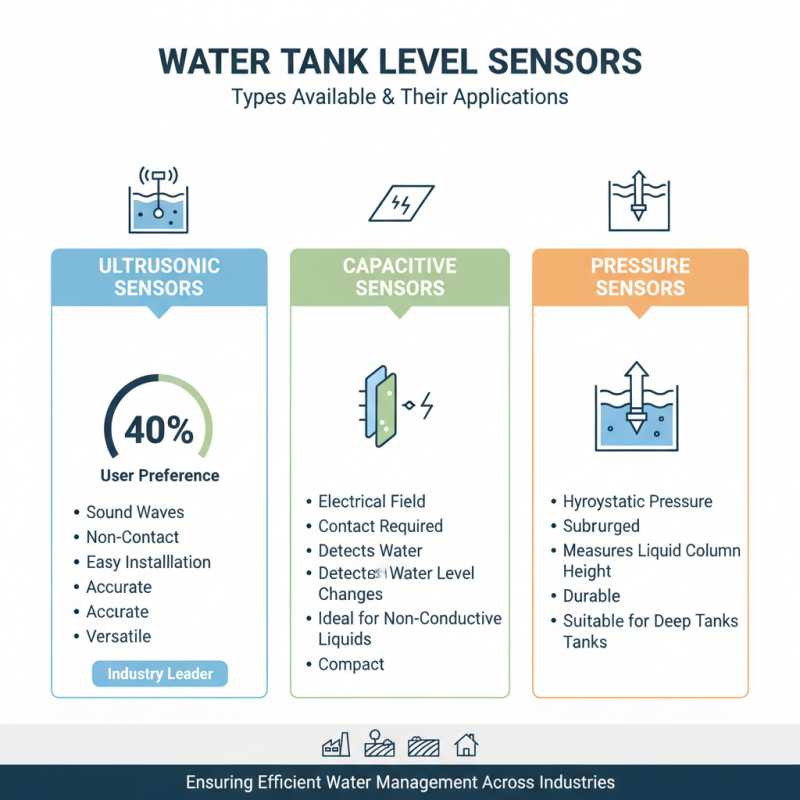
Water tank level sensors play a crucial role in various industries, ensuring efficient water management. There are several types available in the market today, each suited for different applications. The primary types include ultrasonic, capacitive, and pressure sensors. Ultrasonic sensors use sound waves to measure the distance to the water surface. They are easy to install and provide accurate readings in most conditions. According to recent industry reports, approximately 40% of users prefer ultrasonic sensors for their non-contact measurement capabilities.
Capacitive sensors, on the other hand, measure changes in capacitance as water levels rise and fall. They are best for clean water applications but may struggle with dirty or turbid water. Many experts suggest that understanding the specific environment is essential when selecting this type. Pressure sensors are also prevalent, relying on hydrostatic pressure to determine water levels. These are highly reliable but require careful calibration.
Selecting the right sensor depends on multiple factors, including water quality, tank size, and installation environment. A recent market analysis highlighted that around 30% of users reported issues due to improper sensor selection. Continuous monitoring and adjusting sensor choices can greatly improve efficiency. Understanding these nuances can help in choosing the right sensor for your needs.
When choosing a water tank level sensor, it is essential to consider several factors. One key aspect is the type of sensor technology. Ultrasound, floats, and pressure sensors are common options. A report by MarketsandMarkets indicates that the ultrasonic sensor segment is projected to grow significantly. Each type has its strengths and weaknesses, depending on the application. Float sensors are reliable but can get stuck in debris.
Next, consider the environmental conditions where the sensor will operate. High temperatures or corrosive substances can affect sensor accuracy. According to a study by ResearchAndMarkets, sensors designed for harsh environments capture up to 95% of the maximum accuracy. This is crucial for industries like agriculture or water treatment. A sensor that can withstand varying conditions will offer greater reliability.
Lastly, the ease of installation and maintenance are important. Some sensors can be intricate, requiring professional help. A survey highlighted that 30% of users experienced issues with complex setups. Look for sensors that come with clear installation guidelines to reduce headaches. This reflects the need for practicality in operational environments. Choosing the right sensor involves balancing these factors to ensure optimal performance.
When choosing a water tank level sensor, technology plays a crucial role. Each sensor type has its advantages and downsides to consider. For instance, ultrasonic sensors offer non-contact measurement, preventing issues with corrosion. However, they are sensitive to temperature changes and require calibration, which may complicate maintenance.
Capacitive sensors, on the other hand, are reliable and can detect levels in various liquids. They are generally more durable, but they can be costly. Additionally, these sensors may be affected by changes in dielectric properties. A thoughtful selection process is essential, especially for unique water types.
**Tip:** Consider the specific environment and liquid type for optimal performance. Regular testing of sensor accuracy can prevent errors. Explore multiple technologies before making a choice to ensure the best fit. Stay updated on advancements in sensor technology for a competitive edge in efficiency.
When installing a water tank level sensor, proper placement is crucial for accurate readings. Choose a location that minimizes interference from walls or other structures. Sensors should ideally be placed in the middle of the tank. This positioning helps capture true water levels without distortion. Remember that maintaining the sensor's cleanliness is equally important. Regularly check for debris that may obstruct readings.
Once your sensor is installed, consider conducting routine maintenance checks. Inspect the wiring connections and ensure they are secure. Corrosion can lead to unreliable data or complete sensor failure. Cleaning the sensor body is also essential. Use a gentle cloth with water to remove any buildup.
Calibration should not be overlooked. It ensures that your sensor provides accurate measurements over time. Perform calibration seasonally or after any significant maintenance. Keeping a detailed log of maintenance activities and sensor performance can be beneficial. It allows you to track any patterns or recurring issues. Addressing these promptly can enhance the reliability of your water tank level sensor.
When choosing a water tank level sensor, ensuring accurate readings is crucial. According to industry reports, sensors with high precision can reduce operational errors by up to 30%. Factors like the type of sensor, installation, and environmental conditions play a significant role in performance. Ultrasonic and capacitive sensors are popular for their reliability. However, calibration is vital to maintain accuracy.
Tip: Regularly calibrate sensors to account for environmental changes. Humidity and temperature fluctuations can affect sensor performance. Performing checks every six months helps ensure reliability.
In addition, consider using sensors with built-in diagnostic features. These can alert users to potential issues before they become critical. Research indicates that 15% of sensor failures result from lack of maintenance. Therefore, combining advanced technology with disciplined monitoring leads to better outcomes.
Tip: Keep a maintenance log for all sensors. Documenting any changes or issues can help you spot patterns over time. This practice supports overall system reliability and efficiency.