Why Choose a Data Logger for Your Environmental Monitoring Needs?
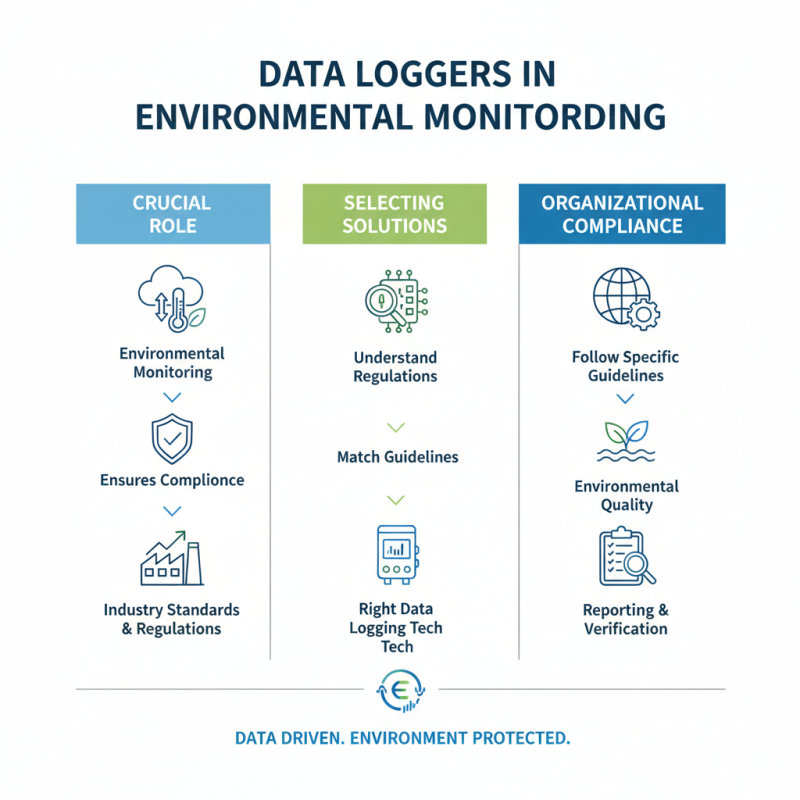
Environmental monitoring is crucial for understanding our impact on nature. Data loggers play a vital role in this process. These devices gather critical information on temperature, humidity, and other environmental factors. They empower researchers and organizations to make informed decisions. Dr. Emily Carter, a noted expert in environmental science, emphasizes, “A data logger provides invaluable insights that can enhance conservation efforts.”
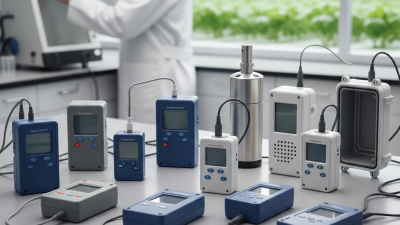
Choosing the right data logger can be daunting. Each project has unique requirements, and not every logger fits all situations. The world of data loggers is diverse, with many options available. While some may find it easy to select a device, others might struggle. This variability raises questions about how effectively we use these tools.
Integrating data loggers into monitoring programs requires careful planning. It is easy to overlook critical features that drive results. Environmental conditions change, and so should our methods. Continuous evaluation and adaptation are necessary. Ultimately, data loggers are powerful allies. They help us capture the evolving story of our planet.
The Role of Data Loggers in Environmental Monitoring: An Overview
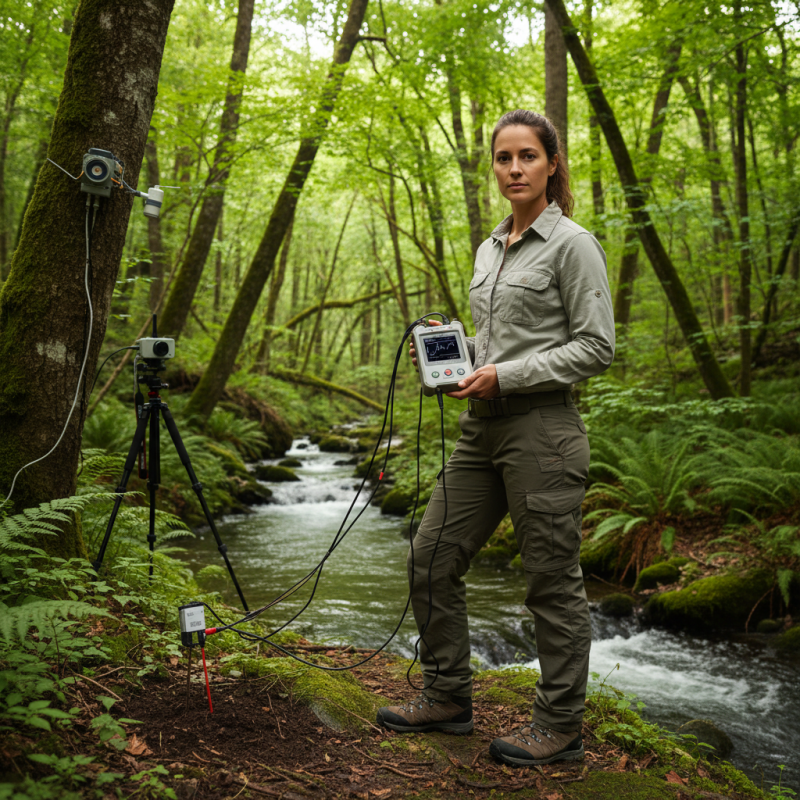
Data loggers play a crucial role in environmental monitoring. They are devices that automatically collect data over time. This data can include temperature, humidity, light levels, and more. Such continuous monitoring helps in understanding environmental changes. For instance, a data logger placed in a forest can track temperature fluctuations throughout the day. This information aids researchers in studying habitat conditions for wildlife.
Using data loggers can also be a challenge. Sometimes, the devices may not capture unexpected events. For example, a sudden storm can cause data loss. Maintenance can be an issue too. Regular checks are necessary to ensure accuracy. Without proper care, data can become unreliable. It's essential to reflect on these challenges when using data loggers for monitoring.
Data loggers provide insight into our environment. They help in making informed decisions. However, it's important to recognize their limitations. Striking a balance between technology and human observation is crucial. This partnership can enhance our understanding of the natural world.
Why Choose a Data Logger for Your Environmental Monitoring Needs?
| Parameter |
Measurement Unit |
Typical Range |
Data Logger Type |
Application Area |
| Temperature |
°C |
-40 to +125 |
Thermocouple |
Climate Studies |
| Humidity |
% RH |
0 to 100 |
Capacitive |
Environmental Monitoring |
| Light Intensity |
Lux |
0 to 100000 |
Photometer |
Agricultural Studies |
| Soil Moisture |
% Vol. |
0 to 100 |
Tensiometer |
Agriculture |
| Air Quality (CO2) |
ppm |
0 to 5000 |
Infrared Sensor |
Indoor Air Quality |
Key Features of Data Loggers for Environmental Applications
Data loggers are essential tools for environmental monitoring. They are designed to track various parameters like temperature, humidity, and light levels. These devices collect data over time, making it easier to analyze trends and patterns. Reliable data can inform necessary adjustments to improve environmental conditions.
Key features of data loggers include high accuracy and durability. Many devices come with multiple channels for diverse measurements. Some can endure harsh environments, such as extreme temperatures or humidity. Additionally, battery life is crucial. A lengthy battery life reduces maintenance and ensures uninterrupted data collection.
User-friendly interfaces also attract many users. Simple software allows easy data access and visualization. However, some may find the initial setup complex and overwhelming. A lack of real-time alerts can be a drawback, too. Over time, users may find they need better troubleshooting support. This highlights the ongoing need for product improvement and user education.
Case Studies: Successful Environmental Monitoring Using Data Loggers
Data loggers have proven essential in environmental monitoring across various case studies. For instance, a recent project monitored air quality in urban areas. Researchers found that pollution levels exceeded safety thresholds by 20% during peak hours. This alarming data drove local governments to take action. Real-time insights allowed for timely interventions, showcasing the power of data loggers.
Another case study involved river temperature monitoring. The data revealed fluctuations that affected aquatic life. Fish populations declined sharply when temperatures rose above specific benchmarks. The findings prompted conservation efforts aimed at preserving these ecosystems. Such data-driven decisions are critical in environmental sectors.
Despite their advantages, the use of data loggers is not without flaws. Inaccurate readings can occur due to sensor malfunctions. Calibration issues and environmental interference also pose challenges. Reflecting on these shortcomings is vital to improve future monitoring practices. Integrating advanced technology could minimize inaccuracies and enhance reliability.
Future Trends in Data Logging Technology for Environmental Data Collection
The future of data logging technology for environmental data collection is rapidly evolving. New sensors are emerging, enhancing data accuracy and reliability. According to a recent report from the Global Data Logging Market, it is projected to grow at a CAGR of 5.5% from 2023 to 2030. This growth reflects increased demand for precise environmental monitoring tools across various sectors, from agriculture to climate research.
Wireless data loggers are gaining traction. They enable real-time data transmission, reducing the need for manual data collection. This trend supports faster decision-making and timely responses to environmental changes, such as fluctuating temperatures or pollution levels. However, implementing this technology requires careful planning. Security concerns related to data transmission must be addressed to avoid potential breaches.
Data quality remains a crucial issue. While advanced algorithms can process large datasets, inaccuracies in sensor readings can lead to misleading information. A report by the Environmental Protection Agency indicates that ensuring data integrity is vital for credible environmental assessments. Therefore, as the industry progresses, continual evaluation of technology will be necessary. Addressing these challenges is essential for a sustainable future in environmental monitoring.