How to Choose a Pneumatic Punching Machine in 2026?
Choosing a Pneumatic Punching Machine in 2026 requires more than comparing pressure ratings and catalogue prices. The decision affects output, air consumption, worker safety, tooling life, and maintenance costs. Grand View Research valued the global pneumatic equipment market at approximately USD 27.5 billion in 2023. It also forecasts steady growth through 2030. MarketsandMarkets similarly identifies automation, manufacturing efficiency, and compact equipment as major market drivers. However, these reports cover broad pneumatic systems, not punching machines alone. That limitation matters.
“Pneumatics is not dead; it is changing.” — Dr. Peter Post, former Head of Research at Festo.
A suitable Pneumatic Punching Machine should match the material, hole diameter, stroke length, cycle speed, and required force. Imagine a production bench cutting stainless-steel blanks every six seconds. A small pressure drop can create incomplete holes, noisy impacts, or premature die wear. Moisture in the air line can make the problem worse. It is easy to focus on maximum punching force. That may be the wrong starting point.
This guide examines practical selection factors, including compressor capacity, air preparation, control systems, guarding, noise, and total ownership cost. ISO 12100 risk assessment and ISO 13849 safety principles should inform machine evaluation. Supplier claims still need verification. A brochure cannot reveal vibration after eight hours, nor maintenance difficulty beneath a crowded frame. My own caution is simple: market growth does not guarantee suitability. The best machine is the one that performs reliably under your real material, tooling, and production conditions.
What Is a Pneumatic Punching Machine?
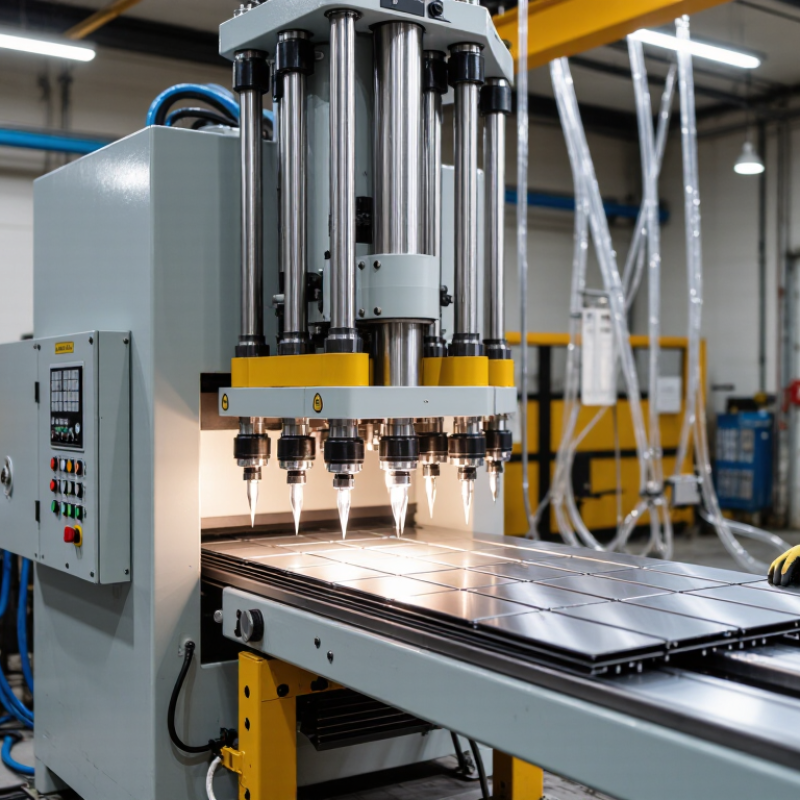
A pneumatic punching machine uses compressed air to drive a punch through sheet material. It creates holes, slots, or formed openings with controlled downward force. Unlike manual punching, it delivers repeatable movement and reduces operator effort. The machine usually includes an air cylinder, punch, die, frame, and foot or hand control. When the control activates, air pressure moves the cylinder, and the punch enters the die. The cut piece then falls away or remains attached, depending on the tool design.
In practical workshops, these machines process materials such as mild steel, aluminum, plastic, and gasket sheet. Their performance depends on material thickness, punch diameter, air pressure, and cycle speed. A larger punch does not always mean better production. It may require more force and cause rougher edges. I have found that alignment often matters more than advertised speed. Even a powerful machine can produce uneven holes when the die is worn or poorly centered. That detail is easy to overlook.
Tips: Check the rated punching force against your thickest material. Inspect the punch and die for chips before each shift. Use a stable work table and keep fingers away from the tooling area. Ask whether replacement tooling is easy to obtain. Also, measure actual noise and air consumption in your workshop. Catalog figures can be optimistic. Safety guards and emergency controls deserve a hands-on inspection, not just a checklist review.
How Does a Pneumatic Punching Machine Work?
How to Choose a Pneumatic Punching Machine in 2026?
A pneumatic punching machine converts compressed-air energy into controlled linear motion. Air enters a cylinder through a directional valve. The pressure pushes a piston, which drives the punch toward the die. When the valve changes position, exhaust air leaves the cylinder, and the ram returns. The punch cuts or forms material only when alignment, clearance, and timing work together. Force depends on air pressure and piston area, not pressure alone. The U.S. Department of Energy reports that compressed-air leaks can waste 20% to 30% of compressor output. That loss can make a correctly sized machine perform poorly. In practice, the clean diagram is not the whole story.
Look for adjustable stroke length, guarded tooling, a stable frame, and a pressure regulator. ISO 8573-1 classifies compressed-air cleanliness, moisture, and oil content, so air preparation should match the cylinder and production environment. A 2024 industrial energy-efficiency review from the International Energy Agency continues to identify compressed-air optimization as a practical efficiency measure. Check the machine at its real operating speed. A machine that punches well during a short demonstration may hesitate during continuous cycles. That assumption deserves checking. Record pressure drop, cycle time, noise, and rejected parts before purchase.
Tips: Use a filter-regulator-lubricator only when the cylinder manufacturer permits lubrication. Inspect hoses and fittings weekly. Keep punch-to-die clearance within the material supplier’s recommendation. Ask for measured force data, not only a catalog rating. Small leaks sound harmless. They are not.
How to Choose a Pneumatic Punching Machine in 2026?
A pneumatic punching machine converts compressed-air pressure into linear force. The chart shows the theoretical push force produced by different cylinder bores at a gauge pressure of 0.6 MPa.
How it works: Compressed air enters the cylinder and pushes the piston. The piston transfers force through the punch to the material. The theoretical force is calculated as F = P × A, where pressure is multiplied by the piston area. Actual punching capacity is lower because of friction, air losses, tooling design, material strength, and machine safety limits.
How Can You Evaluate Cost, Installation, and Supplier Support?
How to Choose a Pneumatic Punching Machine in 2026?
Cost evaluation should begin with the complete operating picture, not the machine price alone. Request an itemized quotation covering tooling, delivery, installation, training, spare parts, and routine maintenance. A machine using excessive compressed air may raise monthly costs. Check its air consumption, cycle speed, working pressure, and expected service intervals. In practical factory evaluations, a cheaper machine can become expensive when replacement punches arrive slowly. The first quotation is rarely complete. Ask what is excluded.
Installation also deserves careful measurement. Confirm the machine’s footprint, floor loading, electrical supply, air quality, and ventilation requirements. Leave space for tool changes and safe operator movement. Ask whether the supplier provides commissioning and production testing. A short demonstration may hide vibration, noise, or inconsistent punching during longer runs. Record sample results using your actual material and thickness. Small details matter.
Tips: Compare at least three written quotations. Request a layout drawing before purchase. Check response times for technical questions. Ask how quickly common spare parts can ship. Supplier support should include clear manuals, operator training, troubleshooting guidance, and documented warranty terms. Verify who handles remote diagnosis and on-site service. A confident supplier will explain limitations, not promise perfection. No checklist is flawless, so let maintenance staff review the final decision.



