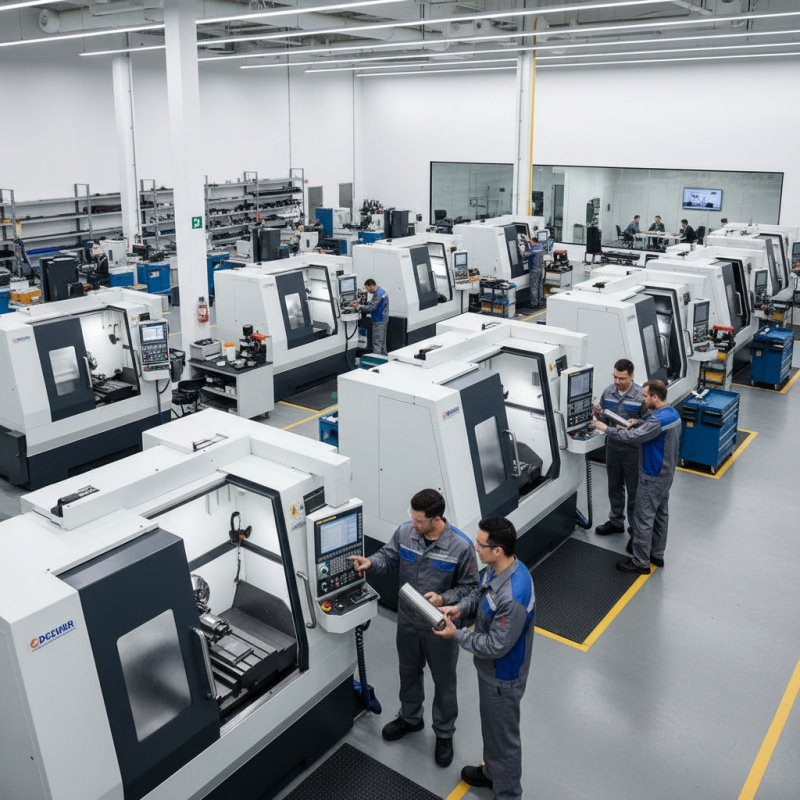
How to Choose the Best CNC Turning Center for Your Needs?
Choosing the right CNC Turning Center is crucial for any machining operation. It affects production efficiency, cost, and part quality. Many factors come into play, making the selection process challenging. Different models offer distinct features that cater to various needs.
When evaluating a CNC Turning Center, consider key aspects like size, precision, and speed. These details can greatly impact your final output. You may find it tempting to choose the most advanced model available, but could it be excessive for your needs? Exploring your actual requirements is essential.
It's easy to overlook maintenance and training. These factors significantly affect the long-term success of your investment. A flashy CNC Turning Center may look appealing, but can your team operate it effectively? Reflecting on these aspects will help ensure you choose wisely.
Understanding CNC Turning Centers: Types and Features
CNC turning centers are vital for precision machining. They come in various types, each serving different purposes. Some are designed for high production, while others excel in versatility and small batch work.
Understanding these types is essential. Horizontal turning centers are popular for their ease of loading and space efficiency. Vertical turning centers, on the other hand, are excellent for larger parts. Each design has unique features that affect your workflow. For instance, a machine with a Y-axis enables more complex shapes.
Consider the features that matter most. Look for adjustable spindle speeds for flexibility. Tool changers save time by reducing manual intervention. Also, software integration can enhance precision and efficiency. However, it’s crucial to evaluate whether these features meet your production needs. Sometimes, unnecessary functionalities can complicate operations. Reflect on your requirements carefully to avoid overspending.
How to Choose the Best CNC Turning Center for Your Needs?
| Feature | Description | Types | Typical Use Cases |
| Axis Configuration | The number of axes the machine can move simultaneously | 2-axis, 3-axis, multi-axis | Complex part designs, high precision machining |
| Spindle Speed | The maximum speed at which the spindle can rotate | High speed, variable speed | Material-specific machining, faster production |
| Tool Capacity | The number of tools that can be stored in the machine | Small capacity, large capacity | Versatile machining processes with minimal changeovers |
| Control System | The type of software used to operate the CNC machine | G-code, proprietary systems | Automation of complex machining tasks, ease of programming |
| Cost | The total expense including purchase price and maintenance | Budget options, high-end machines | For startups vs. established manufacturers |
Evaluating Your Machining Needs and Requirements
When selecting a CNC turning center, evaluating your machining needs is essential. Start by analyzing the materials you work with. Different machines handle various types of materials, such as metals, plastics, or composites. Understanding the compatibility can save time and resources.
Tip: Create a list of materials you frequently work with. This helps in choosing the right machine with appropriate tooling options. Each part requires specific tooling to achieve the desired finish.
Next, consider the complexity of your projects. Are you working with simple shapes or intricate designs? Some CNC turning centers excel at producing straightforward components. Others are designed for precision, enabling complex work. Accurately defining project complexity helps prevent over-investing in features you may not use.
Tip: Review past projects to gauge your typical workload. It’s easy to overlook current needs while dreaming of future capabilities. Focusing on what's essential adds clarity to your selection process.
Lastly, think about production volume. Will you be running high-volume orders or low to medium quantities? Machines vary in efficiency and speed based on utilization scale. This affects not just initial costs but ongoing maintenance and time management as well.
Tip: Balance immediate needs with long-term goals. Don't just focus on the present; consider how your needs may evolve.
Key Specifications to Consider in CNC Turning Centers
When choosing a CNC turning center, there are key specifications to keep in mind. Pay close attention to spindle speed and torque. Higher speeds can lead to better surface finishes. However, excessive speeds may create instability. Torque is equally essential, as it affects the ability to work with tough materials.
Consider the size of the workpiece. Make sure the turning center can handle your requirements. If your projects vary in size, you might need a flexible solution. Look for features like adjustable spindle speeds and tool capacity. These can enhance versatility but may also complicate the learning curve.
Tips: Always assess the available floor space. A compact turning center may fit better in smaller workshops. But, check if it compromises functionality. Also, evaluate automation features. They can boost productivity but may require additional training. Remember, not every feature suits every application. A simple design may sometimes be more effective for your needs.
Key Specifications of CNC Turning Centers
Assessing Budget and Cost Efficiency for CNC Turning Purchases
When considering a CNC turning center, budget and cost efficiency are key factors. Establishing a budget involves evaluating your production needs. Understand the complexity of your parts. Simpler tasks might not require high-end machines, while intricate designs do. This distinction impacts your cost. Unnecessarily investing in features you won't utilize can lead to regret.
Evaluate both initial costs and long-term expenses. Maintenance and operation costs can add up. Cheaper machines may save money upfront, but higher repair costs can offset those savings. Focus on energy efficiency as well. Spending slightly more on a machine that consumes less power could reduce your bills over time.
It's vital to analyze your workflow. Consider how the CNC turning center will fit into your existing operations. If a machine slows down other processes, those inefficiencies can lead to lost revenue. Engage with other users to gain insights. Learn from their experiences. Reflect on the potential pitfalls. Making an informed decision helps avoid future disappointments that stem from hasty choices.
Researching Manufacturers: Reputation and Customer Support
When selecting a CNC turning center, understanding the manufacturer’s reputation is crucial. A reliable manufacturer typically shows consistency in quality. According to a recent industry report, over 70% of users prioritize manufacturer reputation in their decision-making process. This statistic speaks volumes about the trust factor in CNC machining. It is not just about technology; it's about building relationships.
Customer support is equally significant. A robust support system can make or break your experience. Reports indicate that companies with strong customer service see a 60% increase in customer satisfaction. Many users have noted the importance of timely responses and effective troubleshooting. If support is lacking, even the best machine can turn into a frustrating challenge. It's essential to gauge the responsiveness of a company before committing.
Moreover, look for user reviews and testimonials. They provide real-world insights. Some users have faced delays in service, leading to costly downtime. This aspect often gets overlooked. Failing to consider past customer experiences might lead to poor choices. It’s vital to think critically about all these elements to ensure your CNC turning center aligns with your operational needs.