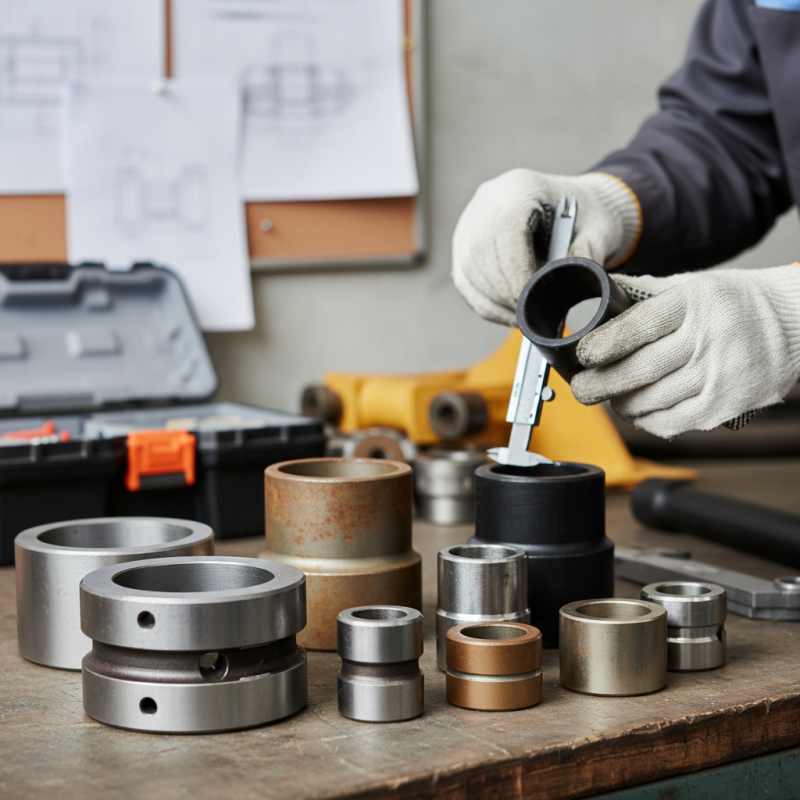
How to Choose the Right Bucket Bushing for Your Needs?
Choosing the right Bucket Bushing can seem daunting. With many options available, making a decision requires careful consideration. A bucket bushing plays a crucial role in the performance of your machinery. It ensures smooth operation and minimizes wear and tear.
Understanding your specific needs is essential. Are you working with heavy-duty equipment or lighter machinery? The weight capacity of the bucket bushing should align with your requirements. Size and material also matter. Opt for durable materials suited for harsh conditions.
Consider consulting with experts who specialize in bucket bushings. Their insights can guide you towards the best choice. Remember, the right selection can enhance your machine's efficiency. Taking time to reflect on your choices can prevent costly mistakes in the long run.
Understanding the Purpose of Bucket Bushings in Machinery
Bucket bushings serve a critical function in machinery that uses buckets. These components reduce friction between moving parts, enabling smoother operation and minimizing wear. They act as protective barriers, absorbing shock during operation. Without them, machinery can experience increased breakdowns and shorter lifespans.
Selecting the right bucket bushing involves understanding their role in your system. Different applications may require specific materials or designs. For instance, a bushing made from durable plastic may work well in one machine, while another may need a metal option for heavy-duty tasks. Evaluating the load conditions is crucial. Sometimes, users overlook the importance of precise measurements. An ill-fitting bushing can lead to inefficient performance and costly repairs. It's essential to balance cost with reliability when choosing a bushing. Your choice can directly influence the longevity and efficiency of the machine.
Types of Bucket Bushings and Their Applications
When selecting the right bucket bushing, it is crucial to understand the various types available. Bucket bushings are essential components that provide support and reduce wear. Each type serves distinct purposes based on specific applications. For instance, plain bushings are simple yet effective for general operations. They are often used in lighter-duty applications where factors like weight and size are manageable.
In contrast, those needing enhanced durability may consider flanged bushings. These are designed to better withstand extreme conditions, making them suitable for heavy machinery. They help distribute loads more evenly, which can prolong the equipment's life. However, choosing the right type necessitates a careful evaluation of your operational environment.
It is important to reflect on your specific needs, as not all applications require high-performance bushings. For smaller projects, simpler solutions may suffice. Consider the materials involved, load-bearing requirements, and lubrication methods. These factors heavily influence performance. Always consult with experts to avoid missteps that could lead to costly replacements. In essence, making informed decisions based on your application will help you find the most suitable bucket bushing.
Factors to Consider When Choosing a Bucket Bushing
Choosing the right bucket bushing is crucial for equipment performance. Various factors come into play to ensure optimal functionality. Consider the material of the bushing. Common materials include rubber and polyurethane. Each has its own benefits depending on usage conditions. Rubber is often more flexible, while polyurethane offers increased durability.
Size and fit are also vital. An ill-fitting bushing may cause unnecessary wear and tear. It's essential to measure your bucket accurately before selecting a bushing. Do not overlook the environment where the bushing will operate. Temperature and pressure can impact material performance significantly.
Tips: Always consult with a technical expert. They can provide insights based on their experience. Assess the load capacity carefully to prevent failure. Lastly, consider installation ease. A complex installation can lead to costly downtime. Ensure that the bushing design aligns with your maintenance capabilities and operational requirements.
Choosing the Right Bucket Bushing Factors
This chart illustrates the relative importance of various factors to consider when choosing a bucket bushing for your needs. Factors including Material, Temperature Resistance, Size Compatibility, Weight Capacity, and Cost are rated on a scale from 1 to 10, indicating their significance in your selection process.
Common Materials Used for Bucket Bushings and Their Benefits
When selecting a bucket bushing, the material plays a crucial role. Commonly used materials include bronze, nylon, and polyurethane. Each has unique benefits that cater to specific applications. For instance, bronze offers excellent wear resistance and can endure high loads. A study by the Machinery Lubrication magazine highlighted that bronze bushings outperformed others in high-stress environments by 30%.
Nylon bushings are lightweight and corrosion-resistant, making them ideal for applications exposed to moisture. Their low coefficient of friction ensures smooth operation. A 2022 report from the American Society of Mechanical Engineers suggested that nylon bushings can increase machinery efficiency by up to 20%. Conversely, polyurethane bushings excel in shock absorption and resilience. They are particularly useful in demanding environments, providing a reliable cushion against impacts.
Choosing the right material is not always straightforward. Consider factors like temperature, load, and exposure to chemicals. Each bushing type presents its own set of trade-offs. For instance, while bronze provides durability, it can be susceptible to corrosion. In contrast, nylon and polyurethane may not withstand extreme loads as effectively. Understanding these nuances is vital for optimal performance and longevity.
Maintenance Tips for Prolonging the Life of Bucket Bushings
Maintaining bucket bushings is crucial for ensuring their longevity and efficiency. Research indicates that inadequate maintenance can reduce the lifespan of bushings by up to 40%. Regular inspection helps identify wear and tear early. Check for signs of corrosion or excessive play. These issues can lead to larger problems if ignored.
Lubrication is essential. It reduces friction and wear, extending the life of the bushing. Studies show that proper lubrication can improve performance by up to 30%. Use the right type of lubricant based on the application and environmental conditions. Over-lubrication can also be an issue, possibly causing contamination.
Storing machinery in a controlled environment can enhance the durability of bucket bushings. High humidity and temperature fluctuations can accelerate wear. Consider placing covers on unused machinery to protect them. While these practices may seem minor, they can significantly impact the overall performance and lifespan of bucket bushings. Regular maintenance checks should be part of standard operating procedures to ensure everything runs smoothly.