How to Choose the Right Chemical Blending Tank
Choosing the right Chemical Blending Tank begins with the product, not the equipment catalog. A low-viscosity cleaner may need gentle circulation, while a thick coating can demand stronger torque and a carefully selected impeller. Ingredients may settle, foam, heat up, or react with tank surfaces. These details shape the entire design.
Edward L. Paul, a recognized authority on industrial mixing, stated, “The mixing process must be designed around the product, not around the mixer.” That principle remains practical. Tank volume, working capacity, material compatibility, agitator speed, baffle arrangement, and temperature control must work together. Stainless steel may suit many formulations, but it is not automatically the best choice. Chlorides, solvents, abrasive powders, and acidic compounds can challenge even durable materials.
Small details matter.
In real projects, operators should review batch size, viscosity changes, cleaning routines, and production frequency before selecting a tank. A vessel that performs well at 20°C may behave differently at 60°C. A mixer that blends water quickly may struggle with syrup, pigment, or suspended solids. Testing is worth the delay. I would rather question an attractive specification than accept an expensive mismatch.
Reliable selection also requires documented calculations, supplier experience, and clear maintenance access. Ask for mixing data, not vague promises. Check weld quality, seals, drain design, motor protection, and control accuracy. No Chemical Blending Tank is perfect for every process. The best choice is the one that delivers consistent blending, safe operation, reasonable energy use, and room for future production changes.
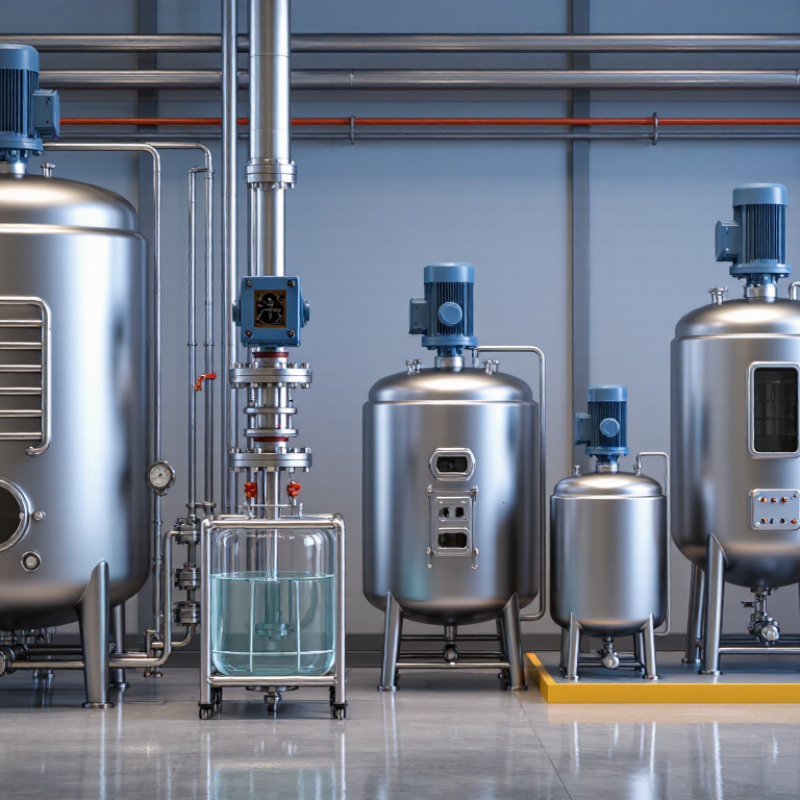
Define the Chemical Blending Tank’s Purpose and Operating Requirements
How to Choose the Right Chemical Blending Tank
A chemical blending tank should begin with a defined job, not a convenient vessel already on site. Will it dissolve powders, dilute concentrates, hold a finished batch, or support continuous dosing? Each purpose changes mixing intensity, residence time, heating needs, and cleaning requirements. Record target volume, batch frequency, viscosity, density, temperature, and allowable shear. A tank that performs well for water may struggle with a thick suspension. Small differences matter.
Operating requirements should describe the full process, including startup, normal production, shutdown, and unexpected pauses. Confirm chemical compatibility for the tank, agitator, seals, baffles, valves, and instruments. Review ventilation, level control, sampling access, and drainability with the people who operate the equipment. Practical experience often reveals problems that specifications miss, such as powder bridging above the liquid or sediment collecting beneath the impeller. Do not size the motor from viscosity alone. Solids loading and mixing patterns can change power demand. This is an easy assumption to challenge.
Tips: Ask operators to sketch the actual batch sequence. Test a representative mixture when settling or foaming is possible. Leave measurable headspace for expansion and splashing. Define cleaning acceptance criteria before fabrication. Keep written records of chemical data and temperature limits. It may feel excessive, but undocumented changes create uncertainty during commissioning. Recheck the design after the first trial; the process may expose needs nobody predicted.
How to Choose the Right Chemical Blending Tank
Define the tank’s purpose and operating requirements before selecting its material, geometry, agitator and controls.
The ranges shown are representative preliminary engineering values. Final tank selection should be verified against the chemical SDS, viscosity profile, solids content, temperature, residence time and required mixing result.
Match Tank Materials to Chemical Compatibility and Corrosion Risks
How to Choose the Right Chemical Blending Tank
Match Tank Materials to Chemical Compatibility and Corrosion Risks
When choosing a chemical blending tank, material selection should begin with actual chemical service, not purchase price. Concentration, temperature, pressure, mixing speed, and exposure time can change compatibility. A mild solution may become aggressive when heated. Small details matter. Review the safety data sheet, process records, and tank manufacturer’s compatibility data together. Do not rely on a generic resistance chart alone.
Polyethylene often suits many acids, alkalis, and aqueous mixtures at moderate temperatures. Stainless steel can provide strength and a smooth, cleanable surface, but chlorides may cause pitting or stress corrosion. Glass-lined equipment can resist demanding chemicals, yet impact damage may expose the underlying structure. Seals, gaskets, valves, and mixer shafts require separate checks. The tank shell may survive while a gasket slowly swells and leaks.
In field assessments, I inspect discolored welds, softened plastic, deposits around fittings, and changes in wall thickness. These clues reveal problems before a failure becomes obvious. Request a small-scale compatibility test when the formulation is new or variable. Measure the liquid temperature during mixing, not only before production. I have seen calculations miss short heating spikes. That assumption needs questioning. Also consider cleaning chemicals, rinsing water, and storage time. A material that handles the main batch may fail during cleaning or repeated cycling. Document the selected material, expected service limits, inspection intervals, and replacement parts before commissioning.
How to Choose the Right Chemical Blending Tank - Match Tank Materials to Chemical Compatibility and Corrosion Risks
General material-selection guide for atmospheric or low-pressure chemical blending tanks | Chemical Service | Typical Reference Condition | HDPE | PP | PVC / CPVC | PVDF | 316L Stainless Steel | Glass-Lined Steel | Primary Corrosion or Compatibility Concern |
| Hydrochloric Acid | 10–37% by weight; ambient temperature | Recommended | Recommended | Recommended | Recommended | Avoid | Recommended | Chloride ions can cause rapid pitting and stress-corrosion cracking in stainless steel, especially at elevated temperature. |
| Sulfuric Acid | 10–50% by weight; ambient temperature | Conditional | Conditional | Conditional | Recommended | Conditional | Recommended | Compatibility changes substantially with concentration and temperature. Dilution is strongly exothermic and can create localized thermal damage. |
| Nitric Acid | 10–65% by weight; ambient temperature | Conditional | Conditional | Conditional | Recommended | Conditional | Conditional | Strong oxidizing conditions may attack polymer additives, elastomers, and some metals; concentration and heat are critical. |
| Sodium Hydroxide | 10–50% by weight; ambient to 60°C | Recommended | Recommended | Recommended | Recommended | Conditional | Conditional | Hot concentrated caustic can cause stress cracking in some plastics and caustic cracking or embrittlement in certain metals. |
| Sodium Hypochlorite | 5–15% available chlorine; ambient temperature | Recommended | Recommended | Recommended | Recommended | Avoid | Avoid | Oxidizing hypochlorite solutions and chlorides can cause severe pitting, crevice corrosion, and stress-corrosion cracking in many metals. |
| Ferric Chloride | 10–45% by weight; ambient temperature | Recommended | Recommended | Recommended | Recommended | Avoid | Conditional | Highly corrosive chloride solutions can rapidly pit stainless steel and attack unprotected carbon-steel surfaces. |
| Hydrogen Peroxide | 3–35% by weight; ambient temperature | Conditional | Conditional | Conditional | Recommended | Recommended | Conditional | Contamination by metals, rust, organic residues, or incompatible seals can accelerate decomposition and oxygen release. |
| Acetic Acid | 5–100% by weight; ambient temperature | Recommended | Recommended | Conditional | Recommended | Conditional | Recommended | Hot concentrated acid can attack stainless steel and some plastics; organic-acid service may require careful seal selection. |
| Phosphoric Acid | 10–85% by weight; ambient temperature | Recommended | Recommended | Recommended | Recommended | Conditional | Recommended | Impurities such as fluorides and chlorides can be more corrosive than pure phosphoric acid and may change the material selection. |
| Isopropyl Alcohol | 10–100% by volume; ambient temperature | Conditional | Recommended | Conditional | Recommended | Recommended | Conditional | Solvent exposure can affect polymer swelling, permeation, fittings, gaskets, and bonded joints; flammability controls are also required. |
| Acetone | Up to 100% by volume; ambient temperature | Avoid | Avoid | Avoid | Conditional | Recommended | Conditional | Many common thermoplastics and solvent-cemented joints can soften, swell, craze, or lose mechanical strength. |
| Sodium Chloride Brine | 5–26% by weight; ambient temperature | Recommended | Recommended | Recommended | Recommended | Conditional | Conditional | Chloride-rich brine can initiate pitting and crevice corrosion in stainless steel, particularly when warm or aerated. |
Recommended Generally suitable within the stated reference conditions Conditional Verify concentration, temperature, exposure time, fittings, and seals Avoid Generally unsuitable without specialized design validation
Selection note: These ratings are general engineering guidance rather than a guarantee of service life. Final selection should consider chemical purity, concentration, operating and cleaning temperatures, agitation speed, vacuum or pressure, permeation, UV exposure, joint design, gasket material, and the possibility of exothermic reactions. Always confirm the complete chemical compatibility of the tank, mixer shaft, impeller, baffles, valves, piping, coatings, and seals before fabrication.
Evaluate Temperature, Pressure, Safety, and Regulatory Requirements
How to Choose the Right Chemical Blending Tank
Evaluate Temperature, Pressure, Safety, and Regulatory Requirements
Selecting a blending tank starts with the process, not the vessel’s appearance. Record the lowest and highest operating temperatures, including cleaning cycles. A small temperature error can damage seals, distort plastic, or change product viscosity. Check chemical compatibility against the tank, agitator, gaskets, probes, and transfer lines. Material selection needs documented evidence, not a quick guess.
Pressure details deserve equal attention. Define normal pressure, maximum pressure, vacuum conditions, and possible blockage scenarios. The tank should include suitable pressure relief and vacuum protection. Do not rely on a pressure rating taken from a catalogue. Confirm the rating at the actual temperature and with the selected fittings. Temperature probes should sit where real hot or cold spots may occur.
Safety design must support daily work. Add guarding, emergency stops, spill containment, grounding where applicable, and safe access for sampling. Operators need clear procedures for charging, mixing, cleaning, and maintenance. Regulatory requirements vary by location and chemical type, so review current local rules, safety data sheets, inspection duties, and waste controls. Keep design calculations and inspection records. A practical weakness is often overlooked: operators may bypass awkward safeguards. Test the workflow with them before approval. No design is perfect. Recheck assumptions after startup.



