How to Choose the Right Tank Level Sensor for Your Needs?
Choosing the right tank level sensor can be a challenging task. With various types and technologies available, it is crucial to understand your specific needs. A tank level sensor monitors fluid levels in tanks, avoiding overflow or running dry.
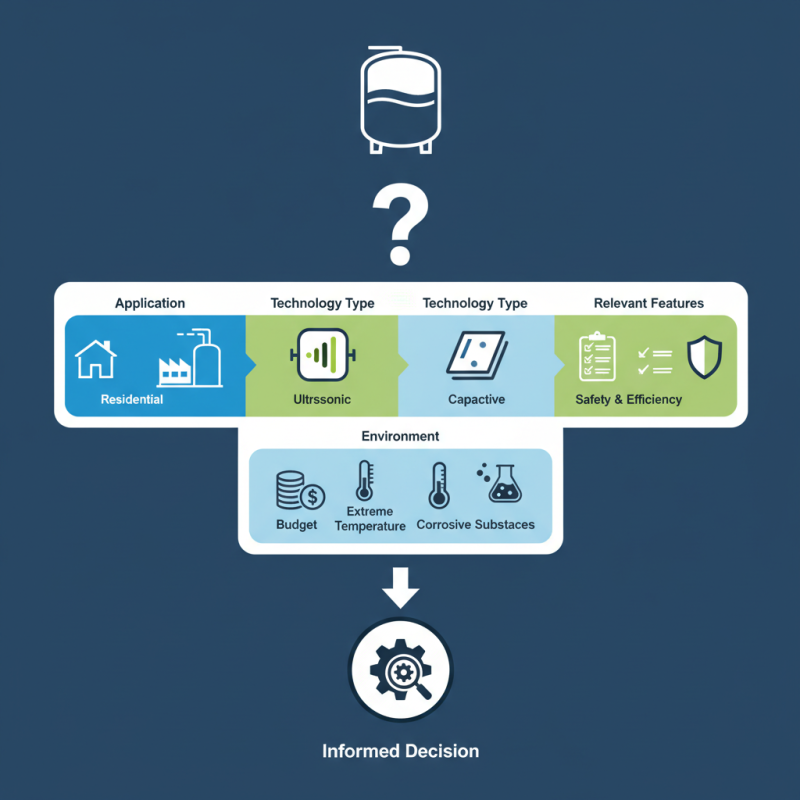
Consider the application. Is it for a small residential tank or a large industrial one? Sensors come in different forms, like ultrasonic or capacitive. Each type has its pros and cons. Your budget is also a factor; high-end sensors may offer advanced features but at a cost.
Think about the environment too. Extreme temperatures or corrosive substances can affect performance. Some tank level sensors may fail under these conditions. Reflect on what features are most relevant for your situation.
Overall, a careful evaluation is vital. Make informed decisions to ensure you choose the right tank level sensor. This choice can impact both efficiency and safety in operations.
Understanding Different Types of Tank Level Sensors Available
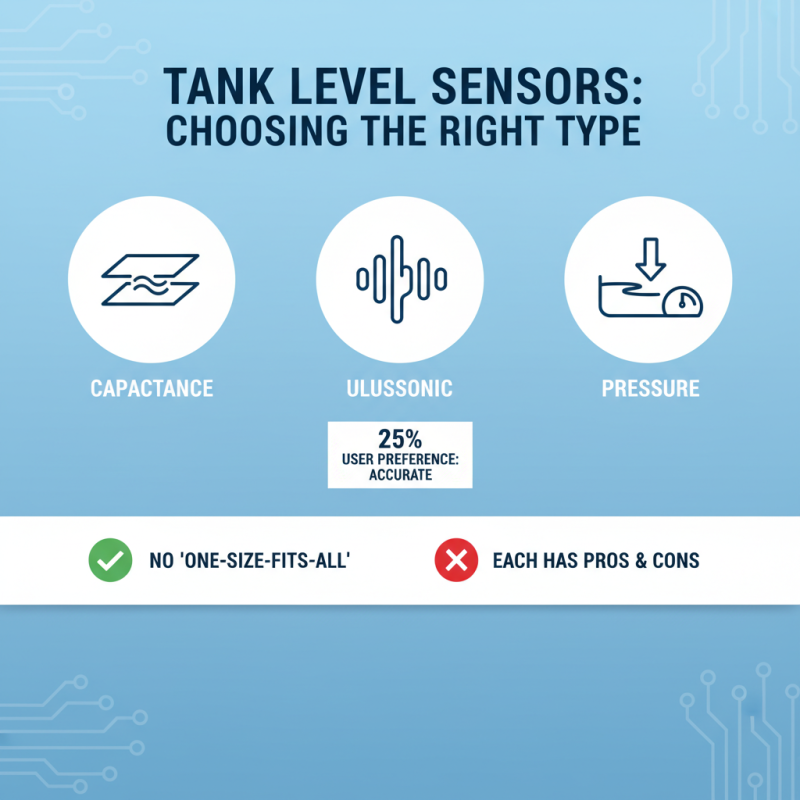
When selecting a tank level sensor, understanding the various types available is crucial. There’s not a one-size-fits-all solution. Each type offers distinct advantages and drawbacks. Common sensor types include capacitance, ultrasonic, and pressure sensors. A recent industry report noted that 25% of users prefer ultrasonic sensors for their accuracy. However, this choice may not be ideal for every application.
Capacitance sensors work well for conductive liquids. They are simple to install but may struggle with changing conditions. Meanwhile, pressure sensors are versatile and reliable, making them popular in many industries. Yet, installation can be tricky. Depending on your tank's material and contents, performance can vary significantly.
**Tip:** Assess the liquid's characteristics. Viscosity and temperature can influence sensor effectiveness.
Consider the installation space. In confined areas, compact models are preferable. Some users reported difficulties with oversized sensors.
**Tip:** Research maintenance requirements before choosing. Some sensors need regular calibration. This can be a hassle and increase long-term costs. Make informed decisions to avoid future complications.
Factors to Consider When Selecting a Tank Level Sensor
Selecting the right tank level sensor requires careful consideration of several factors.
Calibration is crucial.
Many sensors must be calibrated to ensure accurate readings. Faulty calibration can lead to measurement errors.
A report by the International Society of Automation indicates that improper calibration accounts for up to 30% of sensor inaccuracies.
Another important factor is the environment. The sensor material might affect its performance.
For example, some environments are corrosive. Choosing a sensor with appropriate materials can extend its lifespan.
More than 40% of industrial sensor failures are due to environmental factors.
Cost considerations also play a role.
An affordable sensor may not offer all necessary features. This could lead to unexpected maintenance costs down the line.
Sometimes, cheaper options lack precision or durability. Users might find themselves spending more in the long run.
It’s essential to weigh initial costs against potential future expenses.
Evaluating Accuracy and Reliability in Level Measurement
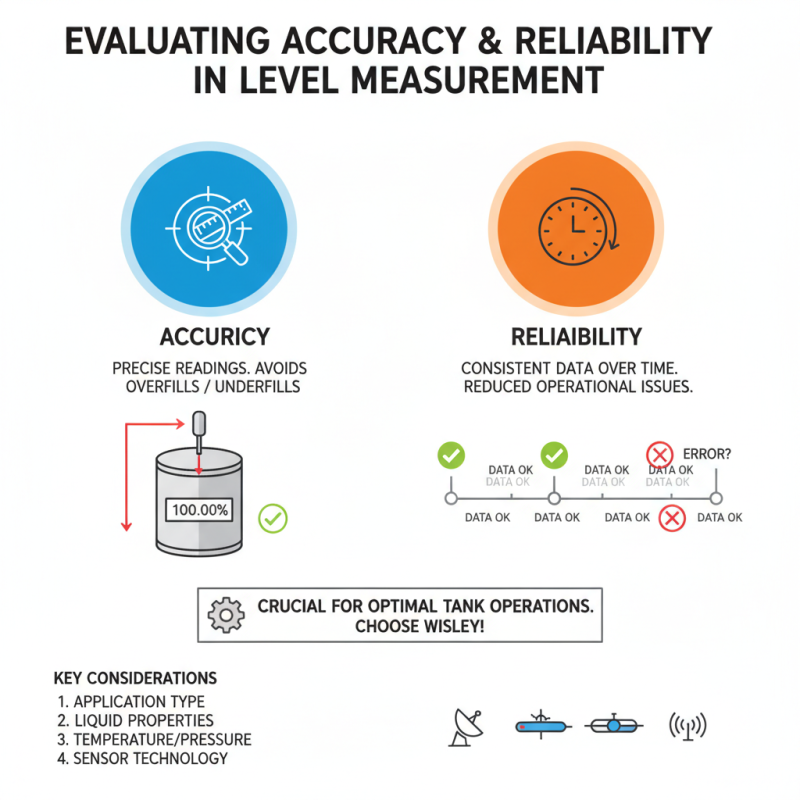
When choosing a tank level sensor, accuracy and reliability are vital. Accuracy ensures that you receive precise readings of the liquid level, while reliability guarantees that the data is consistent over time. Poor accuracy can lead to overfills or underfills, causing operational issues. It’s crucial to understand the specific requirements of your application. Different sensors work better in varying conditions.
Consider the environment where the sensor will be used. Factors like temperature, pressure, and the type of liquid can impact performance. A sensor that works well in water might struggle in oil. Testing under real conditions can reveal flaws. Seek sensors that have been validated through rigorous testing.
Another point to think about is maintenance. A highly accurate sensor might require frequent calibration. This can be a drawback if resources are limited. Evaluate the long-term costs associated with upkeep and replacement. Balancing accuracy, reliability, and maintenance needs can be tricky. Make informed decisions based on your unique circumstances, keeping in mind that no sensor is perfect.
Compatibility with Your Tank Materials and Environment
When selecting a tank level sensor, compatibility with tank materials is crucial. Many sensors work well with standard materials like steel or polyethylene. However, certain chemicals can corrode or damage sensors. For example, a study indicates that almost 30% of sensor failures stem from incompatibility with tank materials. Always check the specifications.
The environment where the sensor operates also matters. High temperatures or humidity can affect performance. Sensors exposed to harsh conditions may have a shorter lifespan. Research from industry reports shows that temperature fluctuations can reduce the lifespan of certain sensors by up to 50%. It's essential to choose sensors designed for the specific environmental challenges you face.
Consider whether the sensor needs to withstand aggressive substances or extreme conditions. Sometimes, cheaper options may not be suitable for critical applications. Ultimately, a mismatched sensor can lead to operational failures. It's important to weigh the risks and benefits carefully.
Cost-Effectiveness and Maintenance Requirements of Sensors
When selecting a tank level sensor, cost-effectiveness and maintenance requirements are crucial. A recent industry report highlighted that sensor maintenance can account for up to 15% of operational costs. Regular checks are essential. Some sensors require frequent calibration, while others, like ultrasonic models, often need less upkeep.
Costs can vary widely among sensor types. Capacitive sensors are typically cheaper but can struggle with high-viscosity liquids. Radar sensors, while pricier, offer more accuracy and less maintenance. This investment may result in lower long-term costs.
**Tips:** Choose sensors suited for your environment. Look for models with low calibration needs. Understand your liquid types to avoid costly mistakes. Ultimately, evaluating both upfront costs and long-term maintenance will lead to better decisions. Opt for the best balance that fits your budget and operational needs.
How to Choose the Right Tank Level Sensor for Your Needs? - Cost-Effectiveness and Maintenance Requirements of Sensors
| Sensor Type |
Cost ($) |
Maintenance Frequency (Months) |
Accuracy (%) |
Environment Suitability |
| Ultrasonic Sensor |
150 |
12 |
±1 |
Indoor/Outdoor |
| Capacitive Sensor |
120 |
6 |
±0.5 |
Indoor |
| Radar Sensor |
300 |
24 |
±0.2 |
Hazardous Environments |
| Magnetostrictive Sensor |
200 |
12 |
±0.1 |
Indoor/Outdoor |
| Float Switch |
50 |
12 |
Varies |
Indoor/Outdoor |