
NOTICE
We use cookies to improve the user experience and analyze its performance.
Choosing the right Pcb Board manufacturer can shape an entire product’s performance, cost, and market reliability. A weak supplier may deliver attractive samples, yet fail during volume production. Small issues matter. A lifted pad, uneven solder mask, or delayed inspection can disrupt a launch.
John W. Mitchell, former IPC President and CEO, stated, “The electronics industry is the foundation of our modern world, and IPC is the foundation of the electronics industry.” His observation highlights an important reality: PCB manufacturing is not merely a purchasing task. It connects design engineering, material control, assembly quality, testing, and supply-chain planning. A dependable manufacturer should explain these areas clearly, not hide behind impressive certificates.
This guide examines how to compare manufacturers through practical evidence. Look for relevant experience with your board type, such as multilayer, high-frequency, rigid-flex, or heavy-copper designs. Review production equipment, trace-width capability, controlled-impedance processes, and inspection methods. Ask whether the factory uses automated optical inspection, flying-probe testing, X-ray inspection, and documented corrective actions.
Communication deserves equal attention. Can the supplier answer technical questions within one working day? Will an engineer review your Gerber files before production? Can the factory provide material certificates and a realistic delivery schedule? These details reveal more than a polished website.
Price still matters. It should not lead alone.
A manufacturer may offer the lowest quotation but create higher costs through scrap, rework, or missed deadlines. I have seen sourcing decisions focus too heavily on unit price. That approach feels efficient, but it often ignores risk. The best choice balances engineering competence, verified quality, transparent communication, production capacity, and long-term accountability.
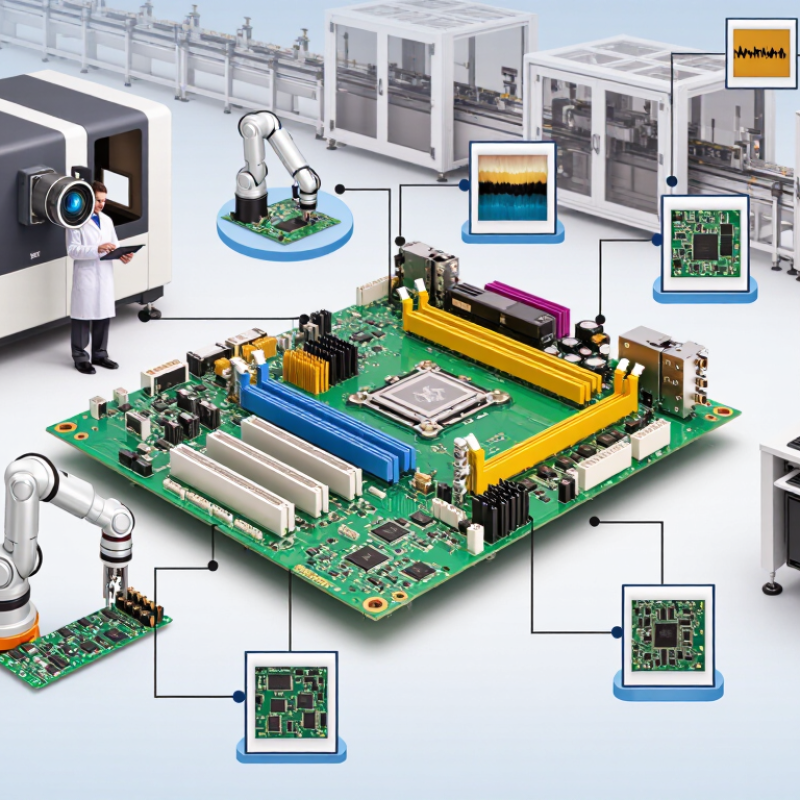
How to Choose the Right PCB Board Manufacturer?
Understanding your PCB manufacturing requirements should come before comparing prices. Define the board’s layer count, dimensions, material, copper weight, impedance, and expected annual volume. A prototype may need fast assembly, while a medical or industrial board may require tighter trace control and complete process records. IPC’s 2024 electronics manufacturing outlook identifies labor shortages, material costs, and supply-chain instability as continuing industry pressures. These factors can affect lead times more than a quotation suggests.
Ask whether the manufacturer can support your actual design, not only produce a standard two-layer board. Request sample inspection reports, capability limits, testing methods, and defect data. Check experience with high-density interconnects, rigid-flex construction, or controlled impedance when relevant. Mordor Intelligence projects the global PCB market to grow at approximately 5% annually through 2029. That growth increases capacity, but it does not guarantee consistent quality. I have seen attractive prototypes fail during volume production because the supplier never reviewed drill tolerances carefully enough.
Tips: Send complete fabrication files, assembly drawings, and a controlled bill of materials. Ask for a design-for-manufacturing review before ordering. Compare first-article results, not promises. Confirm whether testing covers flying probes, automated optical inspection, or electrical tests. A low unit price can become expensive after rework, delays, and rejected boards. Allow time for questions. A rushed specification often hides the real risk.
| Requirement Area | Key Specification | Typical Requirement or Data Range | Why It Matters | Information to Confirm with the Manufacturer | Ready to Evaluate? |
|---|---|---|---|---|---|
| Board Type | PCB construction | Single-sided, double-sided, multilayer, rigid-flex, or flexible PCB | The construction determines the required equipment, process control, inspection method, and production cost. | Ask whether the manufacturer regularly produces the required board type and can provide process capability data. | Yes / No |
| Layer Count | Number of copper layers | Common commercial designs range from 2 to 12 layers; higher counts require more specialized lamination control. | Layer count affects impedance, routing density, dielectric structure, fabrication complexity, and lead time. | Confirm the supported layer range, maximum finished thickness, and layer-registration tolerance. | Yes / No |
| Board Material | Base laminate selection | Standard epoxy-glass laminate for general electronics; high-temperature, low-loss, or halogen-free materials for specialized applications. | Material properties influence thermal performance, signal loss, reliability, and regulatory compliance. | Verify the material grade, glass-transition temperature, dielectric properties, and material traceability. | Yes / No |
| Board Thickness | Finished thickness | Typical rigid PCB thickness is approximately 0.8–3.2 mm, depending on the design and application. | Thickness affects mechanical fit, connector compatibility, controlled impedance, and structural strength. | Confirm standard thickness options, tolerance range, and the measurement method used for finished boards. | Yes / No |
| Copper Weight | Copper thickness | Common outer-layer copper is 1 oz; heavier copper may be required for high-current paths or thermal management. | Copper thickness influences current-carrying capacity, resistance, thermal rise, etching difficulty, and minimum trace geometry. | Ask for finished copper thickness on both outer and inner layers and confirm the applicable tolerance. | Yes / No |
| Design Capability | Minimum trace and space | Many standard designs use approximately 0.15–0.20 mm trace width and spacing; finer features require advanced processing. | Trace and space capability determines whether dense layouts can be manufactured consistently without shorts or opens. | Compare the design rules with the manufacturer's guaranteed minimum trace, spacing, annular ring, and registration values. | Yes / No |
| Vias | Via structure | Through-hole vias are common; blind, buried, microvia, via-in-pad, and filled vias require additional process capability. | Via technology affects routing density, assembly yield, thermal transfer, and overall manufacturing cost. | Confirm available via types, minimum finished hole size, aspect-ratio limits, filling or capping capability, and inspection controls. | Yes / No |
| Surface Finish | Pad finish | Common options include hot air solder leveling, electroless nickel immersion gold, immersion silver, and organic solderability preservative. | Surface finish affects solderability, contact performance, shelf life, wire bonding suitability, and cost. | Check finish thickness, flatness, storage life, compatibility with lead-free assembly, and any restrictions for fine-pitch parts. | Yes / No |
| Solder Mask | Solder-mask process | Green is widely used; other colors may be available but can affect imaging, inspection contrast, and processing time. | Solder mask prevents bridging, protects copper, and supports reliable assembly and insulation performance. | Confirm mask color options, minimum dam width, registration tolerance, clearance rules, and mask thickness control. | Yes / No |
| Electrical Performance | Controlled impedance | Typical single-ended impedance targets include 50 Ω; differential targets commonly range from 90 Ω to 100 Ω, as defined by the design. | Impedance control is essential for high-speed interfaces, radio-frequency circuits, and signal-integrity performance. | Request stack-up calculations, dielectric thickness control, test coupons, and impedance test reports. | Yes / No |
| Thermal Performance | Operating temperature | Specify the expected continuous and peak temperature range; standard materials often use a glass-transition temperature around 130–170°C. | Thermal requirements affect laminate selection, delamination resistance, soldering reliability, and service life. | Confirm material thermal ratings, thermal-stress testing, decomposition temperature, and suitability for lead-free reflow. | Yes / No |
| Quality Standards | Manufacturing and acceptance criteria | Use documented quality systems and applicable PCB acceptance standards, such as IPC criteria appropriate to the product class. | Clear standards create consistent acceptance criteria for defects, workmanship, reliability, and process documentation. | Ask for quality certifications, product-class capability, inspection procedures, corrective-action records, and certificates of conformance. | Yes / No |
| Inspection | Testing and verification | Common controls include automated optical inspection, electrical testing, dimensional inspection, and cross-section analysis. | Multiple inspection stages reduce the risk of opens, shorts, registration errors, plating defects, and dimensional nonconformity. | Confirm whether flying-probe or fixture-based electrical testing is available and which inspection reports are supplied. | Yes / No |
| Production Volume | Prototype and mass-production support | Prototype quantities may range from a few boards to several hundred; production quantities depend on monthly demand and panelization. | A suitable manufacturer should maintain stable quality when moving from prototype validation to repeat production. | Discuss prototype setup charges, minimum order quantity, panel utilization, capacity reservation, and repeat-order controls. | Yes / No |
| Lead Time | Production schedule | Standard prototypes may take several working days; complex multilayer, rigid-flex, or high-reliability boards generally require more time. | Lead time affects product launches, assembly scheduling, inventory planning, and the ability to respond to design changes. | Request a stage-by-stage schedule covering engineering review, fabrication, testing, packing, and shipment. | Yes / No |
| Cost Structure | Total landed cost | Evaluate tooling, engineering, fabrication, testing, packaging, shipping, taxes, and potential rework—not only the unit price. | A low quoted price may not represent the lowest total cost if quality risks, delays, or hidden charges are included. | Request an itemized quotation with validity period, included tests, tooling ownership, payment terms, and change-order charges. | Yes / No |
| Supply Continuity | Material and capacity security | Assess material availability, approved alternatives, production capacity, and the ability to support repeat orders over the product life cycle. | Stable supply reduces redesign risk, unexpected substitutions, and interruptions to assembly operations. | Confirm approved material sources, change-notification procedures, safety-stock options, and business-continuity planning. | Yes / No |
| Communication | Engineering and customer support | Technical communication should cover design-for-manufacturing review, clarification response time, revision control, and issue escalation. | Fast and accurate communication helps resolve manufacturability problems before they become costly production defects. | Identify the technical contact, document-control method, review workflow, escalation path, and response-time expectations. | Yes / No |


