
Blog

What Is OEM for Kitchen Faucet Accessories?

Kitchen Faucet Accessories Oem describes the process of developing and producing faucet-related components for a customer’s brand. These may include spray heads, handles, hoses, aerators, and mounting hardware. The work can involve choosing materials, refining dimensions, matching finishes, and checking how parts fit together. Details matter. A brushed finish should look consistent under kitchen lighting, while a hose needs to move smoothly without pulling awkwardly beneath the sink.

Don Norman, author of The Design of Everyday Things, wrote, “Design is really an act of communication, which means having a deep understanding of the person with whom the designer is communicating.” That principle applies to OEM development: a supplier must understand how customers install, use, clean, and maintain each accessory. Fit is everything. Clear drawings, sample reviews, and practical testing can help catch problems before production, though no sample can answer every question. Small parts count.

This outline explores what OEM means, which accessories can be customized, and how buyers assess materials, design, production checks, and supplier communication. It also considers common trade-offs, such as balancing finish choices with budget and lead time. Not always obvious. A product may look excellent on a workbench yet feel awkward in daily use. That gap deserves honest attention. Kitchen Faucet Accessories Oem is not only about putting a logo on a component; it is a collaborative process that should turn a clear product brief into dependable, usable parts.
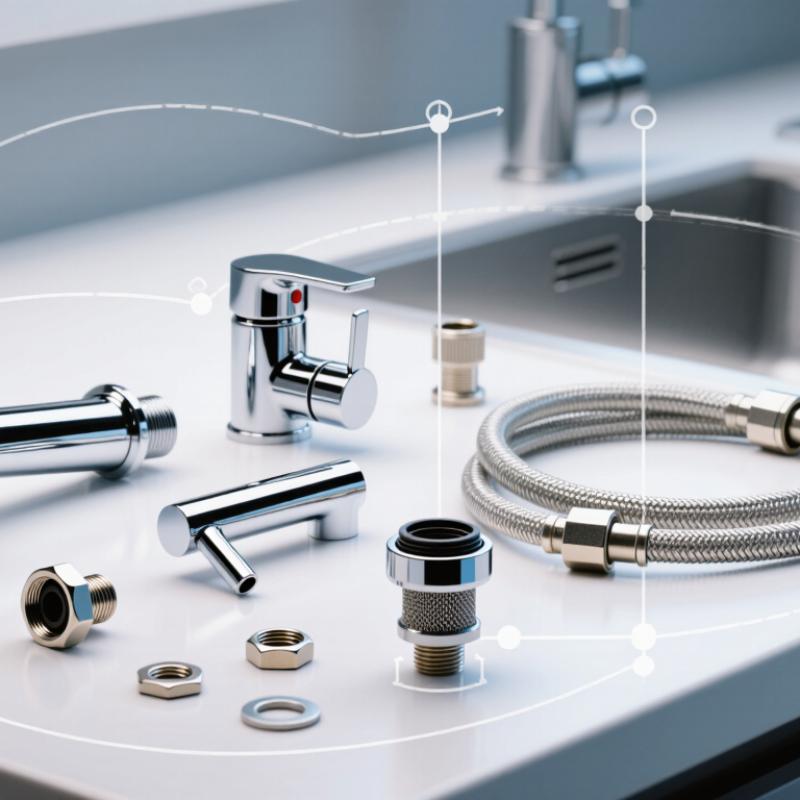
What Is OEM for Kitchen Faucet Accessories?

What OEM Means for Kitchen Faucet Accessories

OEM means “original equipment manufacturer.” For kitchen faucet accessories, it usually describes a supplier making parts to a buyer’s drawings, specifications, or approved sample. The parts may include spray heads, pull-out hoses, aerators, mounting nuts, and soap dispensers. The buyer may specify dimensions, materials, finishes, packaging, and labeling. Exact responsibilities depend on the contract.

Details matter. A hose that looks correct may kink when routed beneath a deep sink. A mounting nut may be difficult to tighten in a cramped cabinet. OEM development therefore involves checking fit, water flow, finish consistency, and repeated use—not just approving a polished sample. A sample is not the whole story. Written tolerances and inspection criteria help both sides identify defects before shipment.

The 2024 U.S. Houzz & Home Study reported median kitchen-remodel spending of $55,000 in 2023, a 22% increase from the prior year. That figure reflects spending across renovation projects, not demand for any specific accessory. Still, it shows why buyers may scrutinize small components within a costly remodel. For an OEM order, confirm who approves design changes, testing, and replacement parts. One detail is easy to miss: a finish name alone may not ensure a visual match across different materials.

What Is OEM for Kitchen Faucet Accessories? - What OEM Means for Kitchen Faucet Accessories

Dimension What It Means in OEM Kitchen Faucet Accessory Examples Practical Considerations
Definition OEM means a manufacturer produces goods to another business’s specifications, which may include its design, requirements, or private-label packaging. Sprayers, hoses, aerators, handles, mounting hardware, and replacement cartridges. The exact division of design, tooling, production, and branding responsibilities should be agreed in writing.
Product design The buyer can provide an existing design or a specification for the manufacturer to produce; some projects also involve design adjustments. A pull-down sprayer shape, hose length, connection type, or handle profile. Confirm drawings, dimensions, interfaces, materials, and revision control before production.
Materials and finishes Material and surface-finish requirements can be specified for the intended application and appearance. Metal or polymer components, stainless-steel braided hoses, and plated or coated surfaces. Specify the material grade where relevant, finish appearance, corrosion expectations, and inspection criteria.
Compatibility Accessories must match the faucet design and the intended installation connections. Threaded or quick-connect fittings, hose interfaces, cartridge dimensions, and mounting hardware. Check dimensions and connection standards for the target market; do not assume parts are interchangeable.
Customization Customization may cover appearance, dimensions, materials, packaging, and product identification. Color options, hose length, spray-pattern configuration, labels, and instruction inserts. Changes can affect tooling, testing, cost, lead time, and minimum order quantities.
Quality control The parties define checks to verify that products meet agreed specifications and perform as intended. Visual inspection, dimensional checks, connection checks, and water-leak testing where applicable. Agree on sampling, acceptance criteria, test methods, and how defects or corrective actions are handled.
Packaging and labeling Products can be packed and labeled according to the buyer’s distribution and retail requirements. Protective bags, product boxes, installation instructions, and spare-part labels. Confirm artwork, language, barcode requirements, packing quantities, and protection for transport.
Documentation and compliance Technical records and market-specific documentation may be needed, depending on the product and where it will be sold. Drawings, material information, test records, care instructions, and applicable declarations. Confirm applicable local requirements with qualified professionals; requirements vary by product and market.
Commercial terms The OEM arrangement sets out pricing, order quantities, lead times, tooling, payment, and ownership of designs or molds. A custom sprayer mold, dedicated packaging, or a production run of replacement hoses. Document tooling costs, ownership, confidentiality, change approvals, and delivery terms before placing an order.
In short: OEM for kitchen faucet accessories means producing components or accessory sets to agreed requirements, often with buyer-defined specifications and packaging. The scope depends on the contract and should be confirmed before manufacturing.

How the OEM Production Process Works

OEM production starts with a clear product brief. The buyer defines dimensions, materials, finish, flow requirements, connections, and packaging. For kitchen faucet accessories, small details matter: a slightly mismatched thread can cause leaks, while uneven plating shows under bright showroom lights. The factory then checks drawings for manufacturability and flags costly or difficult features. This review can expose problems early. It can also miss some.

After design approval, the manufacturer makes samples and, when needed, production tooling. Samples are checked for fit, finish, and function; parts such as cartridges, aerators, and mounting nuts may need separate tests. A pilot run helps reveal assembly delays and inconsistent dimensions before full production. The buyer should agree on inspection criteria, defect limits, and packaging checks in writing. Clear records matter.

ISO’s 2022 Survey counted 1,265,216 valid ISO 9001 certificates worldwide, reflecting the broad use of quality-management systems.

That figure is not faucet-specific and does not guarantee a flawless product. During mass production, inspections should still verify actual parts against approved samples. A good-looking sample can mislead. Independent testing may be worthwhile when material or performance claims need stronger verification.

Which Kitchen Faucet Accessories Are Commonly OEM-Made

Kitchen faucet accessories commonly made through OEM production include pull-down spray heads, flexible hoses, aerators, handles, cartridges, mounting plates, and soap dispensers. These parts may look simple, but each affects how a faucet feels and performs. A spray head must switch modes cleanly; a hose must retract without snagging under the sink. Small parts matter.

OEM buyers usually specify material, finish, connection size, pressure tolerance, and packaging. The U.S. Department of Energy sets a federal maximum flow rate of 2.2 gallons per minute for kitchen faucets, measured at 60 psi. That figure matters when selecting aerators and spray assemblies: a component change can alter flow or spray quality. Suppliers should test assembled samples, not just individual parts. Fit can look correct on paper and still fail at installation. Still, buyers sometimes assume “universal” means interchangeable; it often does not. A thread pitch, seal, or hose length can differ by a few millimeters and cause leaks or poor retraction. OEM specifications should include drawings, material records, and repeatable inspection checks, even for inexpensive accessories.

What Is OEM for Kitchen Faucet Accessories?

OEM (original equipment manufacturing) means producing components to a buyer’s specifications. Spray heads, pull-down hoses, cartridges, aerators, handles, and mounting hardware are commonly sourced as OEM components. The scores below are illustrative rankings of how readily each item can be specified and supplied separately; they are not market-share statistics.

Benefits and Limitations of OEM Manufacturing

What Is OEM for Kitchen Faucet Accessories?

Benefits and Limitations of OEM Manufacturing

OEM manufacturing lets a buyer specify how kitchen faucet accessories are designed and produced. This can include dimensions, materials, finishes, packaging, and installation details. A clear specification helps a manufacturer make repeatable batches. Small details matter: a slightly different thread or gasket thickness may affect fit.

Customization is a key benefit. A buyer can request a particular finish, adjust a handle shape, or match an accessory to an existing faucet design. For larger orders, planned production may also make unit costs more predictable. It can simplify sourcing, too. But the savings are not automatic. Tooling, samples, and minimum order quantities can add expense, especially for a new or untested design.

There are trade-offs. Production may take longer when tooling or material sourcing is involved, and revisions can delay delivery. Quality checks need to be agreed upon, not assumed. Review samples for finish consistency, edge quality, thread fit, and ease of installation. Keep drawings and tolerances specific. Even a careful specification can miss how a part feels in a real installation. That deserves a second look. OEM works best when both sides communicate clearly and allow time to test details before approving a full batch.

How to Assess a Kitchen Faucet OEM Manufacturer

What Is OEM for Kitchen Faucet Accessories?
How to Assess a Kitchen Faucet OEM Manufacturer

OEM means a manufacturer produces faucet parts to a buyer’s design or specifications. Assess the factory, not just its polished sample. Ask how it controls aerator flow, cartridge fit, hose connections, surface finish, and material batches. Request drawings, inspection records, and test results tied to the exact part number. Test the details.

Check whether testing reflects your product and sales market. The U.S. EPA’s WaterSense faucet specification sets a 1.5-gallons-per-minute limit for qualifying private lavatory faucets, versus the federal 2.2-gpm standard. This is a useful efficiency reference, not a kitchen-faucet rating. Kitchen products need testing against their applicable requirements and intended use. Ask for flow readings at stated pressure, leak checks, and repeated-use results—not just a pass certificate.

Visit the production line if practical. Watch workers assemble parts, verify dimensions, and separate rejected units. Request traceability for metals and plastics, plus a clear process for handling defects and design changes. Samples can mislead. A checklist can still miss shifts between production batches, so compare pre-production samples with goods from a normal run. Ask for corrective-action records; vague promises are not evidence.

FrenchBulgaria
