Why is Temperature Monitoring Crucial for Various Industries?
Temperature monitoring is vital across various industries. In pharmaceuticals, proper temperature control ensures drug efficacy. According to a report from the World Health Organization, as much as 25% of vaccines can lose potency due to improper storage conditions. This highlights the importance of precise monitoring in healthcare.
In the food industry, temperature monitoring is equally critical. The U.S. Food and Drug Administration (FDA) states that foodborne illnesses affect 48 million Americans each year. Many of these cases stem from temperature abuse during storage and transportation. Maintaining the right temperatures can prevent these illnesses, ensuring public safety.
Moreover, manufacturing processes rely heavily on temperature monitoring. A slight deviation can lead to defective products. A study by McKinsey found that improper temperature checks could cost manufacturers up to 7% in losses. Thus, a consistent temperature monitoring strategy is not only necessary but also economically beneficial. In summary, the necessity of temperature monitoring across industries cannot be overstated.
Importance of Temperature Monitoring in Food Safety and Quality Control
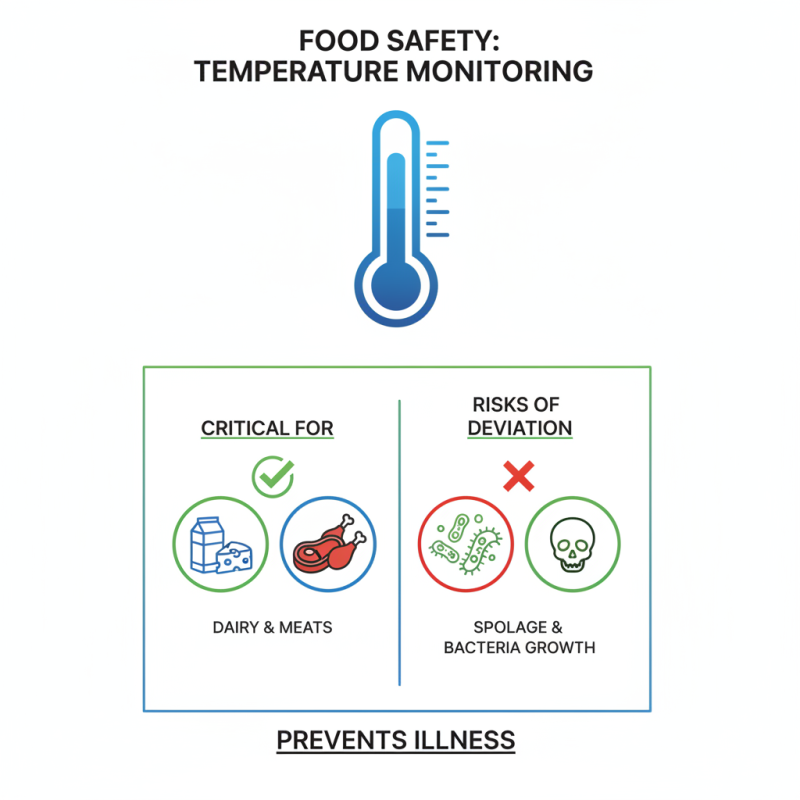
Temperature monitoring is a vital aspect of food safety and quality control. In the food industry, precise temperature regulation prevents spoilage and contamination. For instance, perishable items like dairy and meats need strict temperature standards. A slight deviation can result in harmful bacteria growth. This risk can lead to serious health issues if not managed properly.
Implementing detailed temperature monitoring can be challenging. Many facilities struggle to maintain consistent temperatures. Equipment malfunctions can occur, causing lapses in monitoring. Even human error, like forgetting to check readings, can compromise food safety. Proper training for staff is essential, but not always prioritized. Regular audits may help identify these gaps.
Food quality also suffers without effective temperature management. Fresh produce loses texture and taste when stored incorrectly. Frozen items can develop freezer burn, affecting overall quality. Businesses face tough decisions when balancing costs and safety measures. Investing in reliable monitoring systems is one solution. However, organizations must continuously evaluate their processes to ensure they meet safety standards.
Impact of Temperature Control on Pharmaceutical Stability and Efficacy
Temperature control is vital in the pharmaceutical industry. Many medications require specific storage conditions to maintain efficacy. For example, some vaccines must be kept between 2°C and 8°C. If temperatures stray too far from this range, the active ingredients can degrade, leading to ineffective treatment.
Consider a scenario where a shipment of vaccines sits in a poorly regulated truck. The temperature rises due to a malfunctioning cooling system. Such an oversight can render these vital vaccines useless. Patients depend on these medications to stay healthy. Therefore, strict temperature monitoring should become standard practice.
Also, fluctuations in temperature might affect shelf life. Products could expire sooner than anticipated. An unreliable temperature record could lead to costly recalls. Regular audits and training on proper temperature management are necessary. Medical personnel need to be aware of these risks. Without proper procedures, the consequences could impact not just the manufacturers but also the patients relying on those medications.
Role of Temperature Monitoring in HVAC Systems for Energy Efficiency
Temperature monitoring plays a vital role in HVAC systems. By continuously checking temperature levels, businesses can ensure optimal performance. This not only enhances comfort but also maximizes energy efficiency. Unmonitored systems often lead to energy waste. This can raise costs and hurt the environment.
Here are some tips:
1. Regularly check and calibrate sensors. An accurate reading is essential.
2. Use data analytics to identify patterns. This helps in making better decisions.
3. A poorly maintained system can lead to higher energy usage. Don't overlook routine maintenance.
Improper temperature management can lead to uncomfortable environments. This may affect productivity in workplaces. Additionally, a lack of monitoring can result in equipment failure. Such failures often require costly repairs. Businesses must recognize the importance of consistent temperature checks. It's essential to implement a proactive approach to HVAC monitoring.
Temperature Monitoring in HVAC Systems
This chart illustrates the average energy efficiency ratings of HVAC systems based on different temperature monitoring methods. Effective temperature monitoring can lead to significant energy savings, improving HVAC performance.
Temperature Regulation in Manufacturing Processes to Ensure Product Integrity
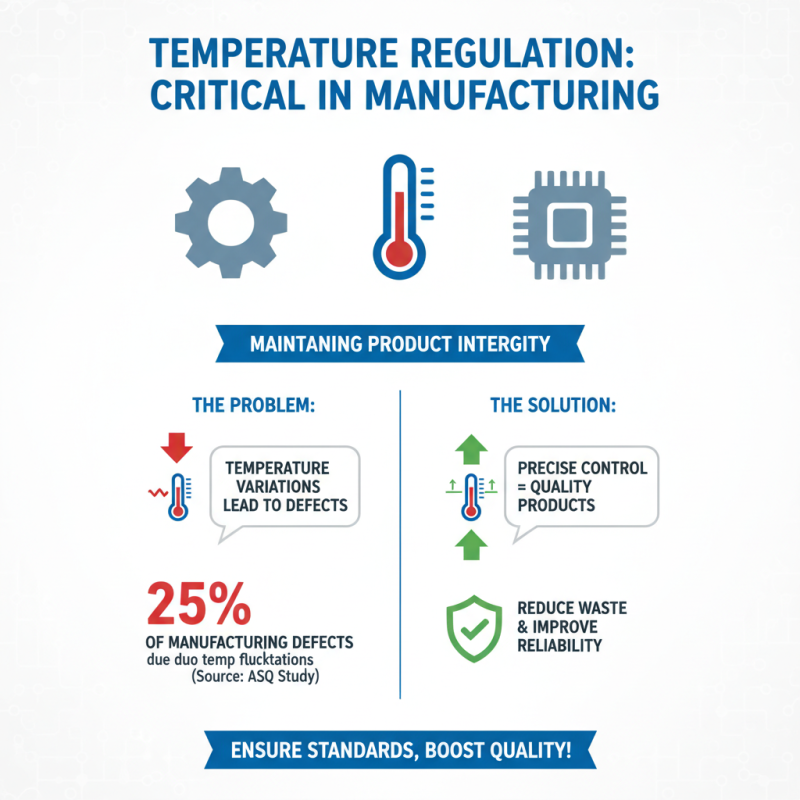
Temperature regulation is critical in manufacturing processes. Many industries rely on precise temperature control to maintain product integrity. For instance, a study by the American Society for Quality revealed that temperature variations can lead to product defects in 25% of cases. This statistic highlights the importance of adhering to temperature standards in any manufacturing setup.
In the food industry, temperature control can safeguard against spoilage. Research shows that improper storage temperatures can result in a 30% loss of perishable goods. Additionally, temperature fluctuations can compromise safety, leading to health risks. Industries must invest in efficient monitoring systems to avoid such issues. Real-time data tracking is essential.
The pharmaceutical sector also suffers without strict temperature adherence. It’s estimated that inadequate temperature regulation could lead to a $35 billion loss due to compromised products. This raises pressing questions about current practices. Many systems still rely on manual checks, which are prone to errors. Reassessing these methods is vital for ensuring product safety and quality.
Challenges of Temperature Monitoring in Data Centers and IT Infrastructure
Temperature monitoring is vital especially in data centers and IT infrastructure. These environments are sensitive to fluctuations. Equipment generates heat, and if it’s not controlled, it can lead to failures. Overheating can damage servers, leading to data loss. Yet, monitoring equipment is often inadequate. Many rely on basic systems that can't provide detailed insights.
In many facilities, temperature sensors are poorly placed. Some are too close to heat-generating devices. This causes misleading readings. Operators may think things are fine. Meanwhile, real temperatures could be much higher. Additionally, human error can’t be overlooked. Technicians may forget to check alerts regularly. They depend heavily on automated systems.
Monitoring software can simplify things. But not all solutions are perfect. Many systems may lag or become unresponsive. This leads to missed alerts. As technology continues to evolve, businesses must rethink their strategies. A more proactive approach may be necessary. Regular audits can reveal weaknesses in current setups. Improving temperature control is not just about installation; it's about constant evaluation.