7 Tips for Choosing an Explosion Proof Forklift?
Choosing an Explosion Proof Forklift is not a matter of selecting the toughest-looking machine. It means matching the truck’s design to the exact hazards, materials, and work patterns at your site. A forklift used near flammable vapors may need different protections from one operating around combustible dust. The details matter: the hazardous-area classification, battery and electrical components, attachments, load capacity, and maintenance plan.
The stakes are real. OSHA’s Powered Industrial Trucks eTool reports estimates of about 85 forklift-related fatalities and 34,900 serious injuries each year in the United States. These figures cover forklift incidents broadly, not explosions alone. They still underline why equipment selection, operator training, and upkeep deserve close attention. NFPA 505 provides a framework for powered industrial trucks operating in hazardous locations; buyers should confirm which standards and requirements apply to their specific facility.
A useful checklist can prevent costly mismatches. Start with the site assessment, then verify the truck’s protection rating and the manufacturer’s documentation. Ask how the unit handles your actual shift length, floor conditions, and loads—not just a brochure’s ideal scenario. Small details count. A connector, worn seal, or unsuitable attachment can undermine an otherwise sound choice.
No source articles or verifiable expert quotation were provided with the request, so I can’t responsibly attribute a statement to a named Explosion Proof Forklift specialist. That gap is worth fixing before publication. The seven tips below offer a practical starting point, but site-specific review remains essential.
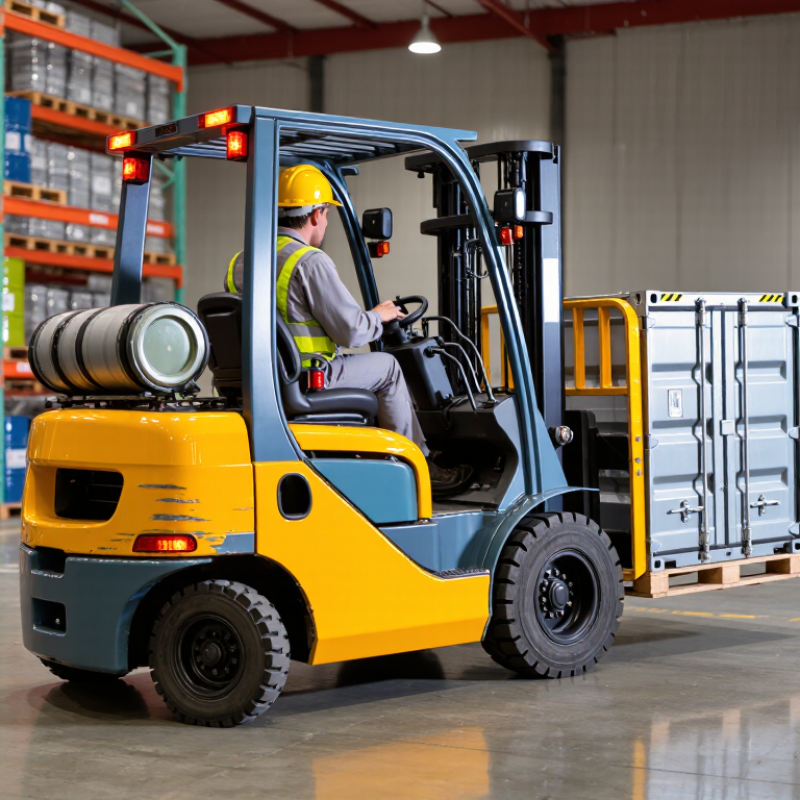
Identify the Hazardous-Area Classification and Operating Conditions
Before selecting an explosion proof forklift, identify the hazardous-area classification at the exact place it will operate. A site may contain different zones, divisions, or material groups, even within one building. Check current area-classification drawings and confirm whether the hazard involves flammable gas, vapor, or combustible dust. Small details matter. The equipment’s approval must match the identified hazard, including its group and temperature rating. If records are unclear, ask a qualified safety professional to verify the classification rather than guessing from nearby equipment.
Operating conditions matter just as much. Note ambient temperatures, moisture, washdown routines, ventilation, floor slopes, and narrow turning areas. A forklift used near a dusty transfer point may face different exposure than one traveling through a ventilated aisle. Record typical load weights, travel distances, and hours per shift; these affect capacity, battery needs, and maintenance planning. Charging and battery-changing areas also require careful review. It is easy to focus on the hazardous label and overlook daily tasks, such as cleaning residue from wheels or maneuvering over a raised threshold. Document those details, then have the supplier confirm that the truck’s full configuration suits the location—not just its basic rating.
7 Tips for Choosing an Explosion Proof Forklift
Identify the hazardous-area classification and operating conditions before selecting equipment.
Under the ATEX equipment-category system, Zone 0 and Zone 20 require Category 1 equipment; Zone 1 and Zone 21 require Category 2; and Zone 2 and Zone 22 require Category 3. The category number alone does not confirm forklift suitability: verify the applicable gas or dust group, temperature requirements, certification, and site conditions.
Match Forklift Certification to Site Safety Requirements
An explosion-proof forklift is only suitable when its certification matches the hazards identified at the worksite. Ask the site safety team which hazardous-area classification applies, and whether the risk comes from flammable gas, vapor, or combustible dust. These distinctions matter. A truck approved for one environment may not be appropriate in another.
Check the certification plate and supporting documents before purchase. Confirm the approved area, temperature limits, and permitted configuration. Attachments, tires, lighting, and electrical accessories can affect suitability, so verify that the complete forklift—not just its base model—meets site requirements. Check the plate. Keep records available for operators and maintenance staff.
Walk the route with a qualified safety professional. Look at loading bays, narrow aisles, ventilation, floor conditions, and charging locations. A certificate does not replace site procedures, operator training, or routine inspections. If a plate is unreadable or the paperwork leaves a detail unclear, pause and ask the manufacturer or responsible safety authority to confirm it. I have seen small configuration changes create big questions; it is better to verify before the truck enters service.
7 Tips for Choosing an Explosion-Proof Forklift: Match Forklift Certification to Site Safety Requirements
| # | Selection Tip | What to Check | Practical Example or Action |
| 1 | Confirm the hazardous-area classification | Identify whether the work area is classified under the applicable local system, such as Class/Division or Zone. Confirm the classification with the site’s electrical or process-safety documentation. | Ask the site safety team for the area classification drawing before requesting a forklift quotation. Do not select equipment based only on a general description such as “flammable area.” |
| 2 | Match the certification to the hazard | Check that the certification covers the required gas or dust group and the specific hazardous location. A rating suitable for one hazard type or location is not automatically suitable for another. | Compare the forklift’s certification marking with the site’s documented requirements. Have a qualified person confirm the match when classifications or standards differ. |
| 3 | Check the temperature rating | Review the equipment’s temperature class or maximum surface-temperature marking and compare it with the ignition-temperature limits specified for materials at the site. | Ask the site team to verify the most restrictive relevant substance and operating conditions; do not assume that a low ambient temperature alone determines suitability. |
| 4 | Verify the complete truck configuration | Confirm that the certification applies to the truck as supplied, including its power source, electrical components, protective features, and any specified options or attachments. | Request documentation for the exact model and configuration. Check with the certifying body or a qualified compliance professional before adding or changing components. |
| 5 | Match capacity and operating conditions | Choose a rated capacity and lift height suited to the actual load, load center, aisle width, floor condition, and duty cycle. Added attachments can affect the truck’s capacity. | Check the capacity plate for the proposed configuration and compare it with the heaviest planned load, including pallets and attachments. |
| 6 | Review records, inspection, and maintenance needs | Obtain the certification evidence, operating instructions, inspection requirements, and maintenance procedures. Repairs or substitutions may affect the equipment’s approved protection. | Set up inspections and repairs in accordance with the manufacturer’s instructions and applicable site rules; use personnel qualified for the equipment and hazardous location. |
| 7 | Confirm local approval and operator training | Requirements vary by jurisdiction and site. Verify applicable regulations, accepted certification schemes, traffic controls, charging or refueling arrangements, and operator training requirements. | Before putting the forklift into service, obtain site approval, train operators on the specific truck and work area, and document the required authorization. |
Safety note: Hazardous-area suitability depends on the site classification, applicable regulations, and the forklift’s exact certified configuration. Have a qualified professional verify the selection before use.
Choose Load Capacity, Lift Height, and Equipment Configuration
Start with the heaviest real load, not the forklift’s headline capacity. Include pallets, containers, attachments, and any load shift during travel. Capacity falls as the load center moves forward and the forks rise. Check the capacity plate for the exact configuration, and ask the supplier for a revised rating when adding clamps or other attachments. A small oversight matters.
Set lift height from the highest rack beam, then allow room for mast clearance and safe placement. OSHA’s powered industrial truck safety materials estimate that forklifts cause about 85 deaths and 34,900 serious injuries annually in the United States. Those figures are a reminder to specify stability and visibility, not just maximum reach.
For an explosion-proof forklift, match the equipment configuration to the site’s classified area and potential gas or dust hazards. Confirm the required protection, tires, mast, and electrical components with a qualified safety professional. Details can be easy to miss. Aisle width, floor condition, and door openings also affect the choice; measure them on site, because drawings can be optimistic.
Compare Power Sources and Performance for the Work Environment
Choose the power source around the air, floor, and shift pattern—not headline lift capacity alone. Battery-electric forklifts suit enclosed work areas because they produce no tailpipe exhaust during operation. They can also run quietly, useful when operators need to hear people nearby. But long shifts, cold rooms, and steep ramps can drain batteries faster than expected.
Charging time and battery-change space matter. Small details matter.
Combustion-powered forklifts can refuel quickly and may suit outdoor work or demanding, extended shifts. Their exhaust, heat, and noise can make enclosed or busy areas harder to manage.
A U.S. Department of Energy Alternative Fuels Data Center comparison reports that road-going electric vehicles convert over 77% of electrical energy to wheel power, versus roughly 12–30% of gasoline energy.
These figures are not forklift test results, so use them as context, not a performance promise. Compare actual duty-cycle data, run time, and charging or refueling access. For hazardous locations, verify that the truck’s rating matches the site’s specific classification; a power source alone does not make equipment suitable. A spreadsheet can still miss the bottleneck: measure a real shift before deciding.
Assess Operator Protection, Maintenance, and Service Support
An explosion-proof forklift should protect its operator without making routine tasks harder. Check that the cab, controls, and warning devices are suited to the site’s classified work area. Ask how visibility is maintained when doors or protective enclosures are closed. The operator should be able to read gauges, reach the emergency stop, and hear alarms over normal plant noise. Small details matter. A brief seat adjustment or awkward control can become tiring across a full shift.
Maintenance needs to fit the equipment’s protective design. Ask technicians to explain which inspection points are specific to the electrical enclosures, wiring, and other ignition-control features. Look for clear intervals, documented checks, and parts traceability. A checklist helps, but it is not a substitute for a technician who understands the equipment. I have seen tidy records create false confidence when small damage around a cable entry was overlooked.
Service support is part of operator protection, too. Confirm who can diagnose faults, how quickly critical parts are typically available, and whether on-site training is offered. Ask for a sample service report and a realistic response-time commitment. Ask for evidence. A polished promise is less useful than a named contact and a practical backup plan when a truck is taken out of service.



