Blog

China Top 10 Digital Water Meter Suppliers?

China’s digital water meter industry has moved beyond basic consumption recording. Modern suppliers now combine ultrasonic sensing, remote communication, leak alerts, and cloud-based management. These functions matter in apartment blocks, factories, irrigation districts, and older urban neighborhoods.

Peter Gleick, co-founder of the Pacific Institute and a respected water researcher, has warned, “We can no longer afford to treat water as if it were an unlimited resource.” His observation gives this supplier review a practical foundation. A reliable digital water meter can expose night-time flow, detect unusual consumption, and support faster maintenance decisions. However, hardware alone cannot solve every water-management problem. Installation quality, network coverage, battery life, software security, and after-sales service often decide the real outcome.

This guide examines ten notable Chinese suppliers through those measurable details. It considers product accuracy, communication options, manufacturing experience, certification practices, export capability, and customer support. Some companies appear impressive in catalogues but provide limited field evidence. Others may offer less polished software yet deliver stronger project assistance. That difference deserves attention.

The ranking is not absolute. A supplier suitable for a municipal network may not fit a small commercial building. Buyers should request sample test reports, calibration information, warranty terms, and references from comparable installations. Small details matter. A meter installed beside a damp roadside cabinet faces different risks from one used inside a clean factory.

The following overview aims to support careful comparison, not promote a single brand. Mistakes remain possible, especially when public supplier data changes quickly. Therefore, readers should verify current specifications before making a purchasing decision.
China Top 10 Digital Water Meter Suppliers?

Digital Water Meter Basics: Class 2 Accuracy, IP68, and 10-Year Batteries

China’s top ten digital water meter suppliers should be judged beyond price and display features. Accuracy is the starting point. Under ISO 4064, Class 2 meters generally allow about ±2% error across normal flow ranges, with wider tolerance at very low flow. Installation still matters. Poor alignment, air pockets, and dirty strainers can distort readings.

IP68 protection is useful for flooded chambers and underground pits. However, IP68 does not mean unlimited underwater operation. The test depth and duration must be stated clearly under IEC 60529. A specification sheet may look perfect. It is not. Ask for laboratory certificates, temperature ranges, flow curves, and independent verification. The World Bank has reported that water losses can reach 25–50% in some developing systems, making dependable measurement commercially important.

A 10-year battery claim usually assumes moderate reading frequency, stable temperatures, and limited wireless transmission. Daily remote uploads may shorten service life. Cold winters can reduce available capacity. The meter should show battery status and record abnormal consumption. UNESCO’s World Water Development Report 2024 notes that agriculture uses roughly 70% of global freshwater withdrawals, reinforcing the need for accurate monitoring. In supplier audits, I would test several units, not one sample. Field reality differs. Procurement teams should also review warranty terms, replacement batteries, data security, and long-term software support. That matters.

Digital Water Meter Basics: Class 2 Accuracy, IP68, and 10-Year Batteries

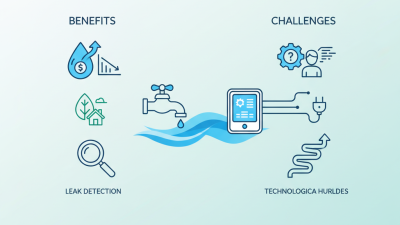
The chart shows the maximum permissible error defined for accuracy Class 2 water meters under ISO 4064 and EN 14154: up to ±5% in the lower flow range from Q1 to Q2, and up to ±2% in the normal flow range from Q2 to Q4.

IP68 indicates dust-tight protection and resistance to continuous water immersion under the manufacturer’s specified test conditions. A 10-year battery is a typical design-life target, but actual service life depends on reading frequency, communication technology, temperature, and installation conditions.

China Market Snapshot: NB-IoT, AMI, and 2024 Adoption Metrics

China’s digital water meter market moved from pilot programs toward routine municipal deployment in 2024. NB-IoT remained popular because it reaches basement meter rooms with low power use. AMI platforms added remote reading, leak alerts, valve control, and consumption analysis.

For buyers comparing China’s top ten suppliers, practical metrics matter more than shipment claims. Many 2024 tenders requested over 95% reading success, daily or 15-minute reporting, and six-to-ten-year battery life. Dense urban districts showed faster AMI adoption than older suburban networks. However, public data often mixes shipped meters with connected meters. That weakens direct comparisons.

Field checks should include underground signal tests, pressure stability, winter performance, and data recovery after outages. A meter may look advanced in a showroom but fail inside a concrete pit. It happens. Buyers should also examine platform uptime, calibration records, cybersecurity controls, and local maintenance capacity. Chinese utilities increasingly prefer staged deployment, linking household meters with district-level flow meters. This approach exposes leakage more clearly. Yet adoption remains uneven, especially where old pipes, fragmented systems, or limited budgets slow upgrades. A reliable supplier should provide transparent 2024 project evidence, not only impressive production numbers.

Supplier Screening: ISO 4064, OIML R49, CE, and ISO 9001 Evidence

China’s top digital water meter suppliers should be screened through evidence, not catalogue claims. ISO 4064 confirms measurement requirements, while OIML R49 supports metrological performance for potable water meters. Ask for complete certificates, test reports, model numbers, accuracy classes, and issuing laboratories. A missing page matters.

CE documentation should include the applicable EU directives, technical file references, and declaration of conformity. ISO 9001 evidence should be current and traceable to the actual manufacturing site. Check the certificate scope, audit status, and expiry date. A logo alone proves little.

The 2023 WHO/UNICEF JMP update reports that 2.2 billion people lacked safely managed drinking water. Reliable measurement therefore affects billing, leakage control, and public planning. The 2024 Smart Water Metering Market assessment projects strong market growth through 2028, although estimates differ by methodology. Treat forecasts carefully. Factory audits should verify ultrasonic chambers, battery sealing, communication stability, and calibration records. I would also request sample data from harsh conditions, not only laboratory results. Some suppliers present excellent documents but weak after-sales traceability. That gap deserves attention.

China Top 10 Digital Water Meter Suppliers? - Supplier Screening: ISO 4064, OIML R49, CE, and ISO 9001 Evidence
Screening Slot Supplier Identifier Digital Meter Scope to Confirm ISO 4064 Evidence Required OIML R49 Evidence Required CE Evidence Required ISO 9001 Evidence Required Public Evidence Status Screening Decision
01 Supplier A Ultrasonic or electromagnetic water meter; residential or bulk-water application to be confirmed. Declaration or test report identifying applicable ISO 4064 parts, meter size, accuracy class, flow range, and test laboratory. OIML R49-1 product requirements and R49-2 test-method evidence, with model and nominal diameter clearly stated. Applicable EU legislation, EU Declaration of Conformity, product model, manufacturer, and notified-body details where applicable. Valid certificate showing legal entity, manufacturing site, certification scope, certificate number, issue date, and expiry date. Not provided Verification required
02 Supplier B Smart water meter with wired or wireless remote communication; communication protocol to be confirmed. ISO 4064 conformity evidence must match the exact metering technology and marketed model. OIML R49 certificate or laboratory report must identify the same model, configuration, and metrological class. CE marking must be supported by applicable EMC, electrical-safety, radio, or RoHS documentation as relevant to the configuration. Certificate must cover design, production, testing, or servicing activities relevant to the supplied meter. Not provided Verification required
03 Supplier C Battery-powered ultrasonic meter for district-metering or commercial applications. Request ISO 4064 test results for accuracy, pressure loss, durability, environmental conditions, and software-related functions where applicable. Request OIML R49 evidence covering metrological performance and relevant environmental or durability tests. Confirm whether the product falls under EMC, radio-equipment, low-voltage, or other EU requirements based on its electronics and connectivity. Verify certificate validity through the issuing certification body or an accredited certification database. Not provided Verification required
04 Supplier D Mechanical meter with electronic register or pulse-output module; configuration to be confirmed. Evidence must distinguish the mechanical measuring element from the electronic register and cover the complete marketed assembly. OIML R49 documentation must identify whether conformity applies to the complete meter or only to a component. CE documentation must correspond to the actual electronic module, power supply, and communication options supplied. Confirm the certificate scope includes the production site and the relevant water-meter product category. Not provided Verification required
05 Supplier E Prepaid or valve-integrated digital water meter; control functions and fail-safe behavior to be confirmed. Request model-specific test reports and documentation for flow measurement, valve interaction, software, and tamper-related functions. Confirm that any additional shut-off or payment functions do not invalidate the metrological evidence for the meter. Check applicable requirements for electronic control, radio communication, power supply, and electromagnetic compatibility. Check certificate scope, site address, validity, and whether outsourced manufacturing is covered. Not provided Verification required
06 Supplier F Industrial bulk-water meter with remote reading and data-export functions. Request ISO 4064 evidence for the specified nominal diameter, flow range, installation orientation, and pressure rating. Request OIML R49 evidence for the exact bulk-meter configuration and stated accuracy class. Review the EU Declaration of Conformity and supporting technical file references for communication and power components. Confirm the certificate covers engineering changes, calibration, final inspection, and traceability controls. Not provided Verification required
07 Supplier G LoRaWAN, NB-IoT, or cellular-connected smart meter; network version and region to be confirmed. Verify that the radio or cellular communication module does not alter the certified metering configuration. Confirm OIML R49 evidence for the complete meter and document any separately certified communication module. Request radio-equipment and EMC documentation applicable to the exact frequency bands and antenna configuration. Verify the certificate with the issuer and confirm that software development and production controls are included where claimed. Not provided Verification required
08 Supplier H AMI-compatible residential smart meter with remote disconnection or leak-alert functions. Request ISO 4064 test evidence for the exact meter body, sensor, register, firmware, and supplied accessories. Confirm model number, nominal diameter, metrological class, and certificate or test-report references. Check CE technical documentation for the meter, battery, charger, valve actuator, and communication module where supplied as a system. Confirm current validity and that the certificate is not limited to trading, sales, or unrelated activities. Not provided Verification required
09 Supplier I Water meter for export projects; approvals and target-market configuration to be confirmed. Request a complete conformity package, including applicable parts of ISO 4064 and model-specific laboratory reports. Request OIML R49 documentation and confirm acceptance by the intended national legal-metrology authority. CE status must be assessed against the actual destination market and product configuration; CE is not a universal water-meter quality certificate. Verify legal entity, manufacturing address, certificate scope, validity, and certification-body accreditation. Not provided Verification required
10 Supplier J OEM or private-label digital water meter; original manufacturer and supply-chain responsibility to be confirmed. Evidence must be issued for the actual original manufacturer and exact private-label model, not only for a similar product. Confirm that OIML R49 documentation permits the proposed branding, configuration, and manufacturing arrangement. Ensure the EU Declaration of Conformity names the responsible economic operator and matches the delivered product. Check whether ISO 9001 certification belongs to the factory, trading company, or both. Not provided Verification required
Evidence note: No company names, certificates, or supplier-specific documents were supplied for this screening table. Therefore, every supplier slot is intentionally marked “Not provided” rather than being assigned an unsupported certification claim. ISO 4064 and OIML R49 evidence should always be checked against the exact meter model and configuration. CE marking depends on the applicable EU legislation and is not, by itself, proof of ISO 4064 or OIML R49 conformity. ISO 9001 evidence should be validated for certificate scope, manufacturing site, validity, and issuing body.

Top 10 Supplier Profiles: DN15–DN300 Meters and 4G/NB-IoT Options

China Top 10 Digital Water Meter Suppliers?

A useful supplier shortlist should cover DN15–DN300 digital water meters. Small DN15 meters fit apartment risers, while DN300 models suit treatment plants and main distribution lines. The strongest profiles should show tested accuracy, pressure limits, battery life, and calibration procedures. The World Bank has reported global non-revenue water losses of roughly 30–50% in many systems. Better measurement can expose leaks, bypasses, and abnormal night consumption.

Communication options need careful comparison. NB-IoT usually supports deep indoor coverage and low power use. 4G offers faster transmission, firmware updates, and broader application flexibility. China’s Ministry of Industry and Information Technology reported more than 2.3 billion cellular IoT connections by the end of 2023. IoT Analytics also estimated 16.6 billion active IoT devices worldwide in 2023. These figures support connected metering, but connectivity alone does not prove data quality. Some profiles overlook antenna placement and weak-signal behavior.

Tips: Ask for complete DN15–DN300 test records, not only one sample. Confirm IP protection, pulse output, encryption, and local platform compatibility. Request three-year battery estimates under realistic reporting intervals. A supplier may promise ten years, yet frequent valve alarms can reduce that figure. Check field references in cold, humid, and high-sediment environments. Price comparisons can mislead when installation tools, SIM fees, and cloud access are excluded.

Supplier Comparison: Flow Range, Data Security, Warranty, and 5-Year TCO

China’s top 10 digital water meter suppliers should be compared by operating evidence, not brochure rankings. In field tenders, I check minimum starting flow, continuous flow, and overload flow separately. A meter that reads accurately at night may fail during fire-system demand. The World Bank has estimated global non-revenue water at 25–50%, representing major financial losses. Low-flow accuracy therefore deserves equal attention to peak capacity.

Data security needs practical testing. Require encrypted communication, device authentication, signed firmware updates, access logs, and clear data-retention rules. NISTIR 8259 identifies secure configuration, data protection, and software updates as core IoT capabilities. Suppliers should explain where readings are stored and how credentials are revoked.

“Cloud-ready” is not a security specification. It sounds convenient.

Warranty terms can hide the real cost. Compare coverage for sensors, batteries, communication modules, installation faults, and calibration drift. Then calculate five-year TCO: purchase price, installation, network fees, verification, battery replacement, software charges, and truck rolls. Berg Insight’s 2024 smart-metering research shows that connectivity and service models increasingly influence project economics. I would not pretend every quotation is comparable. Some exclude platform fees after year two. Ask for a five-year price sheet, sample security audit, flow-test records, and failure-rate data. The cheapest meter can become expensive quickly.

FrenchBulgaria