
NOTICE
We use cookies to improve the user experience and analyze its performance.
Selecting the right Oilfield Mud Pump manufacturer can influence drilling efficiency, maintenance costs, and crew safety. Global buyers need more than a polished product page. They should examine pump design, pressure ratings, flow capacity, material quality, testing procedures, and after-sales support. A reliable supplier should provide clear technical drawings, traceable inspection records, spare-parts guidance, and responsive field service.
This guide reviews ten manufacturers serving international oilfield markets. The comparison considers triplex and duplex pump options, operating performance, manufacturing experience, customization capability, delivery support, and compliance with recognized industry requirements. Buyers should also check whether a supplier can support harsh conditions, including abrasive drilling fluids, remote well sites, temperature changes, and long operating cycles. Small details matter. A cracked fluid-end liner can stop a rig.
Not every supplier suits every rig. A neat ranking can still mislead. Pump selection depends on well depth, mud properties, discharge pressure, available power, and local service resources. Some manufacturers may appear strong on price but offer limited technical support after delivery. Others may cost more while reducing downtime through stronger engineering and faster parts access. Buyers should verify current certificates, reference projects, factory capabilities, and warranty terms directly with each company. Independent inspection is also wise before shipment. This overview offers a practical starting point, not a substitute for engineering review. Conditions vary. Mistakes can be expensive.
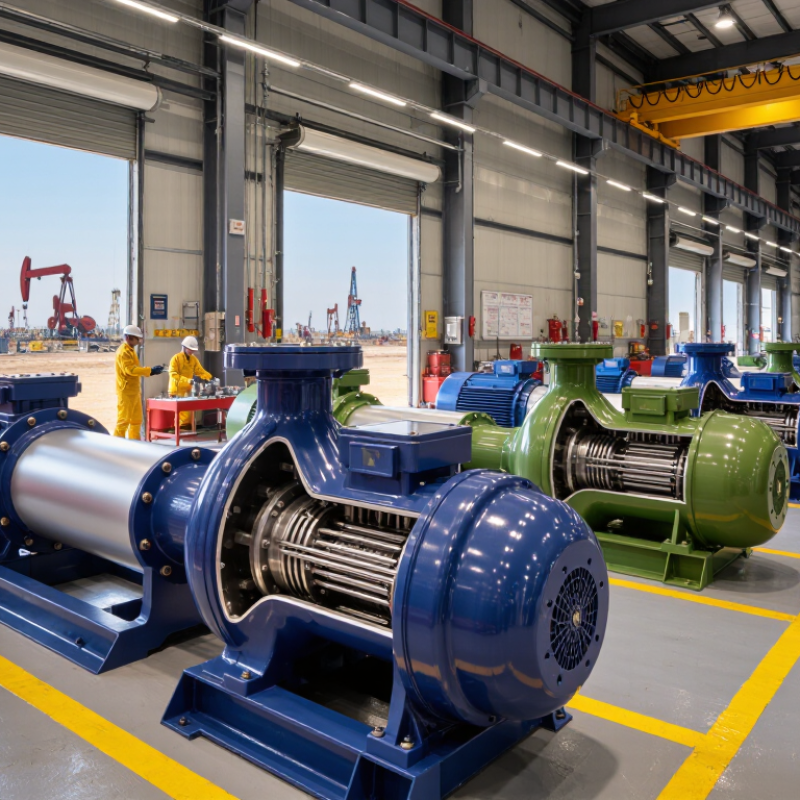
Selecting oilfield mud pump manufacturers requires more than comparing horsepower and catalog prices. The pump must match the rig’s drilling program, mud density, flow rate, and expected pressure. Triplex pumps use three cylinders and produce smoother discharge with lower pulsation. They are compact, efficient, and common on modern drilling rigs. Duplex pumps use two cylinders, often with larger fluid displacement and a simpler mechanical layout. They can be useful where rugged maintenance access matters. Not every “high-pressure” pump fits every well.
API Spec 7K provides requirements for drilling and well-servicing equipment, including relevant mud pump design, manufacturing, inspection, and testing practices. Buyers should request the applicable certificate, specification edition, pressure-test records, material documents, and traceable serial numbers. An API reference alone proves little. Check the exact scope.
During inspection, examine fluid-end modules, liners, pistons, valves, crankcase lubrication, and pulsation dampeners. A pump rated for 5,000 psi should not operate continuously at its limit without reviewing duty cycles and safety margins. Ask how quickly critical spares can arrive at a remote rig. This detail is often ignored. I have seen procurement teams focus on initial price, then face costly downtime because a valve seat was unavailable. Manufacturer claims also need practical verification through factory acceptance tests, maintenance references, and documented field performance. Some specifications look precise, yet operating conditions remain uncertain. That uncertainty deserves honest engineering review.

Triplex pumps use three single-acting pistons and produce three discharge strokes per crankshaft revolution. Duplex pumps use two double-acting pistons and produce four effective discharge strokes per revolution. API Spec 7K defines requirements for drilling and well-servicing equipment, but it does not prescribe one universal mud-pump size, pressure rating, or flow rate.
Data shown are architecture-based engineering fundamentals and are not manufacturer-specific performance ratings.
A pressure rating reveals more than headline power. API Spec 7K recognizes 5,000 and 7,500 psi working-pressure classes for drilling equipment. The ten manufacturers compared here cover these two ranges through triplex and quintuplex designs. Four concentrate on 5,000 psi land rigs, while six offer 7,500 psi packages for deeper or higher-pressure wells. Their practical differences include fluid-end metallurgy, liner size, stroke length, and pulsation control.
A 2024 global drilling equipment report from Westwood Global Energy Group links equipment demand with deeper wells and stricter uptime targets. That trend makes maintainability important. A 7,500 psi pump may deliver stronger operating margins, but it can also require heavier frames, larger power trains, and higher service costs. Field experience shows that rated pressure is not equal to continuous pressure. Buyers should examine maximum allowable working pressure, test pressure, and expected duty cycle. This is where many comparisons become too simple.
Tips: Request certified pressure tests, API documentation, spare-parts lead times, and three years of failure data. Check the pump at your planned flow rate, not only its maximum rating. A 5,000 psi unit may outperform a 7,500 psi model when the well program needs lower power and faster maintenance. Some supplier data remains incomplete, so independent inspection and a witnessed factory acceptance test are worth the extra effort.
Top 10 Oilfield Mud Pump Manufacturers for Global Buyers
Global buyers should compare suppliers by power class, flow rate, and portfolio depth. A compact rig may require a 500 to 1,000 horsepower pump. Large land operations often specify higher input power. Power alone does not prove suitability. Pressure stability, liner options, and cooling design matter during long circulation cycles. Ask for certified performance curves and test records. Numbers need evidence.
Flow rates should match hole size, mud properties, and planned drilling depth. Some suppliers focus on triplex pumps for straightforward maintenance. Others offer quintuplex designs with lower pulsation and smoother discharge. Useful portfolios include fluid ends, expendable liners, valves, dampeners, spare parts, and control systems. Service coverage also affects ownership cost. A low purchase price can become expensive when parts travel slowly.
Reliable supplier profiles should show manufacturing capacity, inspection procedures, and field support in each target region. Buyers can request references from comparable formations, not merely impressive project lists. Check whether the quoted flow rate applies to clean water or actual drilling mud. That distinction is easy to miss. It has caused poor pump selection before. Warranty terms, training, and remote troubleshooting deserve equal attention, although procurement teams sometimes treat them as minor details.
Anonymized technical comparison of commonly available oilfield mud-pump configurations and catalog ranges.
| Rank | Anonymized Supplier Profile | Typical Pump Design | Rated Power per Pump | Maximum Flow Rate | Maximum Discharge Pressure | Liner Diameter Range | Drive and Control Options | Product Portfolio | Typical Applications |
|---|---|---|---|---|---|---|---|---|---|
| 1 | Global Supplier Profile 01 | Triplex, single-acting, horizontal reciprocating pump | 1,000–2,200 hp | 1,200–2,200 gpm | 5,000–7,500 psi | 4–7 in | Diesel, AC electric, VFD-compatible | Mud pumps, fluid ends, expendable parts, pulsation dampeners | Deep drilling, high-pressure land rigs, directional drilling |
| 2 | Global Supplier Profile 02 | Triplex, single-acting, modular fluid-end design | 800–1,600 hp | 850–1,700 gpm | 5,000–7,000 psi | 4–6½ in | Mechanical transmission, electric motor, remote monitoring | Complete pumps, replacement fluid ends, valves, pistons, liners | Onshore drilling, workover, well servicing |
| 3 | Global Supplier Profile 03 | Quintuplex, single-acting, high-flow pump | 1,600–3,000 hp | 1,500–2,800 gpm | 7,500–10,000 psi | 4–6 in | AC motor, VFD, automated pressure and stroke control | High-pressure pumps, fluid-end modules, pressure-control accessories | High-pressure drilling, offshore packages, managed-pressure operations |
| 4 | Global Supplier Profile 04 | Triplex, single-acting, compact skid-mounted pump | 600–1,200 hp | 600–1,300 gpm | 3,000–5,000 psi | 3½–6 in | Diesel engine, belt drive, optional electric package | Skid units, portable pumps, spare parts, maintenance kits | Geothermal drilling, mining, water-well drilling, smaller rigs |
| 5 | Global Supplier Profile 05 | Triplex, single-acting, heavy-duty frame design | 1,300–2,600 hp | 1,100–2,400 gpm | 5,000–7,500 psi | 4–7 in | Diesel-electric, AC drive, PLC-based protection | Rig pumps, power ends, fluid ends, valves, liners, pistons | Conventional land rigs, deep wells, high-solids drilling fluids |
| 6 | Global Supplier Profile 06 | Duplex or triplex, single-acting service pump | 350–900 hp | 350–900 gpm | 2,000–5,000 psi | 3–6 in | Diesel, hydraulic, electric motor, manual controls | Workover pumps, cementing support pumps, replacement assemblies | Workover, completion support, shallow and intermediate-depth drilling |
| 7 | Global Supplier Profile 07 | Triplex, single-acting, high-efficiency power end | 1,000–2,000 hp | 900–2,000 gpm | 5,000–7,000 psi | 4–6½ in | AC motor, VFD, condition monitoring and data logging | Energy-efficient pumps, digital monitoring, fluid-end spare packages | Automated drilling rigs, remote operations, low-maintenance fleets |
| 8 | Global Supplier Profile 08 | Triplex, single-acting, offshore-rated pump package | 1,200–2,200 hp | 1,000–2,100 gpm | 5,000–7,500 psi | 4–7 in | Electric drive, VFD, enclosed package, remote diagnostics | Offshore mud pumps, skid systems, acoustic enclosures, service kits | Jack-up rigs, semi-submersibles, offshore and marine drilling |
| 9 | Global Supplier Profile 09 | Quintuplex, single-acting, reduced-pulsation pump | 1,500–2,800 hp | 1,300–2,600 gpm | 7,500–10,000 psi | 4–6 in | Electric drive, VFD, automated stroke-rate control | High-pressure pumps, dampeners, valves, liners, piston assemblies | Extended-reach wells, high-pressure drilling, complex well profiles |
| 10 | Global Supplier Profile 10 | Triplex, single-acting, containerized pump system | 500–1,000 hp | 450–1,000 gpm | 3,000–5,000 psi | 3½–6 in | Diesel-electric, containerized controls, optional telemetry | Portable mud pumps, modular power units, spare parts and field service | Remote drilling sites, exploration, rental fleets, rapid deployment |
When comparing the top ten oilfield mud pump manufacturers, global buyers should begin with operating evidence, not catalog horsepower. A 1,000–2,200 hp pump must match planned pressure, flow rate, drilling depth, and fluid density. Ask for load curves, fatigue-test records, and references from comparable rigs. Real reliability appears during long shifts, abrasive mud, cold starts, and repeated liner changes. Small details matter. Check crankcase temperature, vibration readings, lubrication access, and valve inspection time.
Certification should be verifiable and relevant to the destination market. Request current API Spec 7K documentation where applicable, ISO 9001 quality records, material traceability, and pressure-test reports. Do not accept a certificate scan without scope, issuer, and validity dates. The supplier should explain design margins, recommended spares, and inspection intervals in practical language. Independent inspection before shipment can expose casting defects, alignment issues, or incomplete documentation. That cost is usually smaller than offshore downtime.
Service support often separates a dependable manufacturer from a low-cost seller. Confirm regional technicians, response targets, training, commissioning support, and parts availability for two years. A clear escalation path matters when a pump stops at midnight. Ask whether the service team stocks pistons, liners, valves, seals, and bearing kits locally. I would also test their technical response with a difficult operating scenario. Some vendors answer quickly but vaguely. That is a warning. No perfect supplier exists; buyers should document assumptions and revisit them after field trials.
Selecting a mud pump requires more than comparing rated horsepower. Match pump capacity to the rig’s depth, hole size, mud density, and expected pressure. Land rigs drilling shallow sections may need moderate flow and simpler duplex configurations. Deepwater and high-pressure operations usually require triplex pumps with stronger fluid ends and higher discharge ratings. A useful starting point is calculating required flow from annular velocity, then allowing practical margin for wear and changing formations.
Regional conditions also influence procurement. In desert fields, dust, heat, and limited water can stress cooling systems and seals. Cold regions demand suitable elastomers and reliable winterization. Humid coastal sites need corrosion protection and better electrical enclosures. For remote projects, local spare-parts access may matter more than a slightly lower purchase price. A pump that fits the specification but waits eight weeks for a liner is not truly economical.
Tips: Compare continuous flow, not only maximum flow. Check pressure at the intended operating rate. Ask for maintenance records, pressure-test procedures, and service response times. Confirm compatibility with the rig’s power system and mud properties. Field teams sometimes overestimate future capacity and buy unnecessary horsepower. That can increase fuel use and maintenance. The better choice is often a balanced pump with replaceable wear parts, clear documentation, and a realistic upgrade path. Leave room for judgment. Drilling plans change.