
Blog

Top 10 Open Frame Generator Sets for Global Buyers?

Buying an open-frame generator can look simple until the site begins demanding real answers. A 15 kW workshop load behaves differently from a 150 kW construction site. Fuel quality, ambient heat, altitude, voltage, frequency, and starting current all affect performance.

Energy analyst Paul Breeze offers a useful principle: “Power equipment earns trust through performance, not appearance.” That idea guides this comparison of Open Frame Generator Sets for global buyers. The shortlist examines diesel and gasoline models, prime and standby ratings, alternator quality, automatic voltage regulation, control panels, fuel capacity, portability, and service access. Small details matter. A strong steel frame helps during transport. A clear display helps during a midnight inspection. Simple maintenance can reduce costly downtime.

However, no ranking can fit every country or project. Local emissions rules, grid standards, spare-parts availability, and technician skills may change the best choice. A generator that performs well in a cool warehouse may struggle on a hot, dusty site. We also recognize a limitation: published specifications do not always reveal long-term reliability. Field support can matter more than a slightly higher output rating.

This guide therefore focuses on practical value, not impressive brochures. It considers running costs, load flexibility, noise, protection features, and manufacturer reputation. Some models may appear less powerful but offer better everyday usability. Others may win on price and lose on support. The right decision is rarely perfect. It is the one that matches the load, location, budget, and maintenance reality.
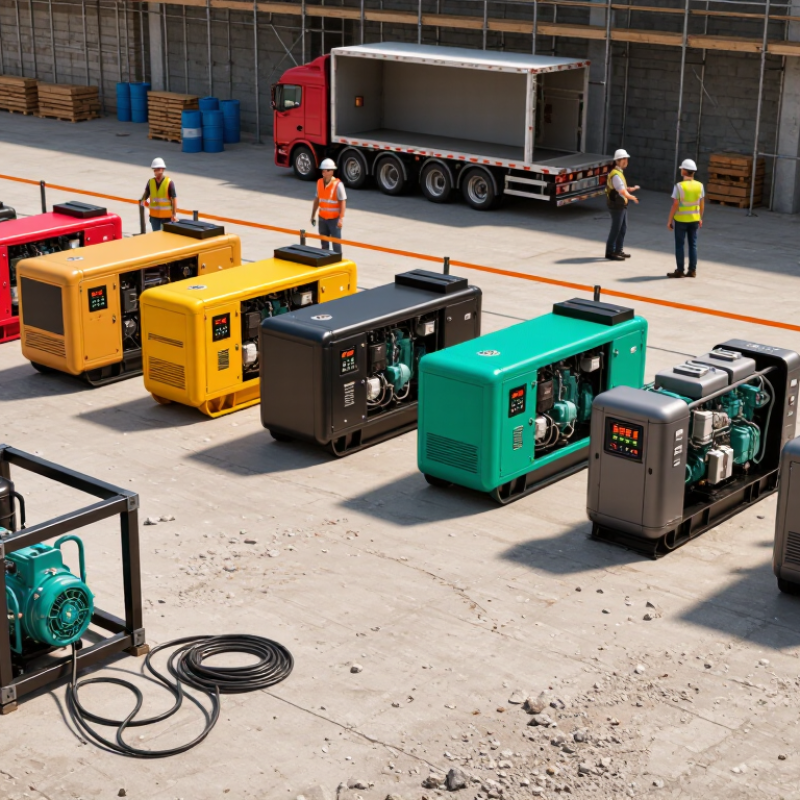
Top 10 Open Frame Generator Sets for Global Buyers?

Open Frame Generator Sets: Definition, Design, and Main Applications

Open frame generator sets are power units with an exposed engine, alternator, fuel system, and control panel. Unlike enclosed models, they use a simpler steel base frame for ventilation and service access. This design usually reduces weight, cost, and inspection time. It also increases exposure to rain, dust, noise, and accidental contact. Buyers should verify the rated output, standby or prime duty, voltage, frequency, and altitude derating. A 100 kVA set may deliver less power at high temperatures. Small details matter.

The design normally combines a diesel engine, synchronous alternator, radiator, battery system, and automatic voltage regulator. ISO 8528 provides the main technical framework for reciprocating engine generator sets. It distinguishes performance classes and operating duties, helping buyers compare specifications across countries. The IEA’s Electricity 2024 report estimated data centres used about 460 TWh globally in 2022. Their consumption could exceed 1,000 TWh by 2026. That pressure makes reliable backup generation important for data rooms, factories, hospitals, construction sites, and commercial buildings.

Open frames work best in ventilated plant rooms, fenced compounds, and temporary sites with controlled access. They are less suitable near offices or residential areas without acoustic treatment. Field experience shows that poor cable sizing and weak grounding cause more trouble than the engine itself. Maintenance access is excellent, but weather protection is often overlooked. No design is perfect. Global buyers should examine local emissions rules, spare-parts availability, fuel quality, and service skills before choosing among the top ten options.

How to Evaluate Generator Power, Fuel Use, and Engine Performance

For global buyers, generator power should be judged by load behavior, not only nameplate capacity. ISO 8528-1 separates emergency standby, limited-time, and prime power ratings. A set rated at 500 kVA may deliver less under continuous operation, high altitude, or 45°C ambient heat. Record real loads with a power analyzer. Motors can briefly demand six times their running current. That starting surge often exposes an undersized alternator.

Fuel use requires a test at 25%, 50%, 75%, and 100% load. Modern diesel engines commonly consume about 0.22–0.28 litres per kWh at efficient loads, but site conditions change the result. The U.S. EPA’s AP-42 data assigns roughly 10.21 kilograms of CO2 to one gallon of diesel. This makes fuel records useful for checking invoices, emissions, and operating cost. Never trust one brochure figure. It may reflect a warm engine and perfect fuel.

Engine performance is visible in details. Check frequency recovery after a sudden load, exhaust color, coolant temperature, oil pressure, and vibration. Review maintenance logs and independent load-bank tests. The IPCC reports a diesel-oil emission factor of about 74,100 kilograms of CO2 per terajoule. That figure helps compare fuel scenarios, but it does not predict every engine’s consumption. A practical mistake is testing only at full load. Real sites often run lightly, where poor combustion and wet stacking can appear. Measure again after installation.

Top 10 Open Frame Generator Sets for Different Global Buyer Needs

Top 10 Open Frame Generator Sets for Different Global Buyer Needs

Open frame generator sets suit buyers who value service access, airflow, and practical pricing. Their exposed design makes routine inspection easier in workshops and remote sites. However, they need a sheltered, dry, and well-ventilated location. In my field experience, many purchasing mistakes begin with undersizing the generator. Check running load, starting current, duty cycle, fuel quality, and local voltage requirements before comparing prices. A unit with a reliable engine, strong alternator, clear control panel, and accessible filters usually saves time later.

For farm irrigation, choose a set with steady output and long fuel endurance. Construction crews need rugged frames, lifting points, and simple controls. Small retailers often prefer compact units with low fuel consumption. Cold regions require dependable starting aids and suitable lubricants. Tropical buyers should prioritize cooling performance and corrosion protection. Remote clinics need stable voltage and planned maintenance support. Events require cleaner power and careful noise management. Rental companies benefit from reinforced frames and easy transport. Workshops may need higher motor-starting capacity. Emergency users should select quick-start controls and stored spare parts.

The “best” set changes with the application. A 20 kVA unit may handle lighting but struggle with pumps or compressors. Ask for tested performance data, protection features, service intervals, and parts availability. Do not trust a brochure alone. Even experienced buyers can overlook altitude derating or cable losses. A practical site assessment remains more reliable than a headline specification.

Key Differences in Features, Reliability, and Operating Environments

Choosing among the top 10 open frame generator sets requires more than comparing rated output. Reliability changes with the operating environment. The U.S. Energy Information Administration reported that weather-related events caused about 83% of major American power outages from 2000 to 2023. Therefore, buyers in storm-prone regions should examine alternator insulation, cooling airflow, drainage, and corrosion protection. An open frame design improves service access, but it exposes controls and wiring to dust, rain, and salt air. That trade-off is easy to underestimate.

Performance claims should match recognized testing. ISO 8528-5 classifications help buyers assess transient response during motor starting and sudden load changes. A set serving pumps may need stronger load acceptance than one supporting lights and office equipment. The IEA’s Electricity 2024 report expects global data-centre electricity consumption to exceed 1,000 TWh by 2026. This trend increases demand for dependable standby systems, clean waveform quality, and precise synchronization. Still, a ranking can mislead. The quietest unit may not be the easiest to repair in a remote site.

Tips: Check altitude derating, ambient-temperature limits, fuel filtration, and documented factory test results. Request service intervals and spare-parts lead times in writing. Inspect the control panel seal yourself, if possible. Small gaps become expensive problems. Also compare measured noise, not brochure language. Reliability depends on installation, maintenance, and operator training, not only the generator’s nameplate rating.

Top 10 Open Frame Generator Sets for Global Buyers? - Key Differences in Features, Reliability, and Operating Environments

Representative non-branded open-frame diesel generator configurations. Runtime figures are typical estimates at approximately 75% rated load and vary with engine, alternator, fuel-tank size, and site conditions.
Rank Typical Configuration Prime Power Voltage / Frequency Engine Speed Alternator Class Estimated Runtime Reliability-Oriented Features Best Operating Environment Key Limitation
1 Compact backup set 10 kVA / 8 kW 230/400 V, 50 Hz
120/208 or 277/480 V, 60 Hz options
1,500 rpm at 50 Hz
1,800 rpm at 60 Hz
Brushless, AVR, Class H insulation 14–18 hours Mechanical or electronic overspeed protection, low-oil shutdown, circuit breaker, battery charger Small commercial sites, farms, workshops, and residential backup locations Limited starting capacity for large motors and pumps
2 Light commercial utility set 20 kVA / 16 kW 230/400 V, 50 Hz
120/208 or 277/480 V, 60 Hz options
1,500/1,800 rpm Brushless, AVR, Class H insulation 12–16 hours Digital monitoring, emergency stop, coolant-temperature alarm, replaceable fuel and oil filters Retail outlets, small offices, telecommunications shelters, and building services Requires careful phase balancing under single-phase loads
3 Construction-site workhorse 30 kVA / 24 kW 400/230 V, 50 Hz
480/277 V, 60 Hz option
1,500/1,800 rpm Brushless, AVR, Class H insulation 10–14 hours Heavy-duty steel skid, vibration isolators, air cleaner restriction indicator, lockable control panel Dusty construction areas, temporary power distribution, and agricultural operations Open-frame design needs weather protection and suitable ventilation
4 Three-phase facility backup 50 kVA / 40 kW 400/230 V, 50 Hz
480/277 V, 60 Hz option
1,500/1,800 rpm Brushless, AVR, Class H insulation 10–13 hours Automatic mains-failure compatibility, under/over-voltage protection, earth-leakage options, service-hour counter Workshops, food processing, water systems, and medium-sized commercial buildings Fuel consumption rises significantly when operated below efficient load range
5 Industrial standby set 80 kVA / 64 kW 400/230 V, 50 Hz
480/277 V, 60 Hz option
1,500/1,800 rpm Brushless, AVR, Class H insulation 8–12 hours Electronic governor, load monitoring, jacket-water heater option, automatic shutdown history Hotels, clinics, warehouses, irrigation systems, and small manufacturing plants May require larger lifting equipment and a dedicated fuel-storage plan
6 Prime-power medium set 100 kVA / 80 kW 400/230 V, 50 Hz
480/277 V, 60 Hz option
1,500/1,800 rpm Brushless, AVR, Class H insulation 8–11 hours Wet-stack prevention guidance, high-capacity radiator, digital controller, programmable load acceptance Remote facilities, telecom sites, rental fleets, and continuous-duty applications High-altitude and high-temperature derating must be included in sizing
7 Heavy commercial backup set 150 kVA / 120 kW 400/230 V, 50 Hz
480/277 V, 60 Hz option
1,500/1,800 rpm Brushless, AVR, Class H insulation 7–10 hours Load-step capability, low-voltage ride-through options, dual fuel filters, battery isolator, service access on one side Data rooms, hospitals, commercial complexes, and pumping stations Foundation, exhaust, and heat-rejection requirements become more demanding
8 Large industrial set 200 kVA / 160 kW 400/230 V, 50 Hz
480/277 V, 60 Hz option
1,500/1,800 rpm Brushless, AVR, Class H insulation 6–9 hours Advanced engine diagnostics, automatic synchronizing option, cooling-system alarms, high-capacity starting batteries Factories, large commercial buildings, mines, and infrastructure projects Transport and installation costs can exceed those of smaller sets
9 High-capacity project set 300 kVA / 240 kW 400/230 V, 50 Hz
480/277 V, 60 Hz option
1,500/1,800 rpm Brushless, AVR, Class H insulation 5–8 hours Parallel-operation capability, remote monitoring, automatic transfer compatibility, replaceable heavy-duty air and fuel filtration Large construction sites, utilities, event power, and industrial emergency systems Requires engineered fuel, exhaust, grounding, and ventilation systems
10 Large-scale prime or standby set 500 kVA / 400 kW 400/230 V, 50 Hz
480/277 V, 60 Hz option
1,500/1,800 rpm Brushless, AVR, Class H insulation 4–7 hours Synchronizing and load-sharing options, redundant monitoring, engine preheating, configurable protection relays Data centers, hospitals, industrial plants, ports, and large infrastructure projects Not economical for lightly loaded sites; professional commissioning is essential
Buyer note: Confirm the required voltage, frequency, phase arrangement, prime or standby rating, altitude, ambient temperature, fuel quality, emissions requirements, service support, and local electrical regulations before selecting a generator set. Open-frame equipment should be installed under a properly engineered weather shelter with adequate ventilation, exhaust routing, grounding, and fire protection.

Safety, Maintenance, Regulations, and Purchasing Considerations

Choosing among the top 10 open frame generator sets requires more than comparing rated output. Global buyers should verify continuous and standby power ratings separately. A site electrician should confirm voltage, frequency, phase, and starting-current requirements. Open frames improve ventilation and service access, but they provide limited protection from rain, dust, and accidental contact. Install guards, proper earthing, emergency stops, and suitable barriers around operating equipment.

Maintenance conditions often determine real ownership costs. Inspect oil levels, coolant, belts, terminals, and fuel lines before each use. Keep air filters clean, especially on dusty construction sites. Record operating hours and follow the service schedule supplied with the engine. Noise may become a workplace issue near homes, hospitals, or offices. Local rules can also restrict exhaust emissions, fuel storage, electrical connections, and nighttime operation. Requirements vary widely, so buyers should request current certificates and installation guidance for the destination country.

Tips: Ask for a load-bank test, not only a factory sheet. Check spare-parts availability and technician support before payment. Confirm enclosure options if outdoor exposure is unavoidable. Review the warranty carefully, including transport and labor limits. A smaller set may fail under motor starting loads, while an oversized set can run inefficiently. I have found that purchasing teams sometimes trust headline kilowatts too quickly. Site conditions deserve equal attention. Keep every inspection record; missing paperwork can delay commissioning.

FrenchBulgaria