
Blog

Top 10 Ready Concrete Batching Plant Manufacturers?

Choosing a Ready Concrete Batching Plant is a practical decision, not just a search for a familiar brand. The right equipment can support steady production, accurate aggregate dosing, and dependable mixing across demanding workdays. A poorly matched plant, however, may create delays, uneven output, or service headaches. Details matter. Look closely at the mixer capacity, batching controls, plant layout, and the space available for trucks and material storage.

This guide introduces ten manufacturers associated with ready-mix concrete batching equipment. It is designed as a starting point, not a final ranking. Company product ranges, regional support, and available configurations can change, so buyers should confirm current specifications directly with manufacturers. Ask for clear information on production capacity, installation requirements, spare-parts access, and operator training. A polished brochure is useful, but it cannot replace a detailed technical discussion.

The best choice depends on the work. A compact plant serving nearby projects may need different features from a high-output facility supplying several sites. Consider the local climate, aggregate characteristics, expected production schedule, and maintenance resources. Request references where possible, and compare complete operating needs rather than purchase price alone. Even careful research leaves some uncertainty. That is worth admitting. The manufacturers below offer a useful comparison, but the strongest fit will come from matching verified plant details to your actual production conditions.
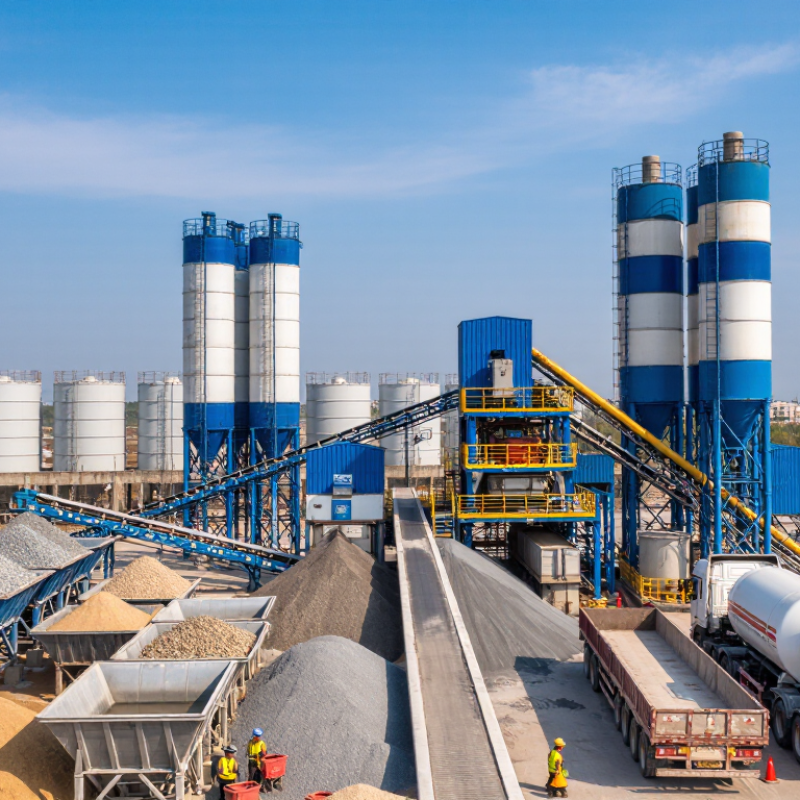
Top 10 Ready Concrete Batching Plant Manufacturers?

Ready-Mix Concrete Batching Plants: Definition and Main Components

A ready-mix concrete batching plant measures and combines ingredients to produce concrete for delivery to construction sites. Unlike a simple mixing area, it uses controlled storage, weighing, and mixing equipment to help keep each batch consistent. The exact layout varies with production needs, available space, and the distance trucks must travel. Small details matter.

Aggregate bins hold sand and stone in separate compartments. Conveyors or skip hoists move these materials toward the mixer, while cement is stored in sealed silos and fed through screw conveyors. Load cells weigh each ingredient. Water meters and admixture dispensers regulate liquid additions. In practice, aggregate moisture can change after rain, so operators may need to adjust the water setting. A clean display cannot replace careful checks.

The mixer combines the measured materials, and a central control system records or manages the batch sequence. Some plants mix concrete on site before loading it into transit mixers; others use different arrangements suited to their process. Dust collectors help limit airborne cement near transfer points. Regular calibration and inspection support reliable output, though no system removes every source of variation. A worn belt or blocked pipe can still disrupt a shift.

How Batching Plants Mix and Deliver Ready-Mix Concrete

When comparing the top 10 ready-mix concrete batching plant manufacturers, study the mixing and delivery process first. A plant stores cement, sand, stone, water, and admixtures in separate systems. Computerized weighing controls each batch. The mixer then combines these materials until the concrete reaches a consistent texture. Small errors matter. A few extra litres of water can reduce strength and increase cracking risk.

Ready-mix concrete usually travels in rotating drum trucks. The drum keeps the mixture moving during transport, but it cannot repair poor batching. ASTM C94 requires control over production, delivery, and quality testing for commercial ready-mixed concrete.

The GCCA’s 2050 Roadmap reports that the industry produces roughly 14 billion cubic metres of concrete annually. It also identifies cement production as responsible for about 7–8% of global carbon dioxide emissions.

Therefore, efficient plants should reduce material waste, control moisture, and use approved supplementary cementitious materials. These features deserve more attention than a glossy equipment catalogue. In practice, even advanced automation can fail when moisture sensors drift. That is an uncomfortable but useful reminder.

Tips

Check the plant’s calibration records before ordering large volumes. Confirm slump, temperature, and delivery time at the site. Ask for test-cylinder procedures and mix-design documentation. Keep the discharge window realistic. Traffic delays are common, and concrete does not wait politely. Reviewing local standards and independent laboratory results also improves purchasing decisions. Data varies by region, so broad market claims need careful verification.

Types of Ready-Mix Concrete Batching Plants

Types of Ready-Mix Concrete Batching Plants

Ready-mix batching plants are commonly grouped by how they store, measure, and mix materials.

Central-mix plant

A central-mix plant blends cement, aggregates, water, and admixtures at the plant. The truck then carries the finished concrete to the job site. This setup can provide consistent mixing, but delivery distance and traffic may affect workability.

Transit-mix plants

Transit-mix plants load measured ingredients into a rotating truck drum. Mixing continues during travel or begins near the site. They are useful when projects are spread across an area. The driver must follow the specified drum speed and delivery time.

Dry-batch plant

A dry-batch plant weighs ingredients separately, then relies on the truck drum for mixing.

Compact plants

Compact plants suit limited sites, while stationary plants often serve larger, steady demand.

Mobile plants

Mobile plants can be relocated, though setup still needs firm ground, safe access, and room for aggregate bins.

Plant choice

Plant choice depends on project volume, haul distance, local climate, and quality-control needs.

It is tempting to choose by hourly output alone.

That can miss the practical limits of storage, maintenance, and truck availability.

A brief site assessment helps reveal those gaps.

Key Factors for Comparing Batching Plant Manufacturers

Top 10 Ready Concrete Batching Plant Manufacturers

Comparing the top ten ready concrete batching plant manufacturers requires more than checking production capacity. Review plant output, mixing accuracy, aggregate storage, and control-system stability. A strong manufacturer should provide clear test data, installation records, and practical maintenance guidance. Ask how the plant performs under dust, humidity, and frequent temperature changes. Real project references matter. Photos alone are not enough.

Examine service response before accepting an attractive quotation. Confirm spare-parts availability, technician training, warranty terms, and remote support. Check whether the design fits your site, truck cycle, concrete recipes, and local safety requirements. A cheaper plant may consume more energy or create longer repair delays. My scoring sheet helps, but it is not flawless. Supplier claims still need independent verification and direct questions.

Tips: Request a live factory inspection. Compare measured output, not advertised output. Ask for a sample maintenance schedule and failure-response time. Check weighing-system calibration records. Speak with two current users, including one with a similar climate. Leave room for upgrades, because production needs often change. Small details matter.

Top 10 Ready Concrete Batching Plant Manufacturers? - Key Factors for Comparing Batching Plant Manufacturers

Use this comparison checklist to assess suppliers consistently. Values such as capacity, accuracy, and delivery time depend on the plant configuration and should be confirmed in the supplier’s technical proposal.

Comparison factor What to compare Useful evidence or questions Why it matters
Rated output Theoretical capacity in m³/h and expected practical output for the proposed mix and operating conditions. Request the capacity calculation, cycle-time assumptions, and references for comparable installations. Theoretical output may exceed achievable site production.
Plant configuration Stationary, mobile, or compact layout; mixer type; aggregate storage; and number of batching lines. Compare the general arrangement drawing with site access, foundation, and production requirements. The right configuration depends on mobility, available space, and intended use.
Batching accuracy Specified weighing tolerances for aggregates, cementitious materials, water, and admixtures. Ask for component-specific tolerances, calibration procedures, and applicable test documentation. Consistent measurement supports repeatable mix production and quality control.
Mixing system Mixer design, nominal batch volume, mixing cycle, and compatibility with required concrete mixes. Request mixer specifications and, where possible, a production demonstration using a representative mix. Mixer selection affects batch size, mixing performance, and maintenance needs.
Controls and software Automation level, recipe management, batch records, reporting, and integration options. Review a software demonstration and confirm data export, user access, backup, and support arrangements. Controls influence operating efficiency, traceability, and ease of production management.
Dust and environmental controls Dust collection, enclosed transfer points, noise provisions, and water or washout management options. Request equipment details and identify which measures are included, optional, or site-supplied. Environmental requirements vary by location and project permit.
Installation and commissioning Scope of supply, installation responsibility, commissioning support, and operator training. Request a written scope matrix, project schedule, and list of site-preparation requirements. Clear responsibilities help prevent delays and unexpected project costs.
Service and spare parts Technical support availability, service response arrangements, and spare-parts supply process. Confirm support hours, contact channels, recommended spare-parts list, and warranty terms. Support arrangements can affect downtime and long-term operating costs.
Safety and compliance Safety features, electrical documentation, guarding, and conformity with applicable local requirements. Specify the destination country and request relevant declarations, manuals, and safety documentation. Applicable standards and regulatory obligations differ by market and installation.
Total cost of ownership Quoted equipment price plus freight, installation, utilities, consumables, maintenance, and expected operating costs. Compare quotations on the same scope and request a clear list of exclusions and optional items. The lowest initial price may not represent the lowest overall project cost.

Top 10 Ready-Mix Concrete Batching Plant Manufacturers

Choosing the top 10 ready-mix concrete batching plant manufacturers requires more than comparing catalog photos. A credible shortlist should reflect verified installations, output stability, and after-sales response. Experienced buyers inspect plant records, not polished claims. They request production data from sites using similar aggregates, climates, and daily demand. A 60-cubic-metre-per-hour plant may perform differently when moisture changes or trucks queue. Details matter.

Leading manufacturers usually offer modular layouts, accurate weighing systems, and controls that record every batch. Their plants should support calibration, dust management, safe access, and quick replacement of wear parts. Ask for test certificates, commissioning procedures, and operator training. Visit an operating installation if possible. Watch the mixer discharge, inspect belt tracking, and compare control-room displays with actual batch tickets. Quiet equipment is not always better. Sometimes a simple design is easier to maintain.

A reliable top-ten ranking should also examine local service capacity, spare-part availability, warranty clarity, and total operating cost. One supplier may excel in automation, while another suits remote projects with fewer electronic components. The best choice is not universal. I would leave room for doubt because published capacity can overlook aggregate shape, seasonal moisture, or inexperienced operators. That weakness deserves discussion. Buyers should score real performance over impressive specifications, then document the decision.

FrenchBulgaria