
Blog

Top 10 TRV Radiators for Global Buyers in 2026?

Choosing the right radiator can influence comfort, energy control, installation cost, and long-term maintenance. For global buyers in 2026, a Trv Radiator is more than a heating appliance. It combines heat output with a thermostatic radiator valve that regulates room temperature. This feature can reduce overheating, improve comfort, and support more controlled energy use. However, performance depends on room size, insulation, water temperature, pipe connections, and local climate.

This guide introduces ten TRV radiators selected for practical international comparison. Each option is considered through heat capacity, valve response, material quality, corrosion resistance, mounting flexibility, warranty support, and supplier reliability. Real-world details matter. A compact bathroom radiator may suit a small apartment, while a larger steel panel model may serve an insulated family room more effectively. Compatibility also deserves careful attention. Thread sizes, valve positions, pressure ratings, and national certification requirements can differ between markets.

Specifications can look impressive.

They do not tell the whole story.

Product testing, installer feedback, manufacturer documentation, and after-sales service all shape a dependable buying decision. Some models may perform well in controlled conditions but disappoint when water quality is poor or installation is rushed. That limitation should not be hidden. Buyers should verify technical data with qualified heating professionals and confirm compliance with regional safety standards before ordering. Prices, availability, and regulations may change during 2026, so this ranking is a practical guide rather than an absolute verdict. The best Trv Radiator is not always the most expensive model. It is the one that fits the building, heating system, budget, and maintenance expectations with the fewest unpleasant surprises.
Top 10 TRV Radiators for Global Buyers in 2026?

What TRV Radiators Are and How They Work

A thermostatic radiator valve, or TRV, regulates how much hot water enters a radiator. It responds to room temperature, not radiator temperature. A sensing capsule expands as the air warms and presses a pin inside the valve. This reduces water flow. When the room cools, the capsule contracts, allowing more heated water through. The process is gradual and automatic.

Most TRVs use numbered settings, often from frost protection to a warmer room range. These numbers are not universal temperature readings. A setting marked 3 may feel different in a drafty hallway than in a well-insulated bedroom. Keep the sensor uncovered. Curtains, furniture, or a nearby heat source can mislead it. Small details matter.

For global buyers, valve connection size, pipe direction, and heating-system design deserve careful checking. Some systems require specific bodies or adapters, while others need a compatible remote sensor. A qualified installer should confirm these points before fitting. One easy assumption is that every TRV works with every radiator. It does not. I have also seen heating advice focus too heavily on maximum heat, although balanced room control often matters more. Even accurate specifications have limits when insulation, weather, and user habits change. A TRV is a control device, not a cure for an undersized radiator or poorly balanced system.

Key Features to Compare in TRV Radiators

When comparing TRV radiators for global projects, start with measured heat output. Check the output at the same water temperatures, not only the largest size listed. A radiator may look compact yet heat a bedroom effectively. Room insulation, window area, and climate can change the result. I always compare manufacturer test data with the building’s heat-loss calculation. Guesswork gets expensive.

The thermostatic radiator valve deserves close attention. Compare its temperature range, adjustment accuracy, and sensor position. A remote sensor can help when curtains or furniture block the valve head. Check whether the valve fits your pipe layout, including two-pipe or single-pipe systems. Connection sizes also vary between markets. A small mismatch can delay installation. Look for durable brass or corrosion-resistant components, clear markings, and smooth adjustment. Quiet operation matters in bedrooms and study spaces. Some valves respond slowly, though product sheets rarely explain this weakness.

Control compatibility can separate a basic radiator from a practical one. Manual TRVs suit simple renovations, while programmable or connected controls offer schedules and room-by-room adjustment. Confirm power requirements, communication standards, and local service support before buying. Also inspect pressure ratings, operating temperature limits, warranty terms, and available replacement parts. Independent test reports and recognized safety certifications add useful confidence. I would not trust marketing claims alone. The most attractive model is not always the easiest to maintain. This part is often overlooked.

Top 10 TRV Radiator Configurations for Global Buyers in 2026

Nominal heat output comparison at ΔT50K, a common EN 442 reference condition. Higher output generally suits larger heat-loss requirements, but final sizing depends on room heat loss, water temperature and installation conditions.

Key features to compare: panel depth, convector layers, dimensions, heat output, connection compatibility, operating pressure, maximum water temperature, thermostatic control range, frost protection and corrosion resistance. Values shown are representative, brand-free configurations rather than company data.

Top 10 TRV Radiators for Global Buyers in 2026

Top 10 TRV Radiators for Global Buyers in 2026

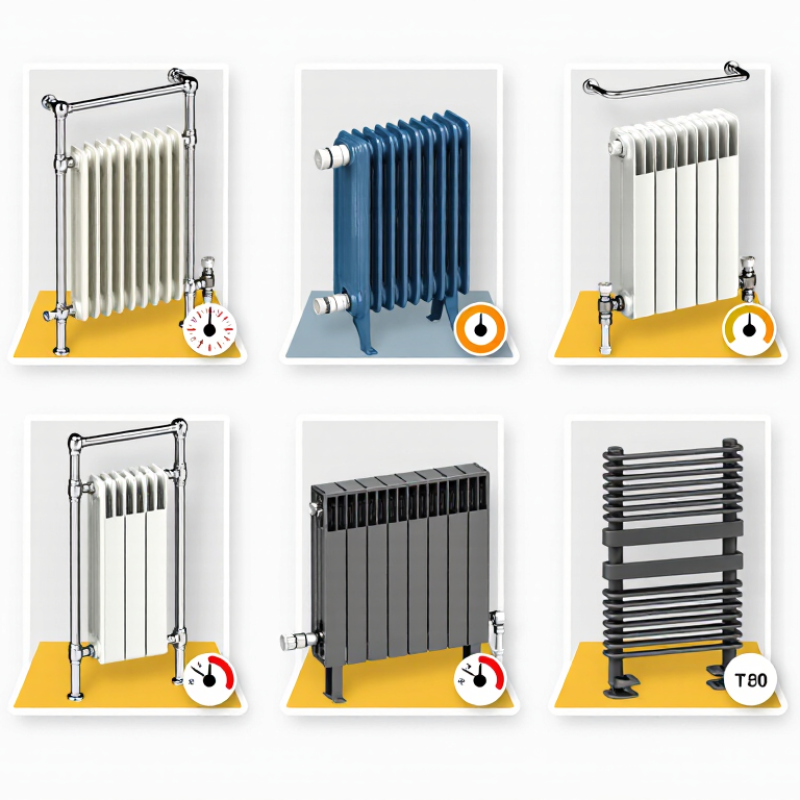
Global buyers need radiators that balance heat output, control, installation, and long-term reliability. Thermostatic radiator valves, or TRVs, adjust water flow as room temperatures change. This can improve comfort and reduce unnecessary heating. The strongest 2026 choices include ten practical types: compact panel radiators, double-panel radiators, vertical radiators, towel radiators, low-temperature radiators, aluminum radiators, steel column radiators, designer radiators, electric-compatible radiators, and corrosion-resistant radiators. Each type suits different climates, room sizes, and heating systems. Panel models work well in bedrooms and offices. Vertical designs save wall space. Aluminum units respond quickly, but their lighter construction may feel less substantial. Performance varies.

For international purchasing, check heat output in watts, pipe connections, operating pressure, valve compatibility, and corrosion protection. A radiator sized for mild weather may struggle in a colder home. That mistake is common. Confirm whether measurements follow the supplier’s stated testing standard. Packaging quality also matters because fins and valve threads can suffer during transport. Ask for installation drawings, material details, warranty terms, and replacement valve availability. These details show practical supplier experience and make comparisons more reliable.

Tips: Measure the room before selecting a radiator. Match the TRV to the heating system. Leave clearance around the unit. Test temperature control after installation. Do not rely only on appearance. A cheaper model can become expensive when fittings, shipping, or maintenance are added. Recheck the calculations; even careful estimates can miss insulation losses.

Installation, Compatibility, and Energy Efficiency Factors

Top 10 TRV Radiators for Global Buyers in 2026?

Installation, Compatibility, and Energy Efficiency Factors

A reliable TRV radiator starts with accurate measurements. Check the pipe centres, connection direction, radiator height, and available wall space before ordering. Many installations use 15 mm or 22 mm pipework, but older homes may need adapters. Confirm the valve thread and connection type. A small mismatch can cause leaks or force awkward pipe changes.

Compatibility also depends on the heating system. Most TRV radiators suit wet, closed-loop systems, but one-pipe layouts require careful valve selection. Check operating pressure, maximum temperature, and heat output at the system’s actual water temperature. A radiator rated at 75°C may deliver far less heat at 45°C. This detail is often missed.

Energy efficiency comes from control, not radiator size alone. Set the TRV near the desired room temperature, then keep curtains and furniture away from the sensor. Balance the system so distant rooms receive enough flow. Lower flow temperatures can improve efficiency, especially with modern condensing boilers and heat pumps. Still, reducing temperature too far may leave a bedroom cold. That trade-off needs testing.

The strongest choices in a global top-ten comparison should include clear installation data, replaceable valve parts, corrosion-resistant finishes, and accessible technical support. Local water quality matters too. In hard-water areas, maintenance may be more frequent than expected. A careful installer should test for leaks after heating and cooling cycles, not only immediately after fitting.

Top 10 TRV Radiators for Global Buyers in 2026 — Installation, Compatibility, and Energy Efficiency Factors
Rank Radiator Configuration Typical Size Heat Output at ΔT50 Heat Output at ΔT30 TRV and Valve Compatibility Connection Arrangement Installation Profile Energy Efficiency Factors Best Application
1 Type 22 double-panel, double-convector steel radiator 600 × 1000 mm Approximately 1,700 W Approximately 860 W Compatible with standard thermostatic radiator valves using common European threaded connections; confirm thread and valve body dimensions. Side-entry or bottom-opposite connections, depending on model Wall brackets required; allow clearance for airflow and valve operation. High surface area and strong low-temperature performance; suitable for condensing boilers and heat pumps when correctly sized. Medium to large living rooms
2 Type 22 compact panel radiator with integrated valve body 600 × 1000 mm Approximately 1,650 W Approximately 830 W Designed for a compatible TRV insert; remote or angled TRV heads may be used where access is restricted. Bottom connections, commonly opposite-end configuration Fast installation on pre-plumbed systems; flow direction and valve insert must be checked. Good control accuracy and neat pipework; output remains dependent on actual system temperature. New construction and renovations
3 Type 33 triple-panel, triple-convector steel radiator 600 × 1000 mm Approximately 2,400 W Approximately 1,200 W Compatible with standard TRV heads and lockshield valves when the valve body is correctly matched to the pipework. Side-entry connections; optional bottom connection on selected formats Heavier than Type 11 or Type 22 units; use suitable brackets and wall fixings. Very high output per wall length, but greater water content can increase warm-up time. Large rooms with limited wall length
4 Type 11 single-panel, single-convector steel radiator 600 × 1000 mm Approximately 950 W Approximately 480 W Works with common mechanical TRVs and electronic TRV heads using the correct adapter or valve body. Side-entry connections Lightweight and simple to mount; suitable for shallow wall spaces. Low water volume supports quick response and room-by-room control, although more wall length may be needed. Bedrooms, corridors, and small offices
5 Vertical Type 22 panel radiator 1800 × 500 mm Approximately 1,650 W Approximately 830 W Use a TRV head positioned horizontally or with a remote sensor if the valve is exposed to rising heat. Bottom connections are common; confirm flow and return positions before purchase. Requires secure fixing to a suitable wall; check height, skirting, and curtain clearance. Provides useful output where horizontal wall space is limited; accurate balancing is important. Narrow rooms and feature walls
6 Low-temperature Type 22 radiator for heat-pump systems 600 × 1400 mm Approximately 2,350 W Approximately 1,180 W Compatible with mechanical or electronic TRVs; valve sizing should reflect lower design flow temperatures. Side or bottom connections, subject to the selected format Requires heat-loss calculation and adequate system flow; oversizing is often necessary for low-temperature operation. Optimized for lower flow temperatures, improving the operating conditions of condensing boilers and heat pumps. Heat-pump retrofit projects
7 Aluminium sectional radiator 600 mm height, 8 sections Approximately 1,200 W Approximately 600 W Use a TRV and valve set approved for aluminium radiators; check water-treatment requirements and thread standards. Side connections, typically reversible by installation orientation Lightweight compared with steel; use compatible plugs, valves, and corrosion-control practices. Low water content provides fast response, but mixed-metal systems may require appropriate inhibitors. Retrofits and lightweight partitions
8 Cast-iron sectional radiator 600 mm height, 8 sections Approximately 1,100 W Approximately 550 W Compatible with standard TRVs when the valve connection and pipe capacity are suitable; electronic heads may require clearance. Side connections; custom pipework may be needed for replacements. Very heavy; structural wall or floor support and careful handling are essential. High thermal inertia maintains heat for longer but gives slower response to TRV adjustments. Heritage interiors and high-mass heating systems
9 Hydronic towel radiator with horizontal rails 1200 × 500 mm Approximately 650 W Approximately 330 W Suitable for TRVs rated for towel radiators; position the sensor away from direct heat from the rails. Bottom or side connections, depending on rail layout Wall fixing must account for tile type, pipe location, and towel loading. Moderate output; do not rely on it as the sole heat source unless the calculated room load is met. Bathrooms and utility rooms
10 Low-profile Type 21 panel radiator 500 × 1000 mm Approximately 1,250 W Approximately 630 W Compatible with standard TRV bodies; angled or remote-sensor heads help where furniture restricts access. Side-entry connections Suitable for shallow spaces; maintain manufacturer-specified clearance above flooring and below shelves. Balanced compromise between depth, output, and water volume; performs best with proper hydraulic balancing. Apartments and compact rooms
Output figures are indicative values for common steel, aluminium, or cast-iron hydronic radiator formats and vary with construction, testing standard, water temperature, room temperature, and manufacturer design. ΔT50 generally represents a 50°C mean water-to-room temperature difference, while ΔT30 represents a 30°C difference. Always verify heat-loss calculations, valve thread standards, connection spacing, operating pressure, corrosion compatibility, and local installation requirements before purchase.

How to Choose the Right TRV Radiator for Your Market

Top 10 TRV Radiators for Global Buyers in 2026

Choosing the right TRV radiator starts with the target market, not the product list. A thermostatic radiator valve controls room temperature by adjusting water flow. Buyers should check local heating habits, climate, room size, and fuel costs. A compact radiator may suit a mild coastal apartment, while a deeper panel may serve a cold inland home. Measure wall space carefully. Incorrect sizing causes uneven warmth and unnecessary energy use.

Tips: Confirm valve thread, pipe position, pressure range, and heat output before ordering. Request test reports and installation drawings. Check whether the valve includes frost protection and tamper-resistant options. These small details often prevent costly returns. Ask suppliers for samples, not only digital specifications.

Material choice also matters across markets. Coated steel can offer practical value, while aluminium usually provides lighter handling and fast heat response. Water quality deserves attention. Hard water may increase maintenance needs in some systems. Confirm compliance with applicable regional standards and require traceable quality records. I have seen attractive specifications fail during installation because connections were assumed, not measured. No selection method is perfect. Even experienced buyers should test a small batch under local conditions. Packaging, spare parts, warranty support, and installer training can influence performance as much as the radiator itself.

FrenchBulgaria