Top Green Machine Optical Sorter Suppliers Worldwide?
Choosing among the top Green Machine Optical Sorter suppliers worldwide requires more than comparing brochures and purchase prices. These systems combine cameras, sensors, software, conveyors, and precisely timed air jets. Their performance depends on material type, moisture, belt speed, particle size, and contamination levels.
This guide examines suppliers through practical and verifiable criteria. It considers sorting accuracy, throughput, energy use, machine durability, software flexibility, installation support, spare parts, and operator training. Reliable manufacturers should provide technical specifications, documented test results, customer references, and realistic performance expectations. A controlled material trial can reveal more than a polished demonstration. Watch how the sorter handles dark plastics, dusty packaging, broken glass, or overlapping items under changing light.
Details matter.
Supplier reputation also deserves careful review. Strong companies explain maintenance schedules, sensor calibration, warranty limits, and response times before signing an agreement. They should understand local recycling conditions rather than offering one standard configuration worldwide. Independent certifications and transparent case studies can support their claims, but they should not replace direct testing.
No supplier is perfect. Published accuracy figures may not reflect wet materials, uneven feeding, or heavily mixed streams. Even an advanced Green Machine Optical Sorter can require careful installation and regular cleaning. This comparison therefore focuses on evidence, field experience, and long-term operating value. Readers can use these factors to identify capable suppliers while recognizing that the best choice depends on site conditions, budget, material goals, and available technical support.
What Defines a Green Machine Optical Sorter? NIR, RGB, AI, and Ejection Rates
Top Green Machine Optical Sorter Suppliers Worldwide?
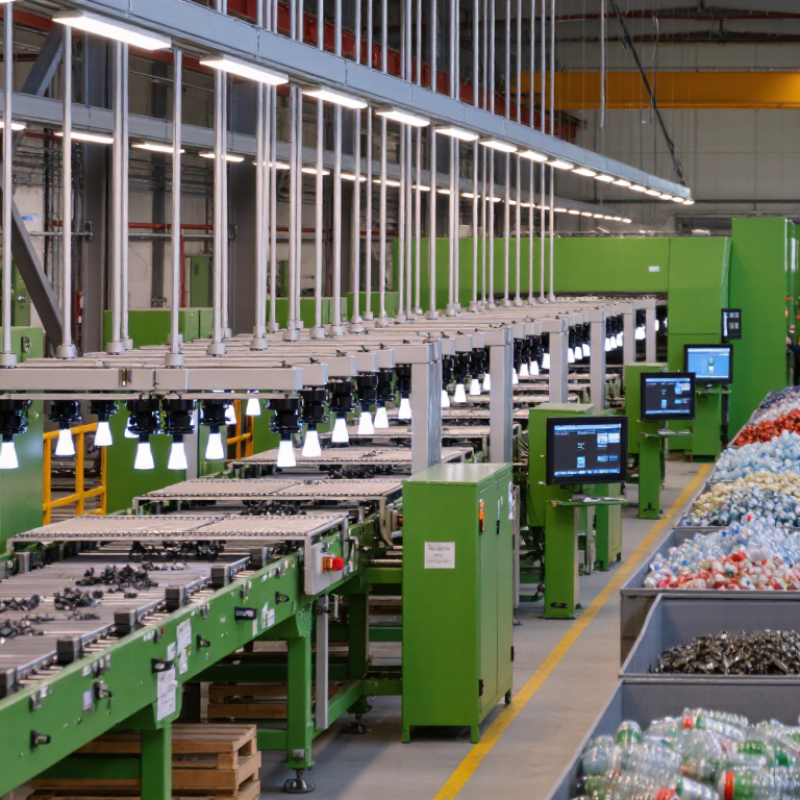
A green machine optical sorter combines NIR, RGB cameras, AI software, and precise air ejection. NIR identifies material chemistry beyond visible color. RGB cameras read surface color, shape, and contamination. AI connects these signals, but it still needs clean training data. Poor lighting can confuse even advanced systems.
Ejection rates reveal practical performance. A fast air valve must remove target items without disturbing valuable material. In real facilities, belt speed, spacing, moisture, and dust change results. A supplier should provide tested recovery, purity, throughput, and compressed-air figures. Ask for sample trials using your actual material. Laboratory claims alone may mislead.
Tips: Check NIR accuracy across colored and dark items. Review RGB performance under changing light. Measure ejection timing at your planned belt speed. Request maintenance records and operator training details. Do not judge AI by software language alone. Watch the sorted fractions. Small losses matter. I would also question unusually perfect results, because every line has difficult pieces and occasional misclassification.
Global Optical Sorting Demand: Recycling Capacity and 2035 EU Targets
Europe’s optical sorting market is being reshaped by recycling capacity, not only machine sales.
Eurostat reported 84.3 million tonnes of packaging waste in the EU in 2021, equal to 188.7 kilograms per person. The European Environment Agency identifies stronger collection, sorting, and reprocessing capacity as essential for meeting 2035 targets. EU policy requires municipal waste recycling to reach 65% by 2035. Landfill use should fall below 10%. These targets create steady demand for near-infrared, color, and artificial-intelligence sorting systems.
Capacity matters more than catalogue specifications. A facility processing 20 tonnes per hour may still lose valuable polymers when input moisture changes. I have seen operators adjust belt speed, air pressure, and calibration several times daily. Small errors become expensive at scale. The OECD Global Plastics Outlook also warns that global plastic waste could nearly triple by 2060 without stronger collection and recycling systems. That forecast supports investment, but future feedstock quality remains uncertain.
Tips:
Compare suppliers through verified recovery rates, uptime records, and independent acceptance tests. Ask for data from materials similar to yours. Check performance after dust, labels, and mixed colors appear. Do not trust laboratory purity alone. Real plants are messier. Review energy use, maintenance access, software updates, and local technician coverage. A 2024 report from the European Commission on circular economy progress also stresses traceability and reliable measurement. Those requirements should influence equipment selection, even when the cheapest bid looks attractive.
Top Worldwide Suppliers: TOMRA, Bühler, Pellenc ST, Machinex, and Sesotec
Worldwide demand for optical sorting is rising with waste volumes. The World Bank’s What a Waste 2.0 report estimates 2.01 billion tonnes of municipal waste annually. It projects 3.40 billion tonnes by 2050. Optical systems help facilities identify polymers, paper, glass, metals, and organic materials on fast conveyor lines.
A practical supplier shortlist includes five international profiles. They cover sensor-based sorting, complete material recovery plants, plastics separation, regional system integration, and quality inspection. Some focus on near-infrared cameras. Others add color cameras, laser sensors, or artificial intelligence.
The European Commission’s Waste Treatment BREF identifies optical sorting as an established technology for improving material recovery. Field experience still matters. Dust, moisture, belt speed, and uneven feed can reduce accuracy.
The OECD Global Plastics Outlook reports that 353 million tonnes of plastic waste were generated in 2019, while only 9% was recycled. This gap creates strong demand for reliable equipment and trained operators. Buyers should compare verified recovery rates, energy consumption, service response, and spare-parts access.
Laboratory results may look impressive. Real plants are messier. A machine calibrated for clean packaging can struggle with black trays, labels, or crushed containers.
Supplier claims should therefore be checked against site trials, third-party testing, and measured output purity. The leading providers are credible, but no system removes the need for maintenance, calibration, and practical operating judgment.
How to Select an Optical Sorter for Plastics, Metals, Glass, and Waste Streams
Choosing a green machine optical sorter starts with the material, not the brochure. UNEP’s Global Waste Management Outlook 2024 estimates 2.3 billion tonnes of municipal waste were generated in 2023. That volume may reach 3.8 billion tonnes by 2050. OECD’s Global Plastics Outlook reports 353 million tonnes of plastic waste in 2019. Sorting accuracy now affects both recovery value and landfill pressure.
For plastics, ask suppliers to demonstrate NIR detection on black, wet, dusty, and overlapping items. For glass, test colour separation, ceramics rejection, and broken fragments. Metals need careful evaluation. Optical sensors can identify surface properties, but eddy-current or magnetic systems may be necessary for reliable metal recovery. Waste streams require trials using your actual belt speed, moisture level, particle size, and contamination profile. A clean laboratory sample can hide difficult plant conditions.
Tips: Request a measured test report, not only a purity claim. Check recovery rate, throughput, compressed-air use, false rejects, and service response time. Ask for results after continuous operation, because performance can drift.
Experience matters here. A supplier should explain calibration, software updates, lighting stability, and maintenance access. Energy consumption deserves equal attention; a fast sorter is not automatically sustainable. Compare kilowatt-hours per tonne over a full shift. I would also challenge impressive accuracy figures when feed composition changes weekly. The best choice may be a slower system with steadier recovery, simpler cleaning, and locally available technical support. Ensure every claim is traceable to testing data, operating assumptions, and a clearly defined material stream.



