
Blog

Top Roll Thread Machine Manufacturers for Global Buyers

Choosing a reliable roll thread machine manufacturer requires more than comparing catalog prices. Global buyers need evidence of stable production, accurate thread forming, and dependable after-sales support. A machine may look impressive in photographs, yet its real value appears during long production runs.

W. Edwards Deming, a respected manufacturing quality expert, said, “Quality comes not from inspection, but from the improvement of the production process.” This principle applies directly to roll thread machine selection. Strong manufacturers control material quality, heat treatment, machine alignment, and final testing. They should also explain how their machines handle different diameters, thread profiles, die materials, and production speeds.

Small details matter. Ask about spindle rigidity, hydraulic stability, control systems, tooling changes, and replacement parts. Request sample threads made from your actual steel grade. A clean thread crest and consistent pitch reveal more than a polished brochure. Service response also matters when a machine stops beside a busy production line.

No ranking is perfect. Buyer requirements differ.

Some factories need compact equipment for short batches. Others require heavy-duty machines for automotive fasteners, construction parts, or high-volume exports. Certification, operator training, installation support, and documented inspection procedures should remain part of the evaluation.

This guide introduces leading roll thread machine manufacturers for global buyers. It considers engineering capability, manufacturing experience, customization, delivery reliability, and customer support. Price is included, but it should not dominate the decision. A cheaper machine can become expensive when tooling, downtime, and technical delays are overlooked. Even experienced buyers can miss these risks. Careful comparison remains essential.
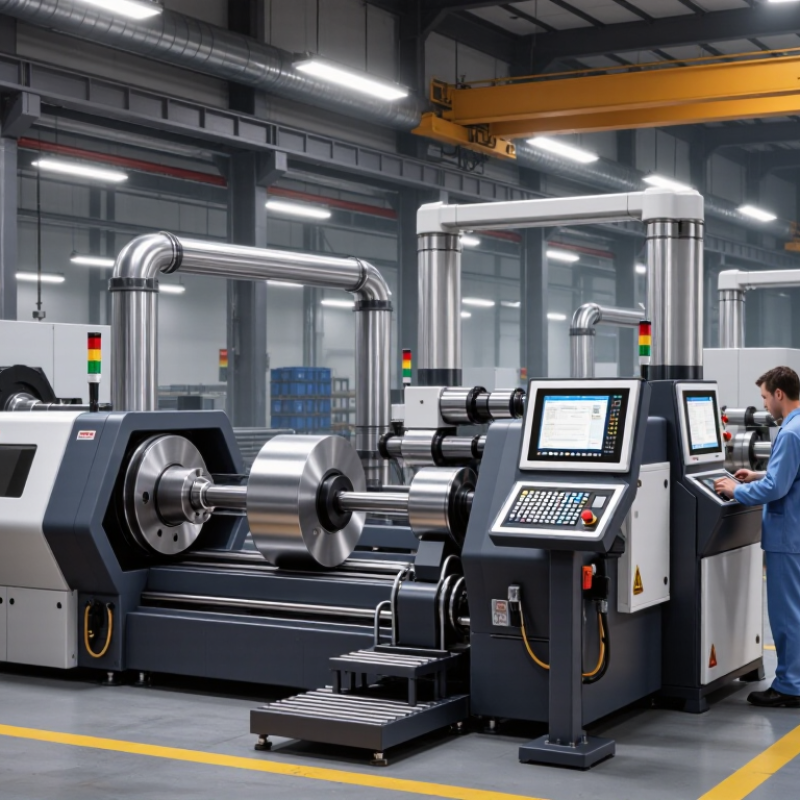
Top Roll Thread Machine Manufacturers for Global Buyers

What Roll Thread Machines Are and How They Work

A roll thread machine forms threads by pressing a cylindrical blank between hardened dies. The dies rotate and displace metal, rather than cutting it away. The workpiece follows the die profile under controlled pressure. A thread appears within seconds.

This process improves grain flow along the thread crest and root. It can also produce stronger surfaces and consistent pitch. The 2024 Grand View Research assessment of metal-forming machine tools forecasts mid-single-digit annual growth through 2030. That trend reflects demand for faster, repeatable cold-forming processes.

Actual performance still depends on material hardness, lubrication, die geometry, and machine alignment.

Setup matters more than brochures suggest. Operators check blank diameter with calibrated micrometers before production. A blank that is slightly oversized may cause excessive forming pressure. Undersized stock can create shallow flanks or incomplete threads. ISO 965-1 provides tolerance principles for metric screw threads, helping engineers define acceptable pitch diameter and fit. In practical workshops, vibration, worn dies, and inconsistent lubrication remain common sources of rejection. The process is efficient, but not magic. I would also question any supplier claiming identical results across every alloy without trial runs, because steel grade and heat treatment can change forming behavior significantly.

Key Features That Define a Reliable Roll Thread Machine Manufacturer

A reliable roll thread machine manufacturer proves performance on the shop floor, not through polished brochures. Buyers should request sample parts, thread-gauge results, and cycle-time records. According to Deloitte’s 2024 Global Smart Manufacturing Survey, 86% of manufacturers expect smart manufacturing to become a major competitiveness driver. Therefore, suppliers should offer stable sensors, traceable production data, and practical machine diagnostics.

Mechanical accuracy remains critical. Check spindle alignment, roller pressure control, tool-life monitoring, and repeatability across long production runs. The manufacturer should test machines under realistic loads, not only during a short demonstration. Documentation should reference recognized safety and machine-tool practices, including ISO 12100 and ISO 230-2. A responsive service team also matters. Spare-part availability, remote troubleshooting, installation training, and clear warranty terms can prevent costly downtime.

Tips: Ask for a factory acceptance test using your material and thread specification. Confirm measurement methods before comparing accuracy claims. A low price can hide weak support, but an expensive machine can still disappoint. Even experienced buyers sometimes overlook software updates and operator training. That mistake is avoidable. Choose a manufacturer that shares inspection records, explains limitations honestly, and adapts the machine to your actual production environment.

Key Features That Define a Reliable Roll Thread Machine Manufacturer

This non-brand-specific procurement benchmark highlights measurable factors commonly reviewed by global buyers: thread diameter range, rolling force, motor capacity, dimensional repeatability, warranty coverage, and production cycle time. The values represent practical reference targets for industrial roll thread machine purchasing.

Leading Manufacturer Types and Their Global Market Roles

Roll thread machine manufacturers serve different roles in the global supply chain. Integrated manufacturers design, machine, assemble, and test complete production lines. They suit buyers needing matched equipment, process guidance, and one technical contact.

Specialized manufacturers focus on specific machine types, such as flat-die, planetary, or cylindrical-die systems. Their narrower expertise can improve tooling accuracy and thread consistency. Buyers should inspect sample parts, cycle times, and maintenance access before choosing. A polished showroom is not enough.

Original equipment manufacturers often build machines for regional distributors or industrial solution providers. Their strength is flexible production and private-label support. Regional manufacturers may understand local power standards, operator habits, and service expectations better than distant suppliers. However, their export experience can vary. Check packing methods, spare-part lists, installation instructions, and response times.

Global buyers also rely on manufacturers with established engineering and after-sales teams. Practical support matters when a machine arrives with vibration, incorrect setup, or unfamiliar controls. Ask for factory acceptance testing with real workpieces. Review inspection records, safety documentation, and warranty boundaries in writing. These steps reveal more than sales promises.

Price still influences decisions. Yet the cheapest quote may hide weak tooling support or expensive downtime. That assumption deserves scrutiny. Even experienced buyers can overvalue delivery speed. A delayed machine is frustrating, but an unstable machine can damage production for years. The strongest supplier is not always the largest. It is the one whose manufacturing role matches the buyer’s material, volume, skill level, and service needs.

How to Compare Machine Quality, Capacity, and Technical Support

Comparing roll thread machine manufacturers requires more than reading speed figures. Inspect sample threads made from your actual steel grade and diameter range. The thread crest should look clean, without tearing, folding, or uneven pitch. Measure several pieces with a thread gauge and micrometer. Repeatability matters more than one attractive sample.

Check machine quality through frame rigidity, roller alignment, drive stability, and guarding. A heavy frame can reduce vibration during high-pressure forming. Ask for test data covering dimensional tolerance, cycle time, and tool life.

Capacity figures need context. Clarify whether the quoted output includes loading, unloading, tooling changes, and inspection. A machine rated for 120 parts per minute may produce less in daily operation. Real factories are rarely that tidy.

Technical support can protect production better than an impressive specification sheet. Request installation procedures, operator training, electrical drawings, and preventive-maintenance schedules. Confirm response times for remote diagnosis and the availability of critical spare parts. Ask whether technicians can support your control system and material requirements. A supplier should explain limitations plainly. That builds trust.

During evaluation, record every question and test result. I would also repeat the trial after a warm-up period, because early results can look unusually stable. This step is easy to overlook, and it has caused me expensive doubts before.

Buying Factors for International Roll Thread Machine Customers

International buyers assess roll thread machine manufacturers beyond catalog prices. A suitable machine must match thread diameter, material strength, production volume, and regional power standards. Ask for verified samples before placing a large order. Test thread accuracy, surface finish, cycle stability, and tooling wear. Real production evidence matters more than polished brochures.

Technical documentation should state rolling force, spindle speed, die specifications, tolerance range, and recommended lubrication. Confirm whether operators can adjust pressure without unsafe improvisation. Remote commissioning, training videos, spare-part lists, and response times reveal supplier reliability. Request references from users with similar metals and batch sizes. Their maintenance records may expose weaknesses that sales conversations hide.

International purchasing also involves packaging, insurance, installation support, customs paperwork, and service language. Confirm the machine’s footprint and lifting points before shipment. A small drawing mistake can delay a factory installation. Total cost includes dies, freight, calibration, energy use, and downtime. Payment terms should be clear and documented. Do not accept vague promises about delivery or precision. One practical concern is often overlooked: local technicians may need simple access to sensors and controls. I would still leave room for doubt. Factory conditions vary, and a successful test cannot guarantee every result. A staged order, with measurable acceptance criteria, reduces that risk.

FrenchBulgaria