
NOTICE
We use cookies to improve the user experience and analyze its performance.
A 240mm clutch kit is a matched group of components designed around a 240-millimeter clutch diameter. It commonly includes a clutch disc, pressure plate, release bearing, and alignment tool. Some packages may also contain pilot bearings or replacement bolts. The exact contents depend on the manufacturer and vehicle application.
The 240mm measurement refers to the disc’s nominal friction diameter, not the complete assembly’s outside size. That distinction matters when comparing parts. A larger clutch surface can help manage higher torque, but size alone does not prove better performance. Disc material, spring pressure, flywheel condition, and heat resistance also influence durability. A clutch kit 240mm specification should therefore be checked against the engine code, gearbox, flywheel design, and original equipment number.
In workshop use, technicians inspect the flywheel for blue heat marks, cracks, and uneven wear before fitting a new kit. They also check hydraulic operation and release-fork movement. Small installation errors can cause clutch drag, vibration, or early slipping. The label can mislead.
Reliable selection depends on verified vehicle data and the manufacturer’s fitting instructions. Some kits use a solid flywheel, while others require a dual-mass flywheel. These systems are not automatically interchangeable. Torque increases, towing loads, and frequent stop-start driving may justify a stronger specification, but an overly firm pressure plate can make the pedal uncomfortable. The best choice balances capacity, drivability, and proven compatibility rather than relying on diameter alone.
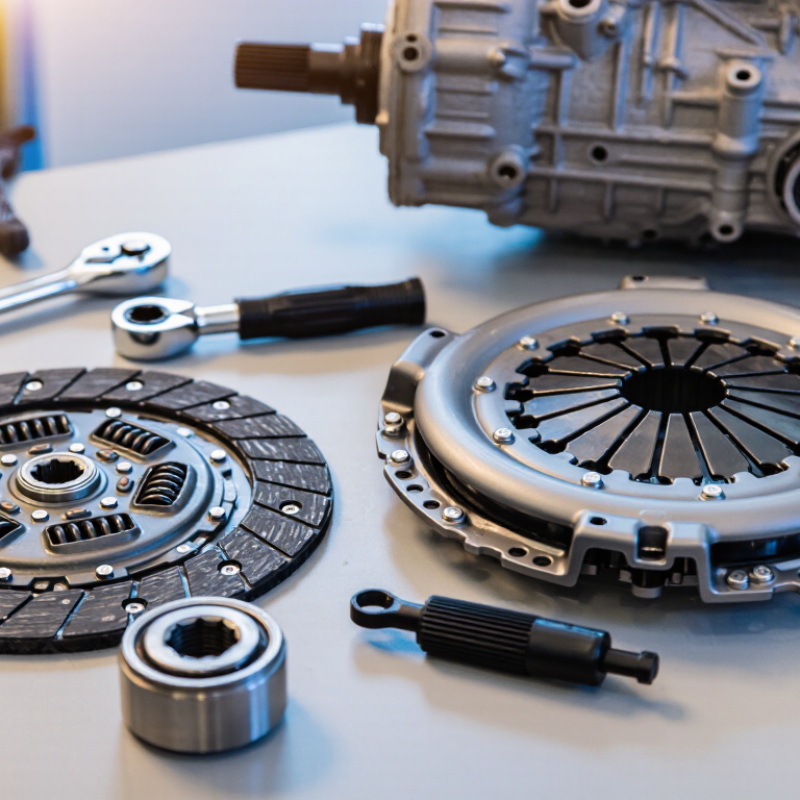
A 240mm clutch kit uses a clutch disc measuring approximately 240 millimetres across. The measurement describes the disc’s outer diameter, not the complete assembly. A typical kit includes the disc, pressure plate, release bearing, and alignment tool. Its purpose is to transfer engine torque to the gearbox while allowing smooth gear changes.
Size matters, but it does not tell the whole story. Clamping force, friction material, disc design, flywheel condition, and heat resistance also control performance. The 2023 U.S. Environmental Protection Agency Automotive Trends Report recorded average new-vehicle weight above 4,000 pounds. Heavier vehicles place greater thermal and torque demands on the clutch during launches. SAE clutch-testing literature also emphasizes temperature, wear, and repeated engagement cycles. A 240mm kit may suit one vehicle but fail early in another. That judgment is often missed.
Tips: Check the vehicle’s original diameter, spline count, flywheel type, and torque rating. Measure the flywheel before ordering. Inspect oil contamination and surface cracks. A slightly worn release fork can create uneven pressure, even with a new kit. Avoid choosing by diameter alone. In practice, fitment charts can be incomplete, and real driving conditions vary. That deserves a second look.
| Specification | Typical Information | Explanation |
|---|---|---|
| Clutch Disc Diameter | 240 mm (approximately 9.45 in) | The “240mm” designation normally refers to the nominal outside diameter of the clutch friction disc. The actual measured diameter may vary slightly by design and manufacturing tolerance. |
| Main Function | Transmit engine torque to the transmission | The clutch connects and disconnects the engine crankshaft from the manual transmission, allowing the vehicle to start, stop, shift gears, and remain stationary while the engine runs. |
| Common Kit Components | Friction disc, pressure plate, and release bearing | Many kits include these three primary service parts. Some applications may also require or include a pilot bearing, alignment tool, flywheel bolts, or a hydraulic release component. |
| Pressure Plate | 240mm-compatible cover assembly | The pressure plate applies clamping force to hold the disc against the flywheel. Its bolt pattern, height, diaphragm spring, and release mechanism must match the vehicle application. |
| Friction Disc Hub | Application-specific spline count and shaft diameter | A 240mm disc is not universally interchangeable. The hub must match the transmission input shaft in spline count, spline form, shaft diameter, and engagement length. |
| Flywheel Compatibility | Must match the 240mm clutch assembly | The flywheel must have the correct friction surface diameter, mounting pattern, step height, and starter-ring arrangement. A single-mass and a dual-mass flywheel are not automatically interchangeable. |
| Torque Capacity | Varies by application and clutch design | Diameter alone does not determine torque capacity. Clamping force, friction material, disc construction, flywheel condition, and operating temperature all affect performance. |
| Friction Material | Organic, ceramic, sintered, or hybrid compounds | Organic linings generally provide smooth engagement for everyday driving. Ceramic and sintered materials can tolerate higher heat and load but may engage more abruptly and increase drivetrain stress. |
| Disc Construction | Solid or sprung hub design | A sprung hub can help absorb torsional vibration and improve drivability. A solid hub is often selected for specialized high-load applications but may transmit more noise and vibration. |
| Release Mechanism | Mechanical cable, hydraulic slave cylinder, or concentric release bearing | The release system depends on the vehicle. The bearing type, travel distance, bearing height, and hydraulic connection must be compatible with the pressure plate and transmission. |
| Typical Application Range | Manual-transmission passenger vehicles, light commercial vehicles, and performance applications | The correct kit is determined by the vehicle’s engine, transmission, production year, flywheel, input shaft, and original clutch specifications—not by disc diameter alone. |
| Installation Practice | Replace matched wear components together | A proper installation normally includes inspection of the flywheel, replacement of worn release components, correct disc alignment, and tightening fasteners to the vehicle manufacturer’s specifications. |
| Break-In Requirement | Usually requires a controlled bedding-in period | Many new clutch assemblies need several hundred kilometers of moderate driving to allow the friction surfaces to seat. Exact break-in instructions should follow the kit or vehicle service guidance. |
| Key Selection Checks | Disc diameter, spline specification, bolt pattern, release bearing, and flywheel type | Confirming all of these dimensions is essential because two clutch kits with the same nominal 240mm diameter may fit different engines or transmissions. |


