
NOTICE
We use cookies to improve the user experience and analyze its performance.
Choosing the best Drain Cleaning Machine from China requires more than comparing prices, motor power, or attractive product photographs. The global drain cleaning equipment market continues to expand as cities replace aging sewer networks and property owners demand faster maintenance. The Business Research Company’s Drain Cleaning Equipment Global Market Report 2024 identifies infrastructure renewal, urbanization, and professional plumbing services as important growth drivers. Grand View Research also reports that broader plumbing equipment demand is supported by construction activity and stricter maintenance expectations.
China is a major manufacturing base for electric drum machines, sectional machines, and water-jetting systems. However, “made in China” describes origin, not quality. Buyers should examine cable steel grade, drum protection, ground-fault safety, noise levels, spare-part availability, and documented testing. Ask for load-test records. Request clear warranty terms. Check the foot switch before purchase.
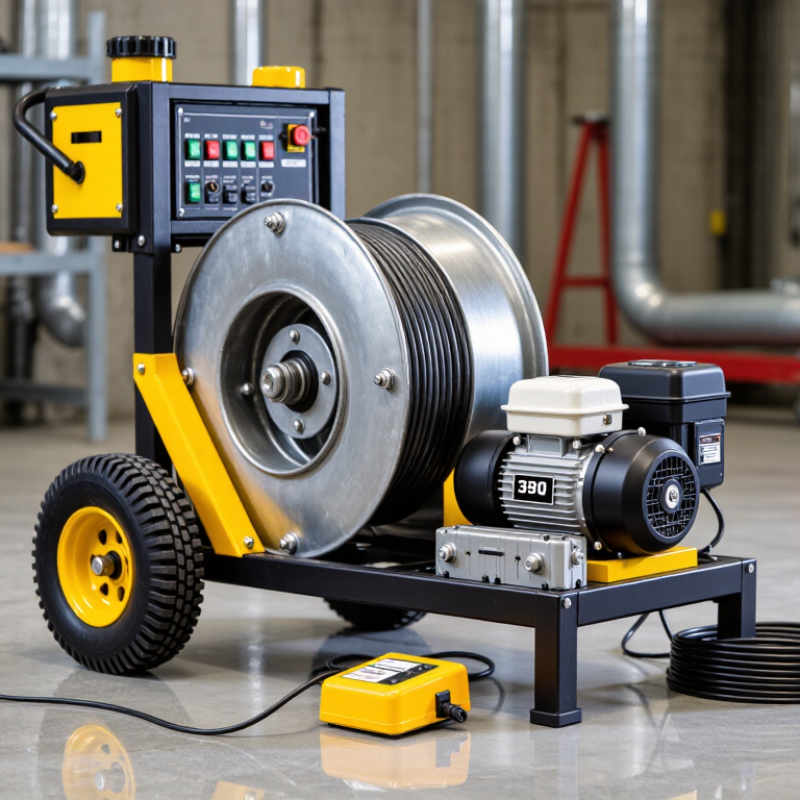
As licensed plumber and plumbing educator Roger Wakefield often emphasizes, “The right tool makes the job safer, faster, and more effective.” That principle applies directly here. A compact 390-watt machine may suit household sinks, while a heavy-duty sectional unit can handle longer commercial lines. Bigger is not always better.
The strongest choice balances torque, portability, operator control, and service support. It should clear a blocked pipe without twisting violently in the user’s hands. That detail matters. Some online comparisons overlook it.
Market reports can also classify machines differently, so their figures are useful but imperfect. Practical testing remains essential. A reliable Chinese Drain Cleaning Machine should perform consistently in wet workshops, include replaceable components, and arrive with readable operating instructions. The lowest quotation may become expensive after one failed cable, delayed part, or unsafe repair.
What Is the Best Drain Cleaning Machine from China?
Drain Cleaning Machine Types: Cables, Jetters, and Inspection Systems
China offers many drain cleaning machines, but the best choice depends on the blockage and pipe condition. Cable machines suit grease, roots, and compact debris in household lines. They provide strong mechanical contact, even in narrow pipes. However, operators must control torque carefully. Excessive force can damage old or cracked pipes.
High-pressure jetters wash pipe walls with focused water streams. They work well on grease, sludge, and recurring buildup. A suitable model should show pump pressure, flow rate, hose length, and water protection details. Inspection systems use push cameras, self-leveling cameras, or crawler units. They reveal collapsed sections, joint failures, and hidden roots before cleaning begins. The U.S. Environmental Protection Agency’s 2022 Clean Watersheds Needs Survey estimated 630.1 billion dollars in wastewater infrastructure needs. That figure shows why diagnosis and preventive maintenance matter. NASSCO’s PACP system also demonstrates the value of standardized sewer inspection records.
Tips: Match the cable diameter to the pipe size. Choose jetter flow before chasing maximum pressure. Record camera distance and defect location. Test safety controls before field work.
A combined cable-and-camera setup is often practical for contractors. A jetter becomes more valuable for larger commercial lines. Price alone is not reliable. Spare parts, operator training, warranty response, and clear technical documents deserve equal attention. Some machines appear powerful on paper, yet perform poorly with unstable pumps or weak cable drums. Selection still requires careful testing.
| Machine Type | Operating Principle | Typical Pipe Diameter | Typical Working Reach | Common Power Source | Best Applications | Main Advantages | Important Limitations | Key Buying Criteria |
|---|---|---|---|---|---|---|---|---|
| Drum Cable Machine Cables | A rotating flexible cable carries a cutting, boring, or retrieving tool through the blockage. | Approximately 50–150 mm (2–6 in), depending on the cable and tool configuration. | Commonly 15–30 m (50–100 ft); larger professional systems may reach farther. | Electric motor, commonly powered by a standard commercial electrical supply. | Household drains, kitchen lines, bathroom drains, floor drains, and short branch lines. |
|
| Cable diameter, drum capacity, rotation control, ground-fault protection, tool selection, and operator safety features. |
| Sectional Cable Machine Cables | Uses detachable cable sections connected together to reach deep sewer lines. | Approximately 75–300 mm (3–12 in), depending on the model and cutting tools. | Often 30–90 m (100–300 ft) with additional cable sections. | Electric motor; some heavy-duty units use hydraulic drive systems. | Long commercial drains, main sewer lines, municipal maintenance, and large facilities. |
|
| Cable strength, coupling design, torque control, transport wheels, protective guards, and compatibility with sectional tools. |
| High-Pressure Water Jetter Jetters | A pump forces water through a specialized nozzle to cut, scour, and flush deposits from the pipe wall. | Approximately 50–600 mm (2–24 in), depending on pressure, flow, hose, and nozzle selection. | Commonly 30–150 m (100–500 ft), subject to pipe condition and hose diameter. | Electric motor, gasoline engine, diesel engine, or vehicle-mounted hydraulic power. | Grease, sludge, silt, scale, accumulated sediment, and recurring sewer maintenance. |
|
| Working pressure, water flow rate, hose length, pump material, nozzle compatibility, filtration, water recovery, and safety relief systems. |
| Compact Electric Jetter Jetters | Uses an electric pump and flexible hose to deliver pressurized water through small or medium-sized drains. | Approximately 40–150 mm (1.5–6 in). | Commonly 15–60 m (50–200 ft). | Electric motor, generally suitable for indoor or urban service locations. | Apartments, restaurants, commercial kitchens, hotels, and indoor maintenance work. |
|
| Electrical rating, pump flow, pressure regulation, hose flexibility, water inlet filtration, portability, and leakage protection. |
| Trailer or Vehicle-Mounted Jetter Jetters | A high-capacity pump, water tank, hose reel, and engine are integrated into a trailer or service vehicle. | Approximately 100–900 mm (4–36 in), depending on system capacity and nozzle design. | Commonly 60–300 m (200–1,000 ft). | Gasoline or diesel engine; hydraulic systems may be used in specialized installations. | Municipal sewers, industrial drains, long laterals, stormwater lines, and large commercial networks. |
|
| Pump flow and pressure, tank capacity, hose reel design, engine cooling, nozzle range, service access, and transport regulations. |
| Push-Rod Inspection Camera Inspection Systems | A waterproof camera mounted on a semi-rigid push cable transmits live images to a monitor. | Approximately 40–200 mm (1.5–8 in), depending on camera head size and pipe layout. | Commonly 30–60 m (100–200 ft). | Rechargeable battery or mains-powered control unit. | Residential branches, commercial drains, blockage location, pipe condition checks, and post-cleaning verification. |
|
| Camera diameter, image resolution, cable length, self-leveling function, sonde frequency, recording capability, and waterproof rating. |
| Crawler Inspection System Inspection Systems | A remotely controlled camera vehicle travels through larger pipes and sends video and measurement data to the operator. | Approximately 150–2,000 mm (6–80 in), depending on crawler size and wheel configuration. | Commonly 100–500 m (330–1,640 ft) with a powered inspection cable. | Mains power, generator, or a dedicated inspection control system. | Municipal sewers, industrial pipelines, stormwater systems, large-diameter infrastructure, and asset surveys. |
|
| Crawler traction, camera pan-and-tilt range, cable length, measurement accuracy, data export, lighting, and pipe-diameter adjustment. |
| Locator and Sonde System Inspection Systems | A transmitter installed near a camera or cable emits a detectable signal to identify underground equipment location and depth. | Used with compatible camera systems and drain lines of various sizes. | Locating range depends on signal strength, soil conditions, depth, and interference. | Rechargeable battery or integrated camera-system power. | Marking blockage locations, identifying pipe routes, and reducing unnecessary digging. |
|
| Transmitter frequency, locating depth, signal stability, display readability, battery life, and compatibility with inspection cameras. |


