Blog

What Is a Tank Level Monitoring System for Global Buyers?

A tank level monitoring system is no longer a simple gauge beside a storage vessel. For global buyers, it is a practical control point for inventory accuracy, production continuity, workplace safety, and maintenance planning. The right solution can show whether a tank is nearly full, unexpectedly empty, or changing level too quickly. Small details matter. A cloudy liquid may challenge ultrasonic sensing. Foam can distort readings. A metal tank may require careful radar installation.

Greg McMillan, a recognized process-control engineer and author, expresses the principle clearly: “Good control begins with good measurement.” His view reflects a central purchasing reality. A monitoring system is valuable only when its data supports timely, confident decisions. Buyers should therefore examine sensor accuracy, measurement range, communication protocols, alarm functions, data logging, and installation conditions. Compatibility with existing PLC, SCADA, or cloud platforms also deserves close attention.

The cheapest device is not always the lowest-cost choice. A failed reading can interrupt filling, trigger unnecessary inspections, or hide a developing leak. That risk is easy to underestimate. Global purchasers also need to review documentation, calibration support, cybersecurity practices, warranty coverage, and regional service capability. Requirements differ between water tanks, chemical storage, food processing, and fuel applications. There is no universal setup.

This guide explains how to evaluate a tank level monitoring system from a buyer’s perspective. It considers technical performance, operating environments, supplier reliability, and long-term ownership. Some recommendations may need adjustment after site testing. That is normal. Real tanks are rarely as predictable as product brochures suggest.

What Is a Tank Level Monitoring System for Global Buyers?

What Is a Tank Level Monitoring System?

A tank level monitoring system measures and reports how much liquid or material remains inside a storage tank. It typically combines a level sensor, a communication unit, and monitoring software. The sensor may use ultrasonic, radar, pressure, or float-based measurement. Each method suits different tank shapes, materials, temperatures, and operating conditions.

In daily use, the sensor sends readings to a local display or cloud dashboard. Operators can view the level, identify unusual changes, and receive alerts before a tank becomes empty or overfilled. For example, a 20% level warning can trigger a planned refill instead of an urgent delivery. A dashboard may also record temperature, signal strength, battery status, and measurement history. These details help maintenance teams understand what happened, not only what is happening.

Installation experience matters. A sensor mounted too close to an inlet can receive unstable readings. Foam, vapor, dust, and tank walls may also affect accuracy. No system is perfect. A reading can still be wrong if the tank is poorly calibrated or the communication signal is weak. Reliable projects include site testing, suitable sensor selection, regular inspection, and clear data protection practices. Global buyers should check measurement range, operating environment, connectivity, power requirements, alarm settings, and support procedures before choosing a system.

How Tank Level Monitoring Systems Measure and Report Levels

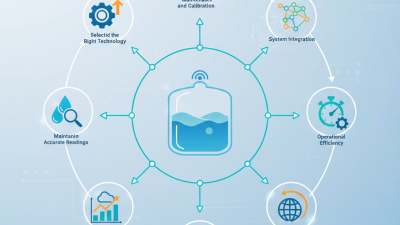
A tank level monitoring system measures material height and converts it into usable inventory data. The sensor choice depends on the tank, liquid, temperature, and installation conditions. Hydrostatic sensors calculate level from pressure at the tank bottom. Ultrasonic and radar sensors measure the distance from the roof to the surface. Float, capacitance, and load-cell systems provide other practical options.

The measurement is not the final answer. A controller applies tank geometry, density, temperature, and calibration data before reporting volume or percentage. A cylindrical tank is relatively simple. A horizontal or irregular tank needs a strapping table. Small errors matter. A 10-millimeter offset can distort purchasing decisions in a wide tank.

Data may travel through 4–20 mA, HART, Modbus, cellular networks, or LoRaWAN. The platform then displays trends, sends threshold alerts, and records historical readings. According to IoT Analytics’ State of IoT report, connected IoT devices reached about 16.6 billion in 2023, showing why remote reporting is becoming practical for distributed tanks. However, connectivity does not guarantee accuracy. The 2024 Verizon State of IoT report identified security and integration as continuing implementation concerns. A sensor can report perfectly while measuring the wrong reference point. Regular calibration, sensor inspection, and comparison with manual readings remain necessary. That part is often underestimated.

Key Components of a Tank Level Monitoring System

A tank level monitoring system combines hardware, software, and communication tools. For global buyers, each component must suit the tank, liquid, location, and local network conditions. The core component is the level sensor. Ultrasonic sensors measure distance from above the liquid, while pressure sensors detect liquid weight near the tank base. Radar sensors can perform well in dusty or humid environments. No sensor fits every tank. That matters.

A local gateway receives sensor readings and sends them to a cloud platform or control room. It may use cellular networks, Wi-Fi, or long-range radio communication. Remote sites need strong signal coverage and stable data transmission. The power unit is equally important. Batteries support simple installations, while solar panels can serve isolated tanks. Cloud software turns readings into useful information. A clear dashboard should show current level, consumption trends, and abnormal changes. It should also send alerts before overflow or unexpected shortages occur.

Reliable monitoring needs proper installation and calibration. A sensor mounted too close to internal pipes may produce unstable readings. I have seen small installation errors create unnecessary alarms. Regular checks can expose these problems early. Data security also requires user access controls, encrypted communication, and backup records. Battery status should appear beside tank data, not in a hidden menu. No system is perfect. Buyers should request field testing, maintenance guidance, and clear accuracy limits before purchase. That practical review often reveals more than a polished product demonstration.

What Is a Tank Level Monitoring System for Global Buyers?

A tank level monitoring system combines a level sensor, signal transmitter, communication gateway, cloud dashboard, and alert functions to measure liquid inventory remotely. The chart shows a representative 24-hour level profile for a 10,000-liter storage tank.

Levels are shown as a percentage of the tank's usable capacity. The 20% line represents a practical low-level replenishment threshold, while the 90% line indicates a high-level operating limit. The sensor collects the level, the transmitter converts it into a standard signal, the gateway sends the data, and the dashboard provides monitoring and alerts.

Benefits for Global Buyers and Industrial Operations

What Is a Tank Level Monitoring System for Global Buyers?

Benefits for Global Buyers and Industrial Operations

A tank level monitoring system measures stored liquid levels through sensors, gateways, and software. It can track water, fuel, chemicals, or process liquids in real time. For global buyers, this visibility supports better purchasing decisions and safer daily operations. Operators can check readings from a control room, tablet, or approved remote interface. That matters.

Accurate data helps reduce emergency deliveries, overflow risks, and unnecessary storage inspections. A buyer managing several sites can compare consumption patterns across regions. This supports more reliable inventory planning and fewer production interruptions. Alerts can identify unusual drops, rising levels, or sensor communication failures. Small errors grow. Early warnings create time for trained staff to investigate.

Industrial teams also benefit from clearer maintenance records and more consistent reporting. A well-designed system should support calibration checks, data backups, secure access, and integration with existing control equipment. Installation conditions deserve careful attention. Heat, vibration, condensation, and difficult tank shapes can affect readings. One device may not suit every facility. Buyers should request test results, installation guidance, and service response details before approval.

The technology is useful, but it is not flawless. Sensors can drift, networks can fail, and automated alerts may be ignored. Human review remains necessary, especially during unusual production cycles or extreme weather. Global operations should also consider local electrical requirements, language settings, training needs, and data-handling expectations. A practical system is not merely connected; it must remain understandable and dependable for the people using it.

What Is a Tank Level Monitoring System for Global Buyers? - Benefits for Global Buyers and Industrial Operations
Data Dimension Manual Measurement Fixed Tank Level Monitoring System Value for Global Buyers Operational Benefit
Basic Definition Tank level is checked periodically with a dipstick, sight glass, or local gauge. A sensor measures liquid level continuously or at configured intervals and sends readings to a local controller or cloud platform. Remote visibility
Buyers can evaluate monitoring functions without relying on physical access to every tank.
Provides a consistent digital record of inventory level and tank status.
Common Measurement Technologies Manual dipstick, float gauge, or visual inspection. Non-contact radar or ultrasonic sensors; hydrostatic pressure sensors; guided-wave radar; or float-based transmitters. Technology can be selected according to tank material, liquid properties, temperature, vapor conditions, and installation requirements. Non-contact measurement reduces exposure to corrosive, hazardous, or contaminated process media.
Typical Accuracy Depends on operator technique, tank geometry, dipstick condition, and reading resolution. Typical industrial specifications range from millimeter-level accuracy for some radar and ultrasonic instruments to approximately ±0.25%–±0.5% of full scale for many hydrostatic systems. Actual performance depends on the sensor and application. Technical specifications can be compared using accuracy, repeatability, measuring range, and application conditions rather than price alone. More stable readings support replenishment planning, material tracking, and process control.
Measurement Continuity Data is available only when personnel perform an inspection. Readings can be collected continuously or at scheduled intervals, such as every few minutes or hours. Scheduled reporting can be matched to local network availability, power limitations, and data-plan requirements. Trend data helps identify rapid consumption, abnormal filling, leakage, or unexpected process changes.
Remote Communication Information normally remains at the tank location until it is reported manually. Common communication options include wired industrial networks, cellular, Wi-Fi, LoRaWAN, and other low-power wireless networks. Communication should be checked against regional coverage, frequency regulations, cybersecurity requirements, and local infrastructure. Operators can monitor tanks across multiple facilities without visiting each site.
Supported Data Outputs Handwritten notes, spreadsheets, or manually entered inspection records. Level, percentage full, calculated volume, temperature, signal status, battery status, and alarm state may be available when supported by the sensor and software. Standard outputs make it easier to connect monitoring data with inventory, maintenance, or enterprise software. Digital records improve traceability and reduce transcription errors.
Alert Functions Alerts depend on personnel noticing a problem during an inspection. Configurable high-level, low-level, rate-of-change, sensor-fault, communication-loss, and low-battery alerts can be provided. Alert delivery may use dashboards, email, text messaging, or platform notifications, depending on the system configuration. Early warnings help reduce stockouts, overflow events, emergency deliveries, and unplanned downtime.
Installation Requirements Usually requires access to the tank and a safe inspection procedure. Requirements may include a suitable mounting point, process connection, power source or battery, network coverage, calibration data, and mechanical protection. Buyers can compare installation complexity, local service availability, spare parts, and commissioning requirements before purchase. Correct installation improves measurement reliability and reduces maintenance visits.
Environmental Suitability Personnel and local instruments may be affected by weather, poor visibility, heat, or hazardous areas. Selection should consider temperature range, humidity, dust or water ingress protection, chemical compatibility, vibration, and hazardous-area certification where required. Environmental and regulatory requirements differ by country and industry, so certification must be verified for the destination market. A correctly rated enclosure and sensor reduce failures caused by moisture, corrosion, dust, or extreme temperatures.
Power Options No electronic power is required for a basic manual reading. Systems may use mains power, batteries, solar-assisted power, or a combination of local power and backup options. Power selection should account for remote location, replacement intervals, charging conditions, and total ownership cost. Low-power operation can reduce wiring work and maintenance at distributed storage sites.
Data Security and Access Access is controlled mainly through physical records and local procedures. Digital systems may provide user accounts, role-based access, encrypted communication, audit logs, and data export functions. Buyers should review data ownership, retention, user permissions, hosting location, and integration security. Controlled access helps protect operational information and supports accountability.
Maintenance Needs Requires regular visual inspection and manual verification. Maintenance may include sensor cleaning, calibration checks, battery replacement, communication testing, and comparison with an independent reference measurement. Clear maintenance intervals and available replacement parts simplify international support planning. Condition monitoring can help schedule service based on actual alarms and performance trends.
Best-Fit Applications Small tanks, low-frequency inspection, or locations without reliable power and communications. Fuel, water, chemicals, lubricants, food-process liquids, wastewater, and bulk storage where regular level information is valuable. The solution should be matched to liquid compatibility, tank shape, required measurement range, compliance needs, and local connectivity. Suitable systems improve inventory planning, production continuity, safety, and resource utilization.

How to Evaluate and Select the Right System

What Is a Tank Level Monitoring System for Global Buyers?

How to Evaluate and Select the Right System

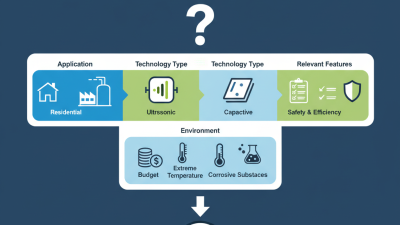
A tank level monitoring system measures liquid volume and sends readings to operators or software. Global buyers should assess the application before comparing devices. Water, oil, chemicals, and food liquids require different sensors. Ultrasonic sensors suit many non-contact applications, while radar performs better with vapor, foam, or changing temperatures. A practical test should compare readings at empty, half-full, and near-overflow levels. Small errors can become expensive inventory losses.

Check accuracy, measuring range, installation position, and calibration requirements. Review the sensor’s protection rating for dust, moisture, and outdoor exposure. Wireless models need reliable coverage, battery-life evidence, and local network compatibility. IoT Analytics reported 16.7 billion connected IoT devices worldwide in 2023, showing strong connectivity growth. However, more connectivity does not guarantee better monitoring. The system should export data through standard interfaces and retain an audit trail.

Cybersecurity deserves equal attention. NIST SP 800-82 Rev. 3 recommends risk-based protection for industrial control systems. Ask about encryption, user permissions, firmware updates, and offline operation. Request documented accuracy results, not only marketing claims. Total cost includes installation, gateway fees, calibration, maintenance, and sensor replacement. A cheap sensor may require frequent site visits. That is not cheap. Buyers should also test alarms during signal loss, power failure, and rapid filling. These tests often reveal weaknesses that a showroom demonstration misses. Selection remains imperfect when site conditions are unknown, so pilot data should influence the final specification.

FrenchBulgaria