Top 10 Temperature Logger Types for Global Buyers?
Choosing the right temperature logger now affects product quality, audit readiness, and operational cost. The category is not tidy. Devices range from single-use USB indicators to reusable wireless sensors with cloud dashboards. Each type fits a different risk profile.
WHO’s Technical Report Series No. 961 highlights temperature mapping, monitoring, calibration, and documented control across pharmaceutical storage and transport. The WHO Global Vaccine Market Report 2023 also shows the scale of temperature-sensitive healthcare distribution. Meanwhile, the UNEP Food Waste Index Report 2024 estimates that 1.05 billion tonnes of food were wasted in 2022. Temperature abuse is not the only cause, but better visibility can reduce avoidable losses. Small data gaps still matter.
Quality expert W. Edwards Deming famously said, “You cannot manage what you cannot measure.” His principle remains useful for every temperature logger decision. However, measurement alone is not enough. A poorly placed probe can record the room instead of the product. A weak battery can create a silent gap. An unverified calibration certificate can undermine otherwise clean data.
This guide compares the top 10 temperature logger types for global buyers. It considers sensor accuracy, recording range, battery life, connectivity, software, calibration evidence, packaging, and total ownership cost. It also examines practical conditions, such as a logger inside a frozen shipment, a humid warehouse, or a refrigerated truck crossing several borders. No single device is perfect. Buyers should match the logger to the product, route, risk, and people responsible for responding to alarms.
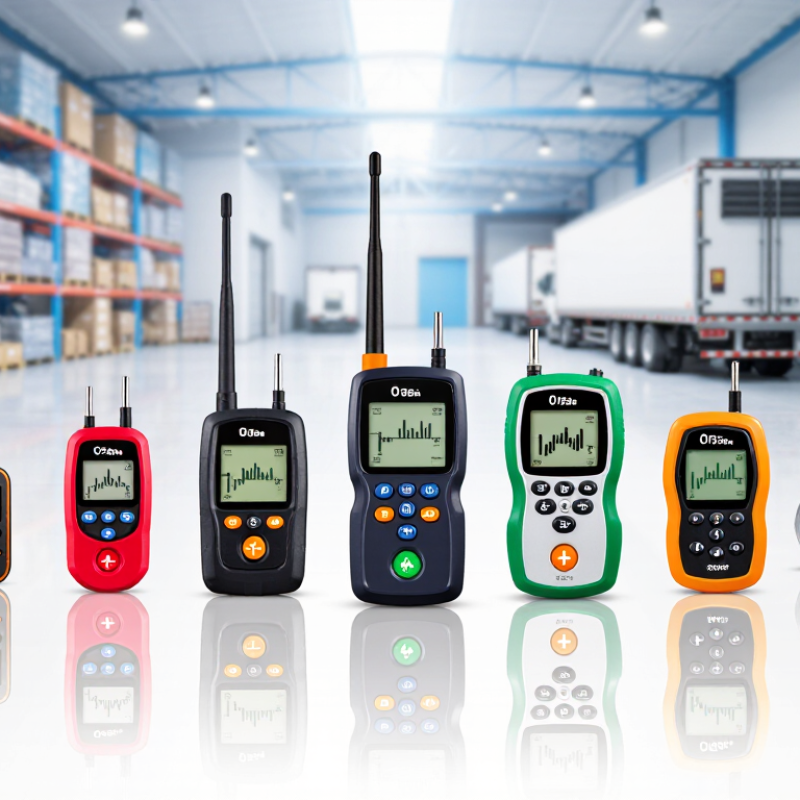
What Is a Temperature Logger and How Does It Work?
A temperature logger is a compact instrument that measures, records, and sometimes transmits temperature over time. Its sensor detects heat changes, while an electronic circuit converts them into digital readings. A clock attaches each reading to a specific moment. Memory stores the record for later review. Some models also send alerts when temperatures exceed preset limits.
Common sensor choices include thermistors, resistance temperature detectors, and thermocouples. Thermistors suit refrigerators because they respond sensitively within a narrow range. Thermocouples tolerate wider temperatures, including industrial heating processes. Wireless loggers transmit readings through local networks, while USB loggers usually export data after collection.
The World Health Organization’s vaccine-storage guidance commonly specifies 2°C to 8°C for refrigerated products, making sensor accuracy and probe placement critical.
Small details matter. A probe touching a cold wall may report a misleading low value. An uncalibrated clock can weaken an otherwise accurate record. The World Meteorological Organization’s State of the Global Climate 2023 reported a global average temperature about 1.45°C above the 1850–1900 baseline, highlighting why reliable monitoring matters across changing environments. Yet a logger is not infallible. Battery loss, condensation, poor airflow, and missing calibration records can distort results. A useful inspection checks the sensor, sampling interval, alarm settings, calibration certificate, and downloaded data. The perfect device does not exist. Selection should match the product, location, required accuracy, and review process.
How Do Different Logger Types Compare in Accuracy and Data Storage?
Temperature logger types differ most in sensing method, calibration, and memory design. Thermistor loggers are affordable and respond quickly, but their accuracy can drift across wide temperature ranges. RTD loggers usually offer stronger stability and repeatability. Thermocouple models cover extreme ranges, although signal noise may affect low-temperature readings. Wireless loggers add remote alerts, while USB loggers provide simpler retrieval. Each choice has a trade-off.
The CDC Vaccine Storage and Handling Toolkit recommends digital data loggers with accuracy of ±0.5°C and recording intervals of 30 minutes or less. That benchmark matters for refrigerated shipments and controlled storage rooms. The World Health Organization’s Temperature Mapping of Storage Areas guidance also stresses calibration and sensor placement. A highly accurate logger can still produce weak evidence if its probe sits beside a door or cooling outlet. Location is not a small detail.
Storage capacity changes the purchasing decision. Single-use indicators show exposure, but they usually cannot preserve a complete downloadable history. USB and wireless loggers may retain thousands of readings, depending on sampling intervals and memory architecture. A 10-minute interval creates six times more records than an hourly interval. Battery life may decline faster. In practical testing, a logger can meet its stated accuracy yet lose data after an unnoticed battery failure. That uncomfortable gap deserves attention. Specifications are useful, but verification under real loading conditions is better.
How Can Global Buyers Select the Right Temperature Logger?
How Can Global Buyers Select the Right Temperature Logger?
Selecting a temperature logger starts with the shipment profile, not the product catalogue. Map the route, cargo, packaging, expected duration, and temperature limits. A frozen shipment may need a probe below -20°C, while fresh produce often requires stable readings above 0°C. WHO guidance has repeatedly warned that temperature failures can waste up to 50% of vaccines in some supply systems. The figure is old, but the risk remains practical.
Check accuracy, calibration evidence, recording intervals, and alarm settings. A logger reading every 30 minutes may miss a short exposure during customs handling. For long ocean routes, memory capacity and battery life matter more. The World Bank’s 2023 Logistics Performance Index covered 139 economies and treated tracking and timeliness as distinct logistics capabilities. Buyers should therefore assess both data visibility and transport speed. Cloud connectivity helps, but it can fail inside aircraft holds or remote ports.
Look for downloadable records, secure timestamps, and clear calibration certificates. These details support audits and reduce arguments after delivery. Choose an external probe when the package core matters more than surrounding air. However, probe placement can create false confidence. Test the complete logger-and-packaging setup before purchasing large quantities. Some buyers focus too heavily on sensor accuracy. They overlook condensation, crushed packaging, weak batteries, or careless placement. That is where a technically excellent logger can still produce poor evidence. WHO vaccine management guidance also emphasizes routine calibration, staff training, and documented procedures, not hardware alone. A cheaper unit may work. It may also create expensive doubt.
Top 10 Temperature Logger Types for Global Buyers
Compare the representative temperature-sensing spans of common logger categories. Select a logger according to the required temperature range, sensor technology, connectivity, data access, calibration needs, and deployment environment.
The ranges shown are representative sensor spans commonly associated with each logger category; actual limits depend on the sensor, probe, enclosure, electronics, and product configuration. Thermocouples and RTDs offer the broadest high-temperature coverage, while thermistors and standard wireless loggers are generally suited to narrower environmental ranges.