NOTICE
We use cookies to improve the user experience and analyze its performance.
Choosing lorawan sensors in 2026 means matching measurements to real operating conditions, not just comparing feature lists. A soil-moisture probe in a dry vineyard faces different demands from a leak detector beneath a busy office. Battery life, radio coverage, enclosure rating, calibration, and reporting interval all affect performance. Small specification differences can become costly after hundreds of devices are installed.
The market is expanding. IoT Analytics’ State of IoT 2024 report estimated 18.8 billion connected IoT devices worldwide by the end of 2024, a 13% year-over-year increase. That figure covers IoT broadly, not LoRaWAN alone, but it shows why buyers need clear, comparable selection criteria. The LoRa Alliance’s technical resources also help buyers assess the protocol and its ecosystem. Real sites differ.
This guide examines leading sensor categories and models for global buyers, including temperature and humidity, air quality, asset tracking, water monitoring, and agriculture. It considers data-sheet accuracy alongside practical details, such as replaceable batteries, antenna placement, and gateway availability. A neat ranking can still mislead. Product suitability depends on local radio conditions, installation quality, and the application’s tolerance for missing or delayed readings. Verify regional frequency support and test representative devices before committing to a large deployment.
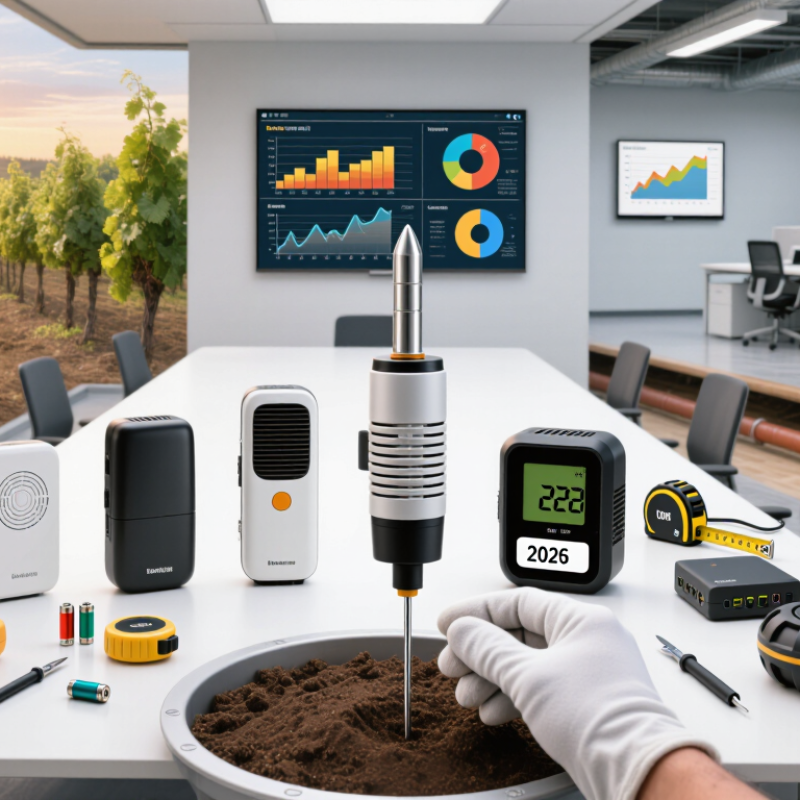
LoRaWAN sensors turn physical conditions into small wireless messages. A temperature probe, for example, detects heat and converts it into an electrical signal. A processor reads that signal, adds a device identifier, and sends a compact packet over a low-power radio link. The sensor does not usually communicate directly with an app. A nearby gateway receives its message and forwards it to a network server, which routes the data to monitoring software.
Messages may report humidity in a greenhouse, soil moisture beside a crop row, or water levels in a remote tank. Many devices sleep between transmissions to conserve battery power. That helps, but battery life still depends on reporting frequency, signal coverage, temperature, and sensor design. Longer intervals can extend service life, while delaying alerts. It is a trade-off.
A tidy datasheet can still mislead. Check the measurement range, stated accuracy, calibration method, and enclosure rating against the actual site. A sensor mounted near a sunny window may read differently from one placed in shade. Also confirm that its regional radio settings match the deployment area; “global” does not mean one configuration works everywhere. Provisioning and key management matter too. They are easy to overlook during a quick installation.

2026 Top LoRaWAN Sensors for Global Buyers
Major LoRaWAN Sensor Types and Their Applications
LoRaWAN sensors commonly monitor temperature, humidity, air quality, soil moisture, water flow, leaks, and equipment vibration. In greenhouses, temperature and humidity readings can flag conditions that threaten crops. Soil-moisture sensors help guide irrigation. The need is substantial: FAO’s AQUASTAT reports that agriculture accounts for about 70% of global freshwater withdrawals. A sensor is useful only when its readings support a clear operational decision.
Buildings use room-temperature, occupancy, and leak sensors to identify comfort or maintenance issues. The International Energy Agency reported that buildings represented about 30% of global final energy consumption in 2022. Door, tank-level, and vibration sensors also serve warehouses, utilities, and remote infrastructure. LoRaWAN suits many battery-powered devices that send small, periodic messages over long distances. It is not ideal for every job. Frequent readings or weak indoor coverage can complicate deployment.
Tips: Match the sensor to the actual measurement point. Test placement in the real environment, especially behind concrete walls or inside metal enclosures. Check calibration and battery life, too. A tidy dashboard can still hide bad readings.
| Sensor Type | Typical Measurement | Common Applications | Deployment Considerations |
|---|---|---|---|
| Temperature and Humidity | Temperature commonly covers approximately −40 to 85°C; relative humidity commonly covers 0–100% RH. Accuracy varies by sensing element and calibration. | Warehouses, greenhouses, building monitoring, cold-chain storage, and equipment rooms. | Choose an enclosure and probe suited to the environment. For regulated storage, verify calibration, placement, and required reporting intervals. |
| Soil Moisture | Often reports volumetric water content (VWC), commonly as a percentage; usable range and accuracy depend on sensor design, soil type, and calibration. | Irrigation management, landscape maintenance, research plots, and greenhouse production. | Install at representative root-zone depths. Soil-specific calibration can improve readings; consider probe durability and seasonal access. |
| Water Level | May measure liquid level using pressure, ultrasonic, or other methods; ranges and accuracy are model- and installation-specific. | Tanks, wells, sumps, reservoirs, flood monitoring, and remote water infrastructure. | Match the measurement method to the liquid, tank geometry, and installation conditions. Check for condensation, sediment, pressure limits, and submersion requirements. |
| Air Quality: Particulate Matter | Typically reports PM1.0, PM2.5, and/or PM10 concentrations in µg/m³; measurement performance depends on the optical sensor and operating conditions. | Indoor air-quality monitoring, schools, offices, public buildings, and environmental observation. | Particle sensors may require more power and airflow than simple environmental sensors. Review maintenance needs and avoid treating indicative readings as regulatory measurements unless certified. |
| Carbon Dioxide (CO₂) | Many building-monitoring sensors cover roughly 400–5,000 ppm; sensing technology, accuracy, and calibration needs vary. | Ventilation assessment, classrooms, meeting rooms, offices, and building automation. | Check warm-up time, calibration approach, mounting position, and battery expectations. Some CO₂ technologies consume more energy than temperature or contact sensors. |
| Door and Window Contact | Discrete open/closed state, usually detected with a magnetic contact or equivalent switch. | Building security, access-event logging, cabinet monitoring, and refrigerated-room door alerts. | Correct alignment and mounting gap are important. Configure event reporting and alert thresholds to limit unnecessary transmissions. |
| Water Leak Detection | Usually detects water presence at a probe, cable, or sensing surface and reports a wet/dry state. | Plant rooms, basements, server rooms, kitchens, water-heater areas, and storage facilities. | Place sensing elements where water is likely to collect. Test alarm delivery and consider probe corrosion, cable length, and local drainage patterns. |
| Occupancy and Motion | Typically reports motion or occupancy events; some devices also provide approximate occupancy or environmental measurements. | Space utilization, lighting control, room booking analysis, and energy management. | Detection depends on sensor technology, mounting height, field of view, and room layout. Event-based reporting can reduce radio traffic. |
| Pulse Counter and Utility Meter Interface | Counts pulses from compatible meters; conversion to volume or energy depends on the meter's pulse constant and interface. | Water, gas, and energy submetering; remote consumption tracking and leak-use analysis. | Confirm electrical compatibility, pulse rate, isolation, and counter behavior during outages. LoRaWAN provides telemetry; it does not replace the meter's measurement function. |
| Barometric Pressure | Common atmospheric measurement ranges are approximately 300–1,100 hPa, depending on the sensor. | Weather stations, building monitoring, environmental studies, and altitude-related applications. | Provide an appropriate pressure path while protecting the sensor from water and contaminants. Consider local calibration and temperature effects where precision matters. |
Note: Measurement ranges and accuracy are representative examples, not universal specifications. Confirm the individual sensor datasheet, regional frequency plan, network coverage, power requirements, and applicable regulations before deployment.
2026 Top LoRaWAN Sensors for Global Buyers
How to Evaluate LoRaWAN Sensors for Global Markets
Selecting a LoRaWAN sensor for global deployment takes more than comparing range or battery-life claims. Match its radio configuration to the frequency plan and approval requirements of each target market; these may differ by country. Ask for test reports, supported regional bands, and the device’s LoRaWAN version. A datasheet is only a starting point.
Assess the sensor in the conditions where it will operate. Check readings in cold rooms, damp areas, or metal-heavy spaces if those reflect the installation. Measure battery use at realistic reporting intervals, not just the supplier’s best-case setting. Also verify secure device onboarding, network compatibility, firmware update options, and local support. One successful test is not proof. A tidy spreadsheet can still hide a poor fit.
Tips: Request a sample and run a small field pilot before placing a large order. Record signal strength, missed messages, battery readings, and setup time. Compare results across sites. Small inconsistencies matter, and they can reveal assumptions your evaluation missed.
How to Evaluate LoRaWAN Sensors for Global Markets
Before choosing a sensor, verify that its radio variant supports the frequency plan used in the destination market. These regional ranges are reference bands; permitted channels and operating rules vary by country.
Reference: LoRa Alliance Regional Parameters.
For global buyers in 2026, leading LoRaWAN sensor options are defined by fit, not feature count. A temperature-and-humidity unit suits cold rooms, warehouses, and occupied buildings. Look for stated accuracy, replaceable batteries, and adjustable reporting intervals. For leak detection, a compact sensor with a cable probe can reach beneath pumps and pipes. Soil-moisture and tank-level sensors can help farms and remote facilities where site visits are costly. Small details matter. Check enclosure ratings, antenna placement, and whether readings remain useful through walls or metal cabinets.
Match each sensor to the gateway and regional network settings used at the installation site. Coverage varies, even within one building, so a real-site test is more useful than relying only on a range figure. Ask for calibration information, battery-life assumptions, and sample data exports before comparing prices. A neat specification sheet can still mislead: frequent reporting, weak signals, or cold conditions may shorten battery life. It is also easy to overbuy precision that a monitoring task does not need. Buyers should document sensor locations and set alert thresholds with the people who will respond to them. A few measurements may be noisy at first. Check the pattern before changing equipment.
For global buyers, a LoRaWAN sensor must match the local radio plan, not just its advertised range. IoT Analytics estimated 18.8 billion connected IoT devices worldwide in 2024 in its State of IoT 2024 analysis, increasing pressure on products to work reliably across diverse networks. Small details matter. Check the sensor’s supported regional parameters, gateway configuration, and network-server compatibility before deployment. A device set for one frequency plan may fail to join a network configured for another.
Regional rules affect practical performance. In the United States, devices commonly use the 902–928 MHz band; many European deployments use portions of 863–870 MHz. Permitted channels, transmit power, duty cycle, and certification requirements can differ by market. Confirm the exact country requirements with its regulator and the current LoRaWAN Regional Parameters specification. Do not assume one “global” SKU covers every region. That assumption is easy to make.
Compatibility also includes the physical installation. A metal meter cabinet, a basement wall, or a poorly placed gateway can weaken coverage, even when the sensor is compliant. Test uplinks at the intended mounting point and verify that firmware supports the target region. Procurement teams should request documented regional variants and test records. Paper compatibility is useful, but it is not field evidence.