Blog

Top Tank Level Sensor Manufacturers for Global Buyers?

Choosing the right tank level sensor manufacturer requires more than comparing product prices. Global buyers must examine measurement accuracy, chemical compatibility, certification, lead times, and after-sales support. A sensor installed above a stainless-steel process tank faces different risks from one fitted inside a dusty grain silo.

Demand is expanding across water treatment, food processing, pharmaceuticals, chemicals, and energy facilities. MarketsandMarkets’ Level Sensors Market report identifies industrial automation and process monitoring as important growth drivers. Grand View Research also reports increasing adoption of industrial sensors as manufacturers pursue safer, more connected operations. These findings support the need for dependable tank level sensor suppliers, not simply high-volume exporters.

Performance matters most.

A reliable manufacturer should explain whether its radar, ultrasonic, capacitive, float, or hydrostatic technology suits the application. Buyers should request evidence from documented installations, calibration procedures, ingress protection tests, and relevant quality systems. ISO 9001 certification can indicate controlled processes, although it does not guarantee every sensor will perform well in every tank.

The market is not perfectly transparent. Published reports define “level sensors” differently, so market-size estimates can vary considerably. That limitation deserves attention. A practical comparison should therefore combine industry data with field experience, technical datasheets, factory audits, sample testing, and customer references. The following overview examines leading tank level sensor manufacturers through those criteria, helping international buyers distinguish proven engineering capability from attractive but unverified claims.

Top Tank Level Sensor Manufacturers for Global Buyers?

Types of Tank Level Sensors and Their Operating Principles

Tank level sensors differ by measurement method, accuracy, and process conditions. According to a 2024 market analysis by Grand View Research, the global level sensor market was valued at several billion dollars in 2023, reflecting wider automation demand. Yet market size does not guarantee suitability. A sensor must match the tank, liquid, temperature, and installation point.

Float sensors use buoyancy. A rising float moves a switch or magnetic target, making them simple and economical. Hydrostatic sensors measure pressure at the tank bottom. They calculate liquid height from density and pressure, but changing fluid density can create errors. Ultrasonic sensors send sound pulses downward and measure the returning echo. They work without contact, although foam, vapor, and turbulent surfaces can weaken the signal.

Radar sensors use electromagnetic waves and usually perform better with vapor, dust, or changing temperatures. Guided-wave radar travels along a probe, improving measurement in narrow or disturbed tanks. Capacitance sensors detect changes in electrical capacitance between a probe and the tank wall. They can detect solids and liquids, but buildup may cause false readings. A 2023 functional-safety review aligned with IEC 61508 stresses proof testing and fault detection for safety-related measurement loops. That detail is easy to overlook. In practice, even a highly accurate sensor can fail when grounding, calibration, or mounting is treated as an afterthought.

Key Factors for Comparing Global Tank Level Sensor Manufacturers

Top Tank Level Sensor Manufacturers for Global Buyers?

Key Factors for Comparing Global Tank Level Sensor Manufacturers

Choosing a tank level sensor manufacturer requires more than comparing prices. Start with measurement conditions. A sensor used in a stainless-steel water tank may fail in thick foam, vapor, or sticky chemicals. Ask how the manufacturer tests these conditions. Request real calibration records, not only attractive charts.

Check accuracy, repeatability, measuring range, and dead-zone limits. Confirm whether the sensor supports 4–20 mA, digital communication, or both. Installation details matter too. Thread size, flange standards, cable length, and enclosure protection can prevent costly site changes. A high IP rating helps, but it does not replace correct mounting.

During equipment reviews, I have seen reliable readings change after condensation formed inside a poorly sealed connection. Small details matter. Compare materials, temperature limits, pressure ratings, and cleaning requirements. Food and process applications may need smoother surfaces and documented material traceability. Ask for batch records and verification procedures. Supplier support should include wiring guidance, troubleshooting, spare-part availability, and clear response times. Delivery promises also deserve evidence. A short lead time is useful only when production quality remains consistent. One weakness is easy to miss: some manufacturers explain performance well but provide limited installation training. Request sample manuals, test reports, and references from similar tank designs before approval.

Leading Tank Level Sensor Manufacturers by Technology and Market Focus

Tank level sensor manufacturers now compete through technology, not only production volume. Radar sensors suit tall tanks, vapor, and changing temperatures. Guided wave radar performs well with foam and narrow vessels. Ultrasonic sensors offer non-contact measurement for cleaner, simpler applications. Capacitance sensors remain practical for stable liquids and compact tanks. Pressure-based systems often fit water treatment and process vessels with consistent density.

Market focus matters equally. Oil and gas buyers usually demand hazardous-area certification, strong diagnostics, and remote monitoring. Food and beverage plants prioritize hygienic materials, washdown resistance, and repeatable readings. Chemical processors need corrosion-resistant probes and stable performance under pressure. According to Fortune Business Insights, the global industrial sensors market was valued at over USD 20 billion in 2023, with process automation supporting continued demand. Grand View Research also identifies manufacturing and energy as major sensor adoption sectors. These figures help, but market reports rarely separate tank-level applications cleanly. That limitation deserves attention.

Tips: Match the sensor to the liquid, tank geometry, and cleaning process. Test foam, condensation, and buildup before approving a large purchase. Ask manufacturers for calibration records, ingress ratings, response time, and field references. A low purchase price can become expensive when false alarms stop production. I have seen specifications look excellent on paper, yet installation access changed the result. Leave room for that uncomfortable possibility.

Top Tank Level Sensor Manufacturers for Global Buyers — Leading Tank Level Sensor Manufacturers by Technology and Market Focus
Manufacturer Category Primary Technology Typical Measurement Capability Best-Fit Tank Conditions Key Industries Common Market Focus Important Buyer Evaluation Points
Radar Level Sensor Manufacturers Non-contact radar
Frequency-modulated continuous-wave or pulse radar
Suitable for continuous level measurement across short and long tank heights; many industrial models support millimeter-level resolution and narrow-beam antennas. High temperature, pressure, vapor, dust, foam, and corrosive process environments. Generally suitable where contact with the product should be avoided. Oil and gas, chemicals, water treatment, power generation, bulk storage, food processing, and pharmaceuticals. Global process industries, especially Europe, North America, the Middle East, and large Asian manufacturing markets. Check antenna material, beam angle, dielectric constant requirements, process connection, hazardous-area approvals, false-echo handling, and communication protocol.
Ultrasonic Level Sensor Manufacturers Non-contact ultrasonic
Time-of-flight sound-wave measurement
Commonly used for non-contact measurement in low- to medium-range tanks, open channels, and utility vessels. Ambient or moderately demanding conditions with limited vapor, turbulence, dust, condensation, and foam. Municipal water, wastewater, irrigation, chemical storage, mining utilities, and general industrial automation. Water-focused projects in North America, Europe, Southeast Asia, Australia, and developing infrastructure markets. Evaluate vapor and foam tolerance, acoustic dead zone, transducer temperature range, tank geometry, mounting position, and resistance to condensation.
Guided Wave Radar Manufacturers Contact radar
Time-domain reflectometry through a probe
Continuous measurement for liquids, powders, and granules, with strong performance in narrow vessels and applications requiring interface detection. Internal obstructions, changing vapor conditions, low dielectric products, foam, and vessels where a guided probe can be installed. Chemical processing, refining, tank farms, specialty liquids, polymers, and bulk solids handling. Process-heavy markets in Europe, North America, the Middle East, China, Japan, and South Korea. Confirm probe type and length, pull strength, coating compatibility, product buildup risk, interface requirements, and mechanical installation clearance.
Hydrostatic Pressure Sensor Manufacturers Hydrostatic pressure
Measurement of liquid head pressure
Continuous liquid-level measurement based on density and pressure; available for shallow tanks, deep wells, and large storage vessels. Liquid applications with relatively stable density and accessible pressure or submersible installation points. Water and wastewater, groundwater monitoring, irrigation, fuel storage, environmental monitoring, and process utilities. Strong demand in municipal infrastructure, agricultural water systems, environmental projects, and remote monitoring deployments. Review density compensation, vented or absolute construction, diaphragm material, cable protection, lightning protection, ingress rating, and calibration stability.
Capacitance Level Sensor Manufacturers Capacitance
Change in electrical capacitance caused by product presence
Point-level or continuous measurement for conductive and non-conductive liquids, powders, and granules. Compact vessels, high-temperature applications, hygienic tanks, and applications requiring point-level alarms or overfill protection. Food and beverage, pharmaceuticals, plastics, chemicals, agriculture, and material handling. Hygienic processing markets in Europe and North America, together with high-volume manufacturing in Asia. Verify product dielectric constant, probe coating, buildup compensation, hygienic design, clean-in-place compatibility, and sensitivity adjustment.
Magnetostrictive Level Sensor Manufacturers Magnetostrictive
Position sensing with a float and magnetostrictive waveguide
High-repeatability continuous measurement, often with the ability to monitor product level, interface level, and temperature on selected models. Clean liquids, fuel tanks, chemical storage, and applications requiring accurate inventory or custody-related monitoring. Fuel distribution, terminals, chemical storage, industrial automation, and liquid inventory management. Tank farms and fuel infrastructure in North America, Europe, the Middle East, and established industrial regions. Check float compatibility, probe length, density range, temperature sensing, accuracy claims, hazardous-location certification, and installation access.
Float and Displacer Level Sensor Manufacturers Mechanical displacement
Float, displacer, or torque-tube operation
Point or continuous measurement, commonly selected for straightforward liquid-level indication and control. Stable liquid services where mechanical components can be inspected and process turbulence is manageable. Boiler systems, storage tanks, chemical plants, utilities, and legacy process-control installations. Replacement and maintenance markets worldwide, particularly in established process plants with existing mechanical infrastructure. Assess density changes, corrosion, moving-part wear, chamber design, maintenance access, switch ratings, and compatibility with existing control systems.
Conductive and RF-Admittance Level Sensor Manufacturers Electrical point level
Conductivity or radio-frequency admittance detection
Primarily used for high-level, low-level, dry-run, and overfill protection rather than full-tank continuous profiling. Conductive liquids, sticky materials, powders, and applications where reliable switching is more important than continuous measurement. Chemical processing, water treatment, food production, plastics, cement, and bulk solids handling. Broad industrial use across Asia, Europe, North America, and Latin American manufacturing markets. Confirm material conductivity, coating resistance, probe insulation, buildup compensation, switching delay, fail-safe configuration, and process temperature limits.
Optical and Vibrating-Fork Level Sensor Manufacturers Point-level detection
Optical refraction or vibrating-fork frequency change
Fast point-level switching for liquids, with vibrating-fork designs also available for selected powders and granules. Small vessels, skid systems, packaged equipment, hygienic processes, and overfill or dry-run protection. Pharmaceuticals, food and beverage, semiconductor utilities, chemical dosing, and machine builders. OEM and hygienic-equipment markets in Europe, North America, Japan, South Korea, and China. Review response time, minimum density, viscosity limits, coating sensitivity, hygienic certification, insertion length, and electrical output options.
Integrated Wireless and IIoT Level Sensor Manufacturers Connected level monitoring
Level sensing with wireless communication and remote analytics
Continuous or periodic measurement designed for distributed tanks, remote assets, and facilities where wired infrastructure is costly. Remote tanks, outdoor storage, utility networks, bulk materials, and brownfield sites with limited cable access. Water networks, fuel distribution, agriculture, chemical logistics, mining, and smart-factory operations. Rapidly expanding in North America, Europe, Australia, the Middle East, and digitally enabled infrastructure projects in Asia. Compare battery life, radio frequency, network coverage, cybersecurity, data platform compatibility, ingress protection, sensor update interval, and total ownership cost.

Industry Applications and Compliance Requirements for Tank Level Sensors

Tank level sensors support reliable measurement in water treatment, chemical processing, food production, fuel storage, and pharmaceutical facilities. Each application creates different demands. A wastewater tank may contain foam and suspended solids. A food vessel may require hygienic surfaces and frequent washdown. High-temperature process tanks need suitable materials, seals, and signal stability.

Compliance begins with the installation environment. Engineers should check pressure ratings, temperature limits, enclosure protection, electrical classification, and chemical compatibility. Sensors used in hazardous areas may require appropriate intrinsic safety or explosion-protection certification. Food and pharmaceutical systems often need sanitary designs, traceable materials, and cleanable connections. Local regulations can differ, so a certificate alone is not enough.

Field inspections show that measurement errors often start with poor placement. Internal pipes, agitators, vapor, and buildup can distort readings. A sensor can meet its specification and still fail in service. That detail is easy to miss. Buyers should request calibration records, test procedures, material declarations, and lifecycle support. They should also confirm whether the output integrates with existing control systems. Periodic verification remains necessary, especially where overflow, dry running, or inaccurate inventory could create operational risk. No selection process is perfect. A small pilot installation may reveal problems that laboratory data cannot.

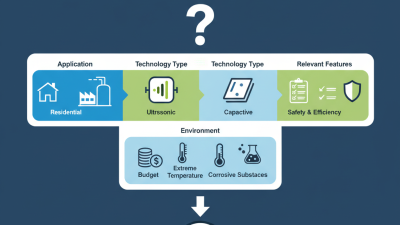
How Global Buyers Can Evaluate Suppliers and Select the Right Sensor

Top Tank Level Sensor Manufacturers for Global Buyers?

How Global Buyers Can Evaluate Suppliers and Select the Right Sensor

Choosing a tank level sensor starts with the application, not the catalog. Define the tank material, liquid properties, temperature, pressure, measurement range, and installation space. A sensor used in a narrow chemical tank may fail in a foaming wastewater vessel. Small details matter. Ask suppliers for accuracy data under similar conditions, not only laboratory results.

Supplier evaluation should include engineering experience, quality controls, calibration methods, and technical support. Request test reports, material certificates, inspection records, and clear warranty terms. Check whether the supplier can provide samples before large orders. Review communication speed and documentation quality, too. These often reveal how support will work after delivery. A polished datasheet is not proof. I have seen specifications look excellent while installation guidance remained vague.

Tips: Compare at least three suppliers using the same requirements. Confirm output signals, power needs, enclosure protection, and mounting threads. Ask how the sensor handles foam, vapor, dust, or buildup. Verify calibration traceability and replacement availability. Consider total cost, including installation and maintenance. Do not select the lowest quote automatically. A cheaper sensor may require frequent cleaning or produce unstable readings. Leave room for honest uncertainty. Real tanks are rarely as clean or predictable as test conditions. Request a practical validation plan with sample testing, acceptance limits, and written records before final purchase.

How Global Buyers Evaluate Tank Level Sensor Suppliers

The chart presents a practical procurement weighting model for comparing tank level sensor suppliers. Measurement performance and application compatibility receive the highest priority, followed by reliability, certifications, integration capability, total cost of ownership, and after-sales support. Buyers should adjust the weighting according to tank design, process media, installation conditions, and regional compliance requirements.

FrenchBulgaria